Francisco Da Silva: The Whisper of Charcoal on Ceará's Walls
Francisco Da Silva is one such artist, a figure whose very origin story is as compelling and mysterious as the art he created.
In the vast, vibrant tapestry of Brazilian art, some threads are spun from formal training and gilded academies, while others emerge from the raw earth, woven by hands guided by an intrinsic, untamed spirit. Francisco Da Silva is one such artist, a figure whose very origin story is as compelling and mysterious as the art he created. His journey began not in a studio, but on the weather-beaten walls of fishermen's shacks in Fortaleza, Ceará, an origin that imbues his legacy with a profound connection to the very soul of Northeast Brazil.
The precise details of Francisco Da Silva's birth remain shrouded in the mists of time, his birthplace simply recorded as "Unknown, Unknown." This absence of a conventional origin only deepens the mystique surrounding him, presenting him as a true autodidact, an artist sprung forth from the land itself. What we do know is that by approximately 1937, in the bustling coastal city of Fortaleza, the capital of Ceará, a young man with an undeniable urge to create began to leave his mark. His first canvases were not stretched linen or pristine paper, but the rough, sun-drenched surfaces of adobe and plaster, the humble exteriors of homes belonging to the fishing communities that dotted the coastline.
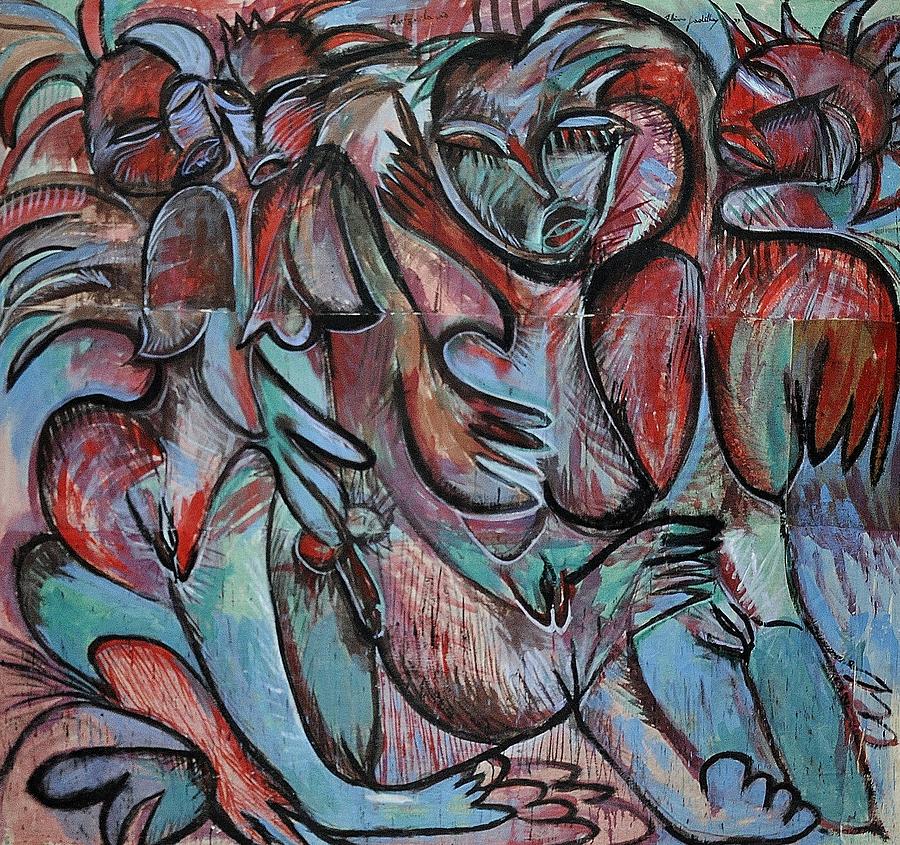
Imagine the scene: the salty air, the ceaseless rhythm of the Atlantic, the vibrant chaos of a fishing village. Amidst this backdrop, Francisco Da Silva, using rudimentary tools – charcoal salvaged from cooking fires, chalk perhaps found or traded – began to draw. These weren't fleeting doodles; they were the nascent expressions of a painter and draughtsman in the making, bold strokes that spoke volumes before a single word of formal critique could be uttered. This act of drawing on public, ephemeral surfaces speaks volumes about his innate drive, a need to communicate visually that transcended any conventional means or materials. It was art as an immediate, visceral response to his surroundings, a dialogue between the artist and his community, etched onto the very fabric of their daily lives.
This practice of "wall art" in the 1930s and 40s was more than just an artistic exercise; it was a profound cultural statement. In a region often marginalized by the economic and cultural centers of the South, art emerging from such grassroots origins carried an authentic power. It bypassed the gatekeepers of the formal art world, offering a direct, unfiltered glimpse into the creative spirit of the common people. Da Silva's early work on these walls would have been seen by everyone – fishermen mending nets, children playing in the dust, women carrying water. His art was public, democratic, and deeply embedded in the social fabric of Fortaleza.

Verified via Gemini vision. Educational use.
By the 1940s, his talent had begun to garner attention. The nascent art scene in Ceará, though small, was attuned to the burgeoning creative energies around it. It was during this period that Francisco Da Silva caught the eye of a discerning critic and painter, who recognized the raw genius simmering beneath the surface of his wall drawings. This encouragement marked a pivotal moment, a bridge between his informal, public practice and a more formalized recognition within the art world. While the full extent of this early patronage is not detailed, it undoubtedly provided the impetus for Da Silva to transition from ephemeral wall drawings to more permanent works, solidifying his path as a painter (pintura) and draughtsman (desenhista).
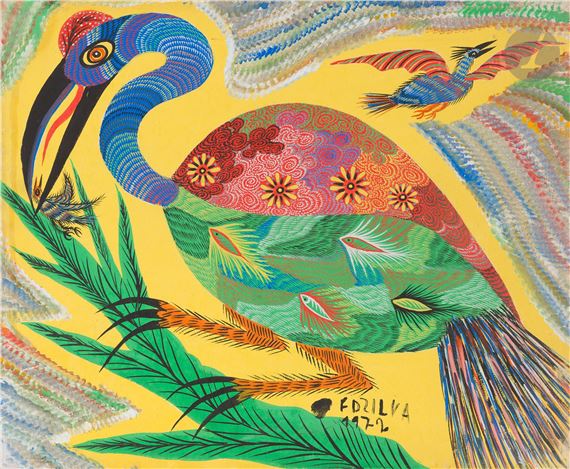
Though specific major works from this early period are not widely documented, his foundational practice on the walls of fishermen's shacks profoundly shaped his artistic identity. His paintings and drawings likely carried the same directness, the same vibrant energy, and the same connection to the natural world and local life that characterized his initial endeavors. One can imagine his canvases teeming with the flora and fauna of the Northeast, perhaps the mythical creatures of local folklore, or the everyday scenes of the coast – fishing boats, bustling markets, the faces of the people who inhabited his world. His self-taught background meant his work would have been unfettered by academic conventions, marked instead by an authenticity and a unique visual language born from observation and intuition.
Francisco Da Silva's contribution to Brazilian art extends far beyond his individual output; it lies in his embodiment of a vital, alternative narrative. He represents the voice of the often-unseen artist, the genius nurtured by instinct rather than institution. His story highlights the rich, fertile ground of popular culture and folk traditions in Northeast Brazil, demonstrating how profound artistic expression can emerge from the most unexpected places. He became a symbol of Ceará's vibrant cultural landscape, a testament to the idea that art is an inherent human impulse, not merely a learned skill.

Verified via Gemini vision. Educational use.
His legacy challenges the very definition of an artist, pushing against the Eurocentric biases that historically dominated Brazilian art criticism. Da Silva's emergence from the "unknown" to a recognized talent underscored the importance of looking beyond conventional parameters for artistic merit. He helped pave the way for a broader appreciation of art that is deeply rooted in local identity, celebrating the unique colors, textures, and narratives of the Brazilian Northeast.
In conclusion, Francisco Da Silva's journey from the sun-baked walls of Fortaleza to the broader art consciousness is a powerful testament to the enduring spirit of creativity. His "unknown" origins and his initial practice of drawing with charcoal and chalk on fishermen's shacks are not mere biographical footnotes; they are the very essence of his artistic identity. He is a reminder that art can bloom anywhere, that genius can be self-schooled, and that the most profound expressions often whisper first from the most humble of canvases. His story continues to resonate, a testament to the raw, untamed beauty of art born from the heart of Brazil's Northeast, a whisper of charcoal that echoes through time.
Fontes:
(1) escritoriodearte.com - https://www.escritoriodearte.com/artista/francisco-da-silva
Imagem de capa: Verified via Gemini vision. Educational use.
This article is part of the CASCA Archive, documenting visual artists from Northeast Brazil. Story about Francisco Da Silva.