Hansen Bahia: Capturing Bahia's Pulse in Woodcut
Hansen Bahia is one such figure, a man whose origins lay far from the tropical shores of Northeast Brazil, yet whose artistic output became synonymous with the vibrant, complex spirit of Bahia.
In the rich tapestry of Brazilian art, certain figures emerge not just as artists, but as conduits for the very soul of a place. Hansen Bahia is one such figure, a man whose origins lay far from the tropical shores of Northeast Brazil, yet whose artistic output became synonymous with the vibrant, complex spirit of Bahia. His powerful woodcuts, brimming with dynamic energy and profound cultural insight, etched the essence of Bahian life onto the global consciousness, making him an indispensable interpreter of Brazil's most African state.
Hansen Bahia's story is one of unexpected transformation – a German sailor who, by a twist of fate and a deliberate choice, found his true home and artistic voice thousands of miles from his birthplace. His work, primarily in gravura (printmaking), particularly xilogravura (woodcut), stands as a testament to his deep immersion in and reverence for the culture he adopted. Through bold lines and stark contrasts, he didn't just depict Bahia; he felt it, and then translated that visceral experience into enduring visual narratives.
From Hamburg to Salvador: An Unlikely Bahian
Born Albert Hansen in Hamburg, Germany, on March 26, 1915, his early life gave little indication of the profound impact he would have on Brazilian art. The trajectory of his life irrevocably shifted with the outbreak of World War II. In 1941, as a German sailor, he found himself in Brazil, where he was subsequently interned along with other German nationals. This period of internment, a consequence of global conflict, inadvertently became the crucible for his future.
When the war concluded, Albert Hansen faced a choice. Instead of returning to a war-torn Europe, he chose Brazil, a land that had, perhaps unexpectedly, begun to captivate him. This decision was pivotal. He eventually settled in Salvador, Bahia, in 1949, a city pulsating with Afro-Brazilian culture, ancient traditions, and an unparalleled artistic vibrancy. It was here that Albert Hansen truly became "Hansen Bahia," adopting the name that would forever link him to his chosen home and artistic destiny. This profound shift, from a European identity to one deeply rooted in the Brazilian Northeast, is not merely biographical detail; it is foundational to understanding the authenticity and depth of his artistic expression.
Carving the Spirit: Hansen Bahia's Artistic Practice

Verified via Gemini vision. Educational use.
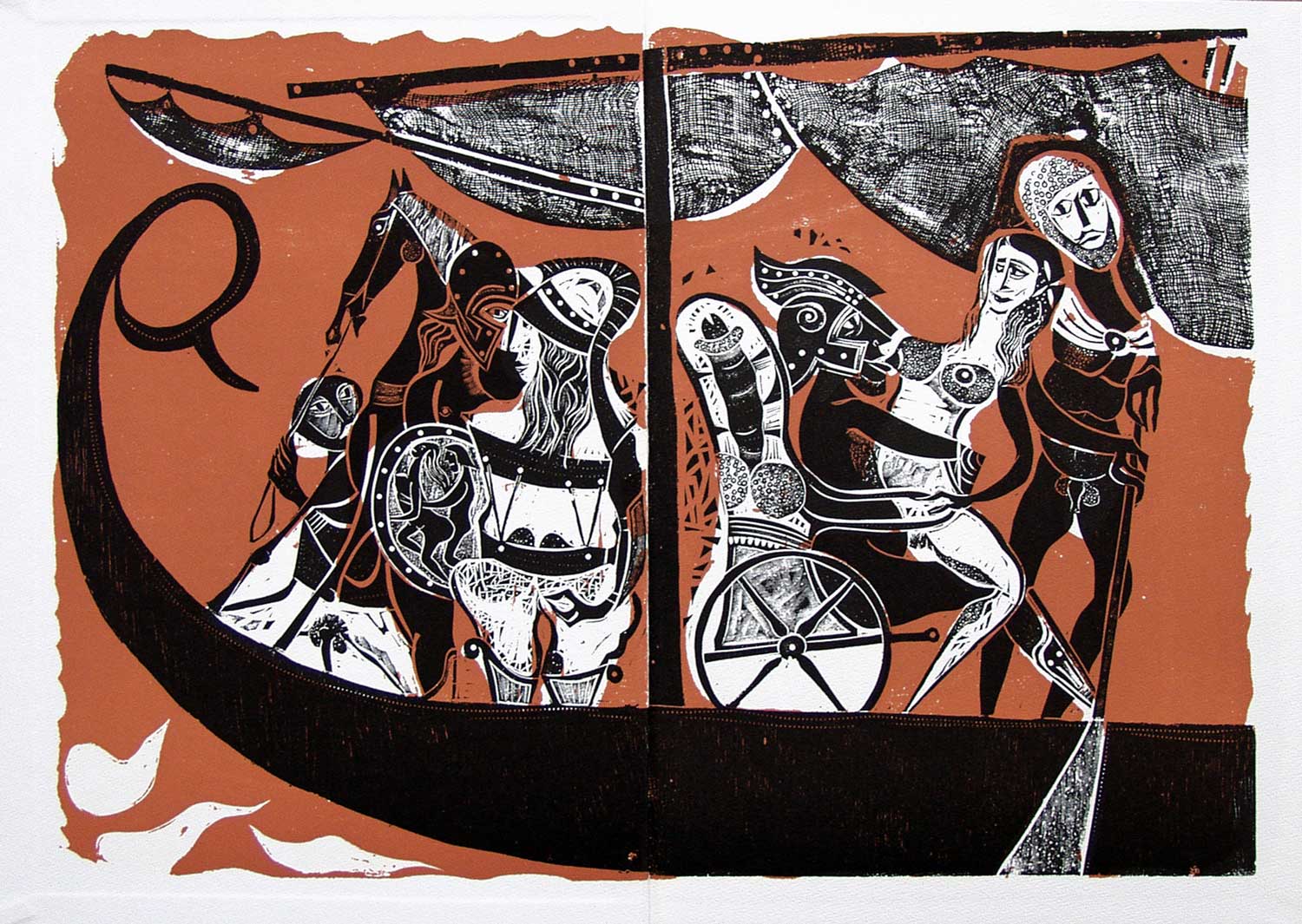
Hansen Bahia found his most potent medium in gravura, a printmaking technique that perfectly suited his expressive style. While he also engaged in painting, sculpture, and mural work, it was through the woodcut that he truly excelled. Xilogravura, with its inherent demands for strong lines, clear forms, and high contrast, became his language for communicating the raw energy and intricate details of Bahian life.
His themes were deeply rooted in the daily existence and rich cultural tapestry of Bahia. He chronicled the bustling markets, the rhythmic movements of capoeira circles, the solemnity and ecstasy of Candomblé rituals, and the arduous lives of fishermen and laborers. His prints are a vibrant ethnography, capturing the essence of popular culture, religious syncretism, and the folklore that permeates every corner of Salvador. He didn't shy away from depicting social struggles, infusing his work with a sense of empathy and a keen observer's eye for the human condition.
Hansen Bahia's style is characterized by its dynamism. His figures are often in motion, imbued with a sense of purpose and vitality. The bold, almost aggressive lines of his woodcuts convey power and emotion, creating images that are both stark and deeply expressive. His command of black and white, typical of the medium, allowed him to create dramatic compositions where light and shadow play crucial roles in defining form and mood. Beyond the immediate scenes, his work also delved into historical narratives, such as the "Ciclo do Café" (Coffee Cycle) and "Ciclo da Cana" (Sugarcane Cycle), illustrating the economic and social foundations that shaped Brazil. These series demonstrate his commitment to understanding and depicting the deeper currents of Brazilian history and labor.
The Visual Voice of a Literary Giant: Hansen Bahia and Jorge Amado
Perhaps the most significant chapter in Hansen Bahia's cultural impact was his profound collaboration with Brazil's literary giant, Jorge Amado. Amado, a native Bahian himself, found in Hansen Bahia a visual artist capable of perfectly translating the vivid worlds of his novels into compelling images. Hansen Bahia didn't just illustrate Amado's books; he became the visual counterpart to Amado's prose, his woodcuts becoming the iconic face of many of the author's most beloved works.

Verified via Gemini vision. Educational use.
His illustrations graced editions of seminal novels such as "Jubiabá," "Mar Morto" (Sea of Death), and "Tenda dos Milagres" (Tent of Miracles). His powerful, evocative imagery captured the sensuality, mysticism, and social realism that were hallmarks of Amado's writing. The partnership was symbiotic: Amado's words brought readers into Bahia, and Hansen Bahia's images made that world tangible, giving faces to characters and forms to landscapes. His work on "A Bahia de Todos os Santos" (Bahia of All Saints), a descriptive portrait of Salvador, further solidified his role as the visual chronicler of the city. This collaboration amplified both artists' reach, introducing Bahia's unique culture to an international audience through both literature and visual art.
Beyond book illustrations, Hansen Bahia's public art also left an indelible mark on Salvador. His murals in prominent public buildings, such as the Hospital das Clínicas, Banco da Bahia, and Palácio dos Esportes, showcased his versatility and his commitment to integrating art into the daily lives of the city's inhabitants. These large-scale works served as permanent visual narratives, celebrating Bahian identity and history in the very fabric of its urban landscape.
A Lasting Legacy: The German Who Became Bahia
Hansen Bahia passed away in Bahia in 1978, leaving behind a legacy that transcends his adopted homeland. He proved that true artistic authenticity is not bound by birthplace but by empathy, observation, and a profound connection to one's subject. Through his woodcuts, he didn't merely depict Bahia; he embodied its spirit, its struggles, its joys, and its undeniable magic.
His journey from a German sailor interned during a global war to one of Brazil's most celebrated printmakers is a powerful narrative of artistic discovery and cultural integration. Hansen Bahia's work continues to resonate, offering a window into the soul of Bahia and a timeless testament to the power of art to bridge cultures and capture the indelible pulse of life. He remains a beacon in Brazilian art, a reminder that the most authentic stories are often told by those who choose to listen, observe, and, ultimately, carve a new home for themselves in the heart of a vibrant culture.
Fontes:
(1) dailyartfair.com - https://dailyartfair.com/artist/hansen-bahia
(2) Wikipedia - https://pt.wikipedia.org/wiki/Hansen_Bahia
(3) Wikipedia - https://en.wikipedia.org/wiki/Hansen_Bahia
Imagem de capa: Verified via Gemini vision. Educational use.
This article is part of the CASCA Archive, documenting visual artists from Northeast Brazil. Story about Hansen Bahia.