The Enduring Light in Reynaldo Fonseca's World
Reynaldo Fonseca (1925–2019) is one such artist, a Pernambucan master whose brushstrokes captured the soul of his homeland and the universal dignity of human experience.
In the vibrant tapestry of Brazilian visual arts, certain names shine with a quiet, yet persistent brilliance. Reynaldo Fonseca (1925–2019) is one such artist, a Pernambucan master whose brushstrokes captured the soul of his homeland and the universal dignity of human experience. Born in Recife, the pulsating heart of Pernambuco, Fonseca embarked on an artistic journey that would span decades, leaving behind a legacy of paintings, murals, and illustrations that resonate with profound warmth and contemplative grace. To delve into Fonseca's oeuvre is to explore a world where the ordinary is transformed into the extraordinary, reflecting a deep connection to Brazilian culture while achieving a timeless appeal.
From Recife's Crucible to the National Stage
Reynaldo Fonseca's story begins in Recife, a city famed for its poetic waterways, colonial architecture, and a rich cultural heritage that has long fostered artistic innovation. It was here, amidst the bustling markets and sun-drenched streets, that Fonseca cultivated his early artistic sensibilities. His formal training commenced at the Escola de Belas Artes de Pernambuco, an institution that played a crucial role in shaping the region's artistic landscape. This foundational period immersed him in classical techniques while exposing him to the burgeoning modernist movements taking root across Brazil.
A pivotal influence during these formative years was Lula Cardoso Ayres, a prominent Pernambucan artist known for his dedication to modernism infused with strong regional themes. Ayres championed the exploration of local culture, landscapes, and people, encouraging artists to find their unique voice within the context of their immediate surroundings. Studying under Ayres provided Fonseca with a critical understanding of how to integrate local identity into a sophisticated artistic practice, grounding his work in the rich specificity of the Northeast.
Fonseca's ambition and talent soon led him beyond the borders of Pernambuco. He ventured to Rio de Janeiro, then the national artistic epicenter, to study with none other than Candido Portinari. This mentorship was a transformative experience. Portinari, a titan of Brazilian modernism, was renowned for his monumental murals and paintings that often depicted the struggles and triumphs of the Brazilian people with a powerful social conscience. From Portinari, Fonseca undoubtedly absorbed lessons in composition, monumental scale (essential for his later muralist work), and perhaps most importantly, a profound humanism that would characterize his own artistic output. The synthesis of Ayres' regional focus and Portinari's national scope gave Fonseca a unique vantage point, allowing him to bridge local narratives with universal themes.
A Brush with Life: Fonseca's Artistic Vision

Escritorio de Arte.
Reynaldo Fonseca's artistic practice was versatile, encompassing painting, muralism, and illustration. Yet, it is in his paintings that his distinctive style truly shines—a style marked by refined technique, a sensitive palette, and an unwavering focus on the human condition and the quiet beauty of everyday existence. His works often feature figures, domestic scenes, and still lifes, rendered with an intimacy that invites viewers into a shared moment of contemplation.
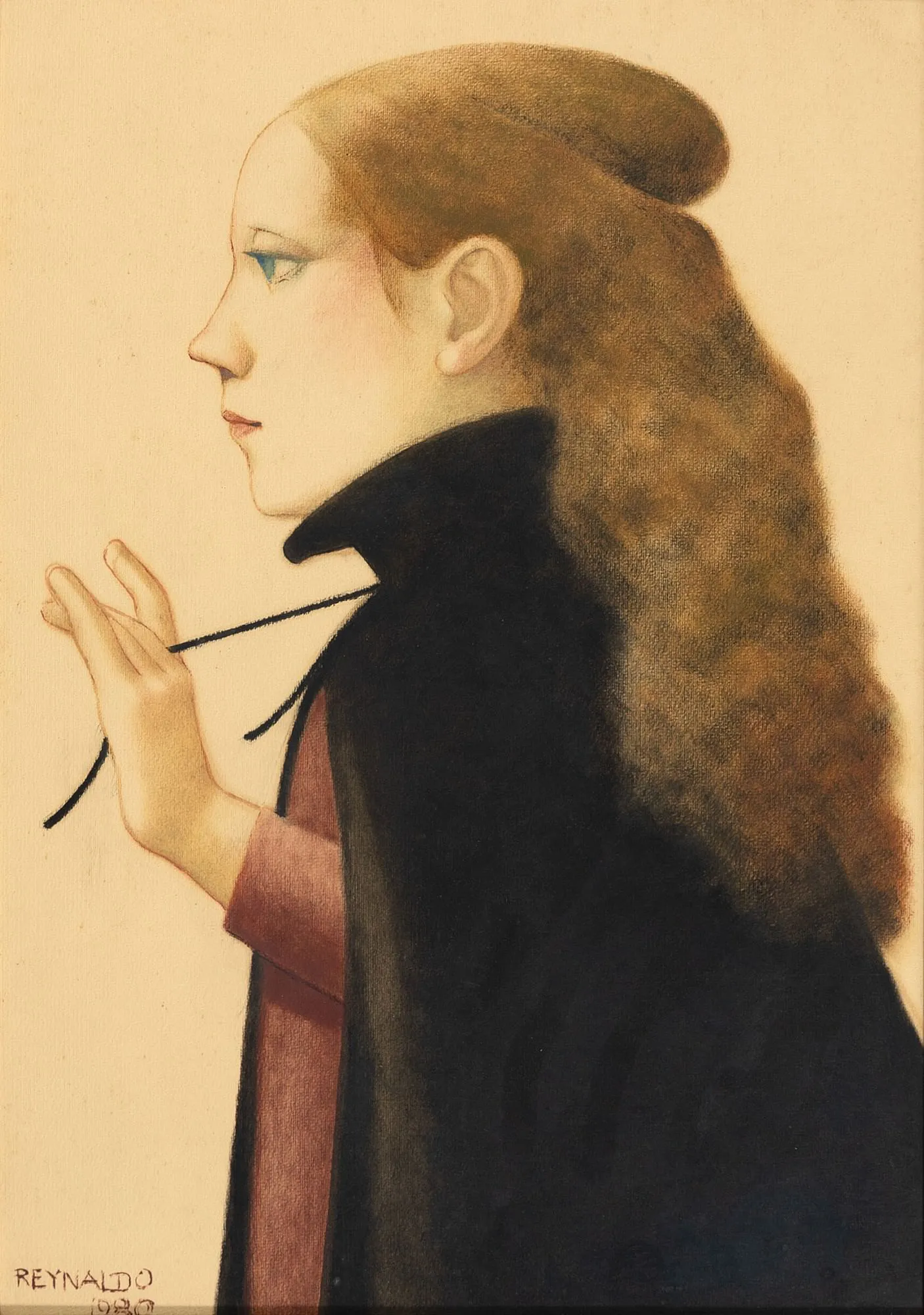
Consider his Figura Feminina (1980), an oil on board executed with a dry brush technique. This particular approach lends a delicate texture and a certain ethereal quality to the subject, suggesting introspection and a timeless elegance. The feminine figure, a recurring motif in art history, is, in Fonseca's hands, imbued with a quiet dignity, stripped of unnecessary adornment to reveal an inner grace. This work exemplifies his ability to capture the essence of his subjects with understated power.
Fonseca's humanism is particularly evident in pieces like Cortando o Cabelo (2007). This oil on canvas depicts a tender, domestic scene—an everyday ritual transformed into an intimate tableau. The act of cutting hair, a simple gesture of care and connection, becomes a window into human relationships and the warmth of shared moments. Through such works, Fonseca elevates the mundane, revealing the profound emotional resonance hidden within ordinary life. It's a testament to his belief in the inherent beauty and significance of daily existence, a theme that resonates deeply with the spirit of the Northeast, where community and familial bonds are paramount.
Even in his still lifes, Fonseca imbued his subjects with a distinct character. Cesta de Frutas (2006), an oil on canvas, is more than just an arrangement of objects. The fruits, likely those abundant in the tropical climate of Pernambuco, burst with color and vitality, celebrating the natural richness of the land. This work speaks to the vibrancy of Brazilian nature and the simple pleasures derived from its bounty, reflecting a grounded appreciation for the local environment.
Across these diverse subjects, a common thread emerges: Fonseca's profound ability to infuse his art with a sense of calm, dignity, and quiet observation. His technique, often meticulous and subtle, allows the narrative or emotion to unfold organically, drawing the viewer into a reflective space.

Escritorio de Arte.
Legacy and Resonance in Brazilian Art
Reynaldo Fonseca's contribution to Brazilian art lies not in grand, revolutionary statements, but in his consistent and deeply personal exploration of universal themes rooted in his Pernambucan identity. He represents a significant voice within Brazilian modernism, one that synthesized the regional specificity taught by Lula Cardoso Ayres with the humanistic depth absorbed from Candido Portinari. His long and prolific career, spanning nearly a century, allowed him to evolve while maintaining a distinct artistic signature.
Fonseca's works offer a counterpoint to some of the more overtly political or avant-garde movements in Brazilian art. Instead, he championed a return to the human figure, domestic narratives, and the quiet contemplation of nature, demonstrating that profound artistic statements can be made through intimacy and observation. His art serves as a timeless reminder of the enduring power of humanity, connection, and the beauty found in the everyday.
For an international audience, Fonseca's paintings offer a window into the soul of Brazil, particularly its Northeast, beyond the usual stereotypes. They speak of resilience, warmth, and a deep appreciation for life's simple, yet profound, moments. His legacy is one of an artist who, through meticulous craft and heartfelt vision, managed to capture the "enduring light" of his world, inviting us all to see the extraordinary in the familiar. His works remain cherished pieces, continuing to inspire and resonate with their elegant simplicity and deep emotional intelligence.
Fontes:
(1) Escritorio de Arte - https://www.escritoriodearte.com/artista/reynaldo-fonseca
(2) Escritorio de Arte - https://www.escritoriodearte.com/artista/reynaldo-fonseca/figura-feminina-19379
(3) Escritorio de Arte - https://www.escritoriodearte.com/artista/reynaldo-fonseca/cortando-o-cabelo-1766
(4) Escritorio de Arte - https://www.escritoriodearte.com/artista/reynaldo-fonseca/cesta-de-frutas-1192
Imagem de capa: Escritorio de Arte.
This article is part of the CASCA Archive, documenting visual artists from Northeast Brazil. Story about Reynaldo Fonseca.