The Master Carver of Pernambuco: J. Borges and the Art of Xilogravura
In the dusty streets of Pernambuco, where the Northeast Brazilian sun beats down on weathered facades and the air hums with stories waiting to be told, José Francisco Borges carved his way into immortality.
In the dusty streets of Pernambuco, where the Northeast Brazilian sun beats down on weathered facades and the air hums with stories waiting to be told, José Francisco Borges carved his way into immortality. Known simply as J. Borges, this master xylographer transformed humble pieces of wood into intricate works of art that would capture the imagination of readers from his hometown to the pages of The New York Times.
For over four decades, the rhythmic sound of manual presses echoed from Gráfica J. Borges, a printing workshop that became more than just a business—it evolved into a cultural institution. Here, surrounded by the scent of ink and the texture of rough paper, J. Borges didn't just create xilogravuras (woodcut prints); he preserved and perpetuated one of Brazil's most authentic folk art traditions.
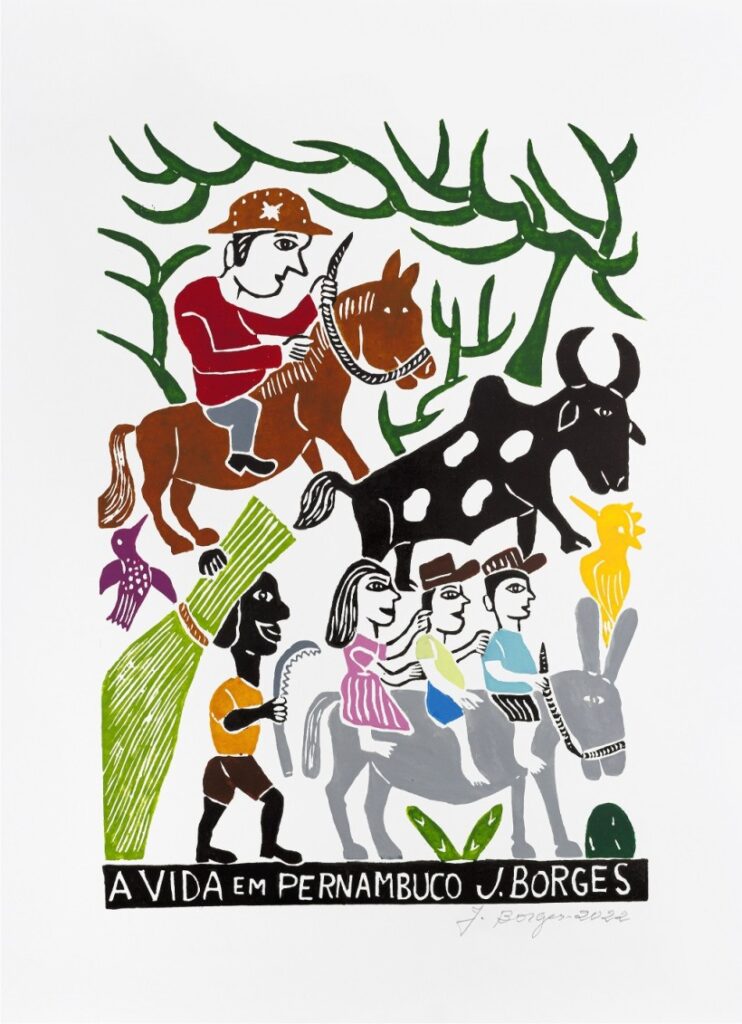
Xilogravura, the Portuguese term for woodcut printing, represents one of the most democratic forms of visual art. With nothing more than a piece of wood, a sharp knife, and steady hands, an artist can create images that speak to universal human experiences. In Northeast Brazil, this technique became inextricably linked with literatura de cordel—string literature—where illustrated pamphlets told stories of love, heroism, social commentary, and local legends.
J. Borges mastered this ancient craft with an intuitive understanding that would earn him recognition as the finest popular xylographer in the Northeast, according to the renowned writer Ariano Suassuna. His workshop became a family enterprise, with sons J. Miguel, Ivan, Manassés, Cícero, Pádua, and the late Jerônimo working alongside their father. Brothers, in-laws, nephews, and extended family members—including Amaro Francisco, Severino Borges, Nena, Joel, Lourenço, and Givanildo—all contributed to building what became a cornerstone of cordel literature history.
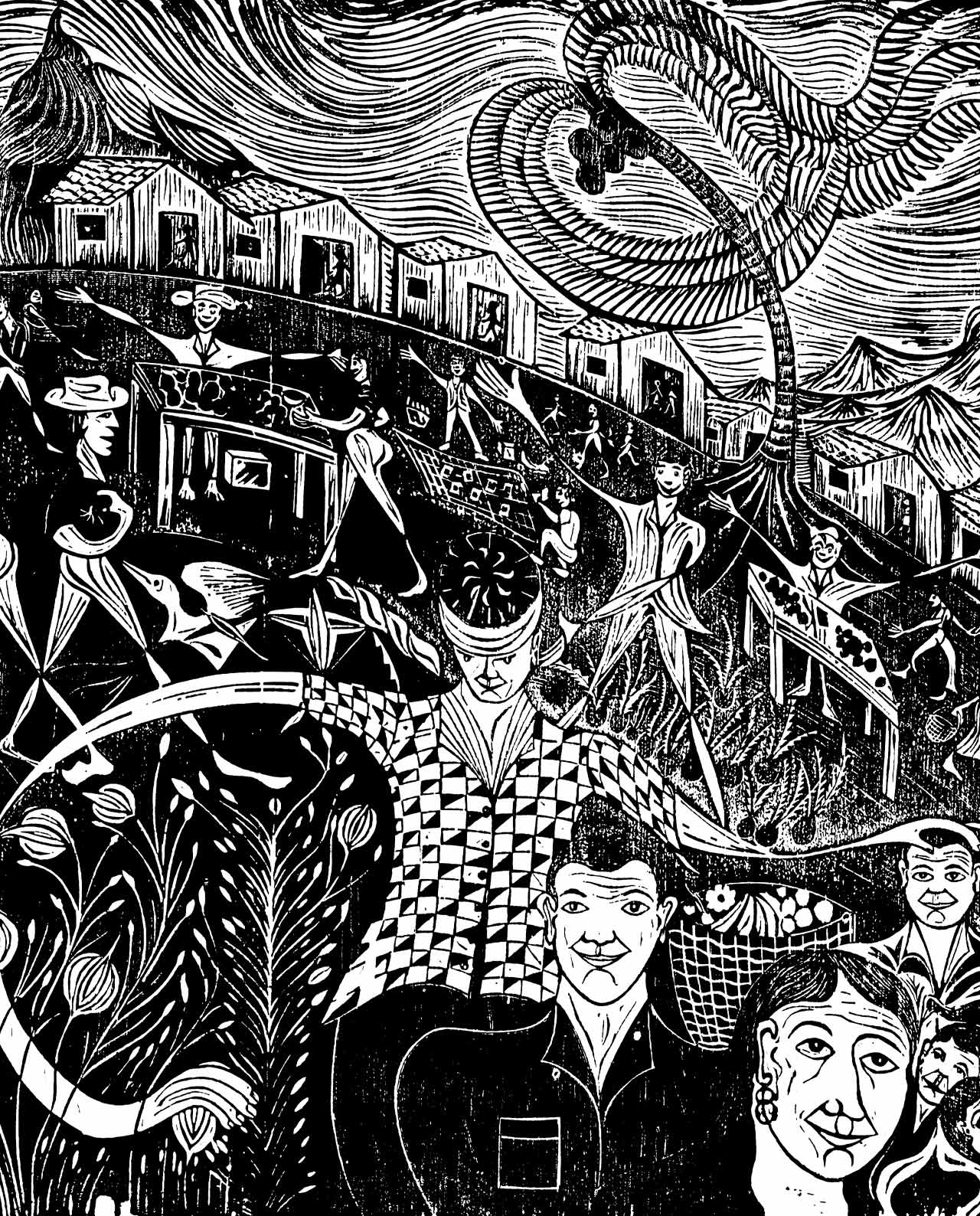
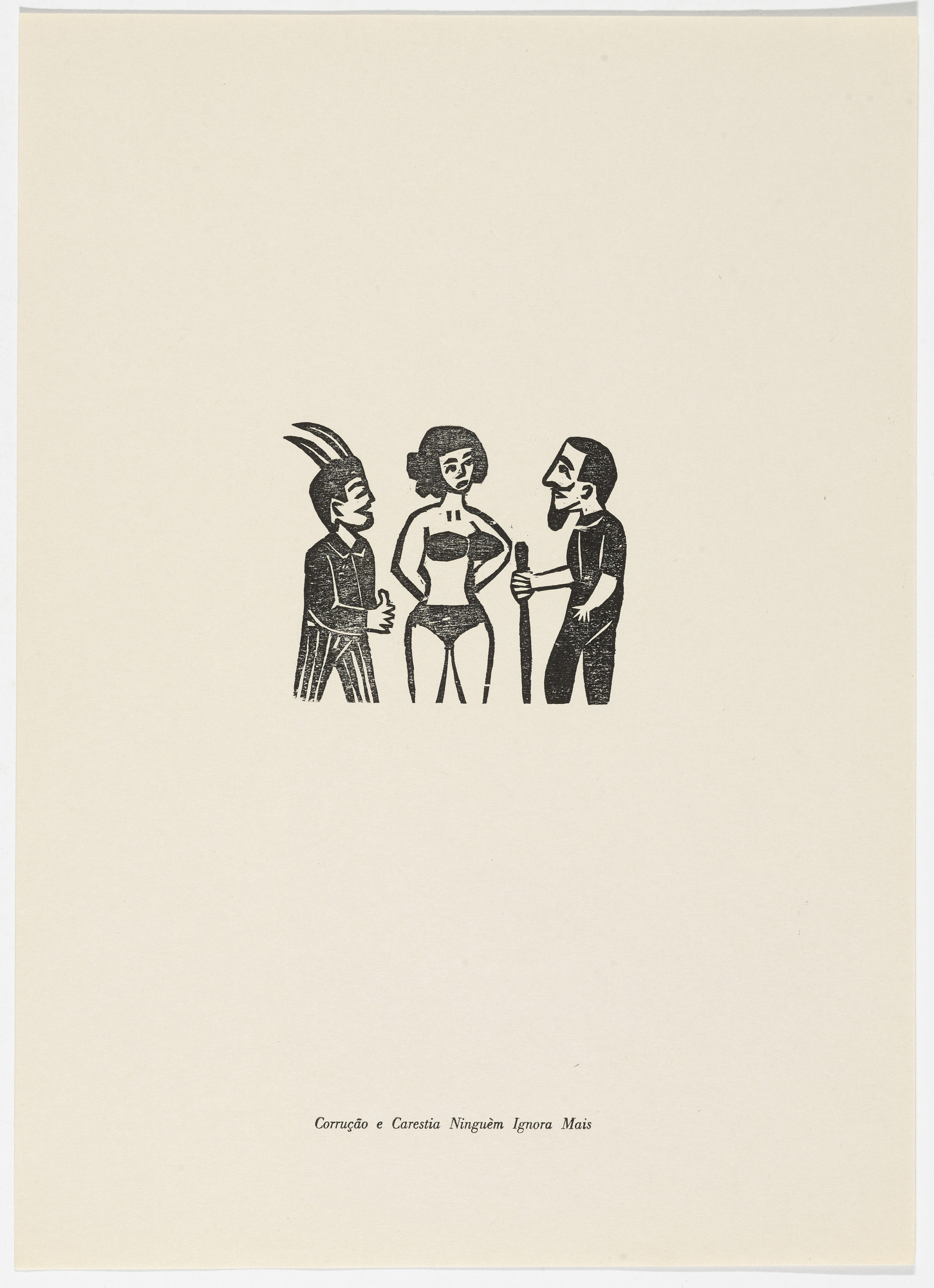
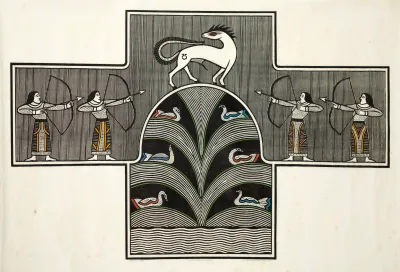
The magic of J. Borges' work lay not just in his technical skill, but in his ability to distill complex narratives into bold, expressive images. Each woodcut told a story with remarkable economy of line and form. His figures—whether depicting folkloric characters, religious scenes, or contemporary social situations—possessed a raw energy that seemed to leap from the page.

Image found via web search. Educational use.
What began as a regional art form serving local communities gradually attracted attention far beyond Pernambuco's borders. J. Borges' reputation grew as collectors, scholars, and art enthusiasts discovered the sophisticated artistry hidden within what some might dismiss as "folk art." His work embodied the cultural richness of Northeast Brazil while speaking to universal themes that resonated with audiences worldwide.
The international art community took notice when J. Borges was commissioned to illustrate books by literary giants. His collaboration with Nobel Prize-winning author José Saramago on "The Lizard" demonstrated how his visual language could complement and enhance sophisticated literary works. Similarly, his illustrations for Eduardo Galeano's "Walking Words" showed how xilogravura could transcend cultural boundaries while maintaining its authentic voice.
This recognition culminated in 2006 when The New York Times featured J. Borges, introducing his work to American audiences and cementing his status as a cultural ambassador for Northeast Brazilian art. The article highlighted not just his artistic achievements but also the cultural significance of his work in preserving traditional storytelling methods in an increasingly digital world.
The State of Pernambuco's decision to declare J. Borges a Living Heritage speaks to the profound impact of his work on regional cultural identity. This designation recognizes not just individual artistic achievement but also the role of traditional craftspeople in maintaining cultural continuity across generations.

Image found via web search. Educational use.
Through his workshop, J. Borges created more than art—he fostered a community of practice that kept alive techniques, stories, and values that might otherwise have been lost to modernization. The manual presses and movable type that defined Gráfica J. Borges represented a tangible connection to pre-industrial methods of communication and artistic expression.
Each xilogravura that emerged from his workshop carried within it centuries of cultural memory. The images he carved drew from a rich tradition of Northeast Brazilian folklore, incorporating elements of indigenous, African, and European cultural heritage that had blended over centuries to create something uniquely Brazilian.
In an age of digital reproduction and mass media, J. Borges' commitment to traditional xilogravura techniques takes on added significance. Each print from his workshop was unique—slight variations in pressure, ink distribution, and paper texture ensured that no two impressions were exactly alike. This handmade quality gave his work a warmth and authenticity that mechanical reproduction cannot replicate.
The artist's influence extends beyond his own production to the broader preservation of cordel literature and xilogravura as living art forms. By training family members and maintaining traditional techniques, he ensured that these cultural practices would survive into future generations.

Image found via web search. Educational use.
J. Borges stands as a testament to the power of regional art to achieve universal resonance. His wooden blocks, carved with the stories and dreams of Northeast Brazil, opened windows into a world where tradition and innovation dance together in perfect harmony. In his hands, xilogravura became not just a printing technique, but a means of cultural preservation, storytelling, and artistic expression that continues to inspire and educate audiences around the world.
Through his dedication to craft and community, J. Borges proved that the most profound art often emerges from the deepest roots—and that sometimes, the whole world is waiting to hear the stories carved into a simple piece of wood.
Fontes:
(1) cultura.pe.gov.br - https://www.cultura.pe.gov.br/pagina/patrimonio-cultural/imaterial/patrimonios-vivos/j-borges/
(2) indigoarts.com - https://indigoarts.com/artists/jos-francisco-borges
(3) instagram.com - https://www.instagram.com/p/DRw0mAvDV86/
Keywords: xilogravura, Brazilian folk art, Northeast Brazil
Imagem de capa: Image found via web search. Educational use.
This article is part of the CASCA Archive, documenting visual artists from Northeast Brazil. Story about J. Borges.