The Master of Memory: J. Borges and the Soul of Northeast Brazil
In the dusty town of Bezerros, Pernambuco, where the caatinga scrubland meets centuries-old traditions, a man spent nearly nine decades carving stories into wood.
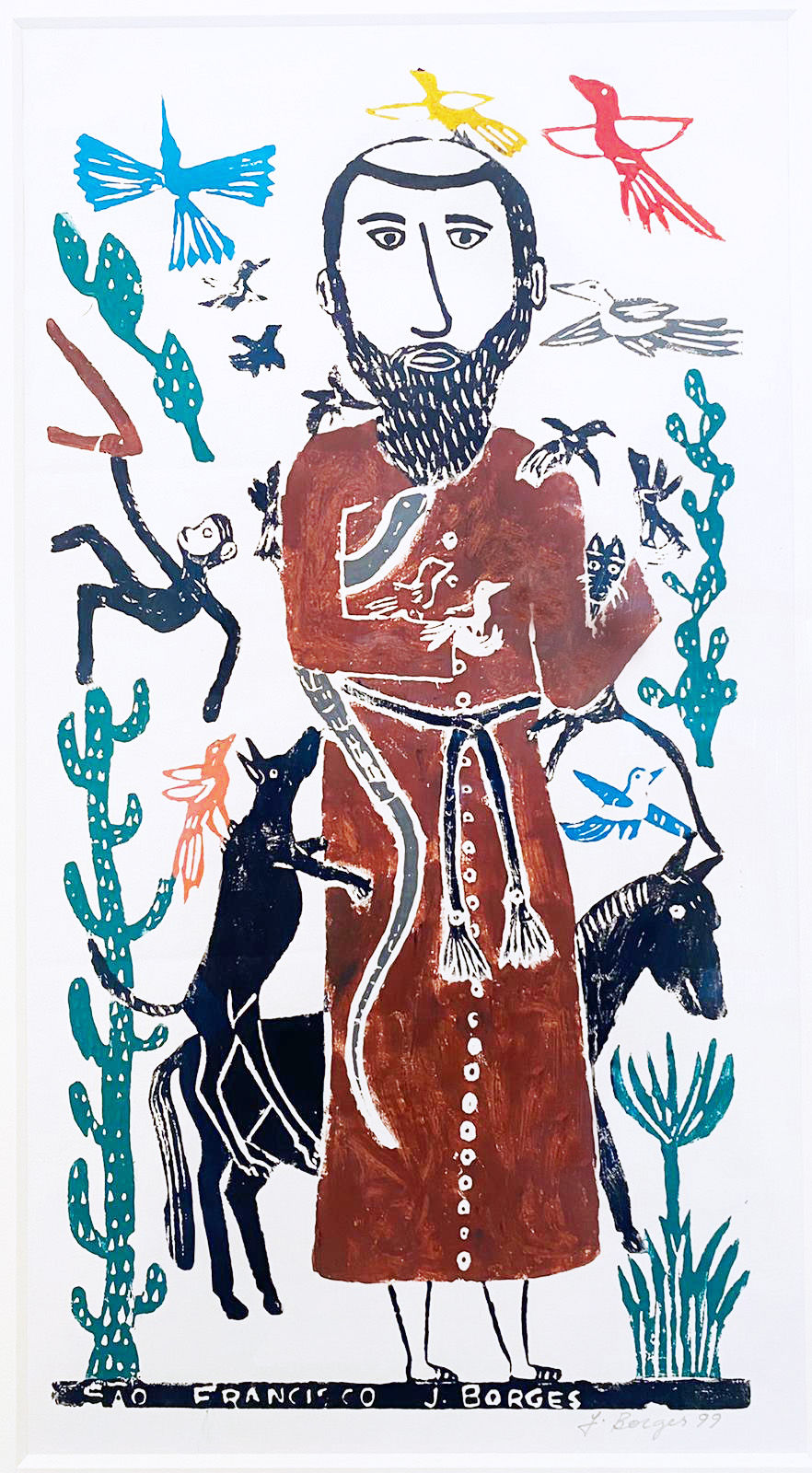
In the dusty town of Bezerros, Pernambuco, where the caatinga scrubland meets centuries-old traditions, a man spent nearly nine decades carving stories into wood. José Francisco Borges—known simply as J. Borges—transformed humble blocks of timber into windows to the soul of Northeast Brazil, becoming what many consider the greatest xilogravura artist who ever lived.
When Borges passed away in July 2024 at age 88, Brazil lost more than an artist—it lost a living library, a keeper of cultural memory whose woodcuts had traveled from rural markets to the halls of the Louvre and Smithsonian. His death marked the end of an era, but his legacy lives on in every carved line that tells the story of a region too often overlooked by the world.
Born on December 20, 1935, in Sítio Piroca, a rural area outside Bezerros, Borges grew up immersed in the rich oral traditions of the Northeast. This was a world where stories lived in the rhythm of repente singers, where cordel literature—small booklets of popular poetry—brought news, entertainment, and moral lessons to communities scattered across the semi-arid landscape.

Image from Google Images search. Educational use.
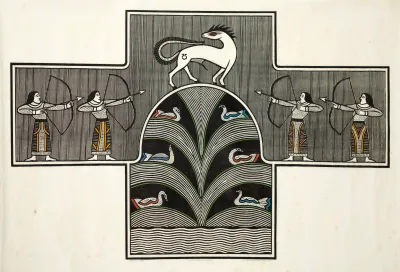
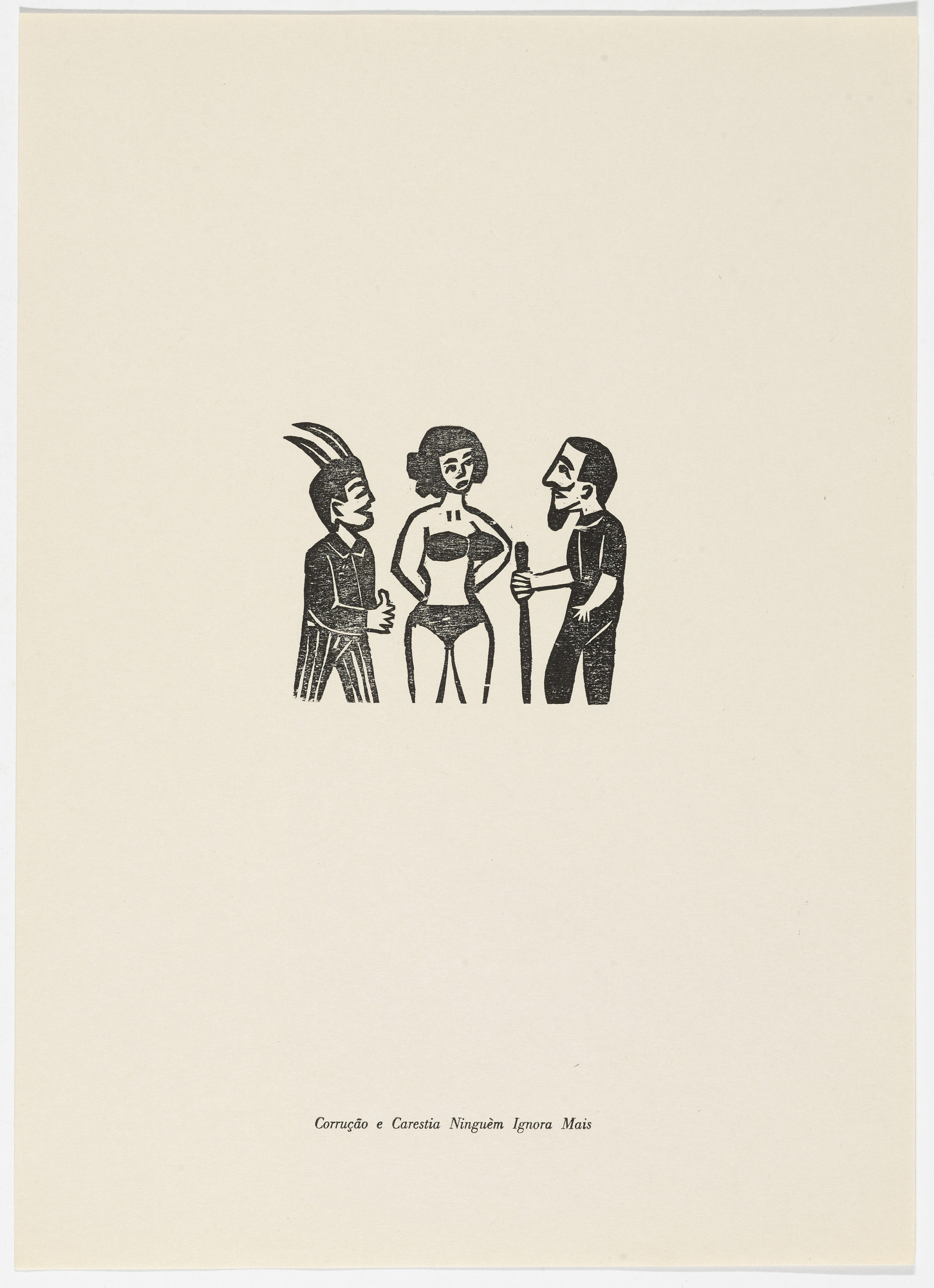
Xilogravura, the art of woodcut printing, had arrived in Brazil through European immigrants but found its most authentic expression in the Northeast, where it became the visual language of cordel literature. These small, often crude illustrations adorned the covers of poetry booklets sold in markets and fairs, capturing everything from local scandals to mythical creatures, from political commentary to religious devotion.
Borges didn't simply inherit this tradition—he revolutionized it. While many xilogravura artists of his generation remained anonymous craftsmen, Borges elevated the medium to fine art status without losing its popular roots. His workshop in Bezerros became a pilgrimage site for collectors, scholars, and fellow artists seeking to understand how someone could capture such complexity and emotion in carved wood.

Image from Google Images search. Educational use.
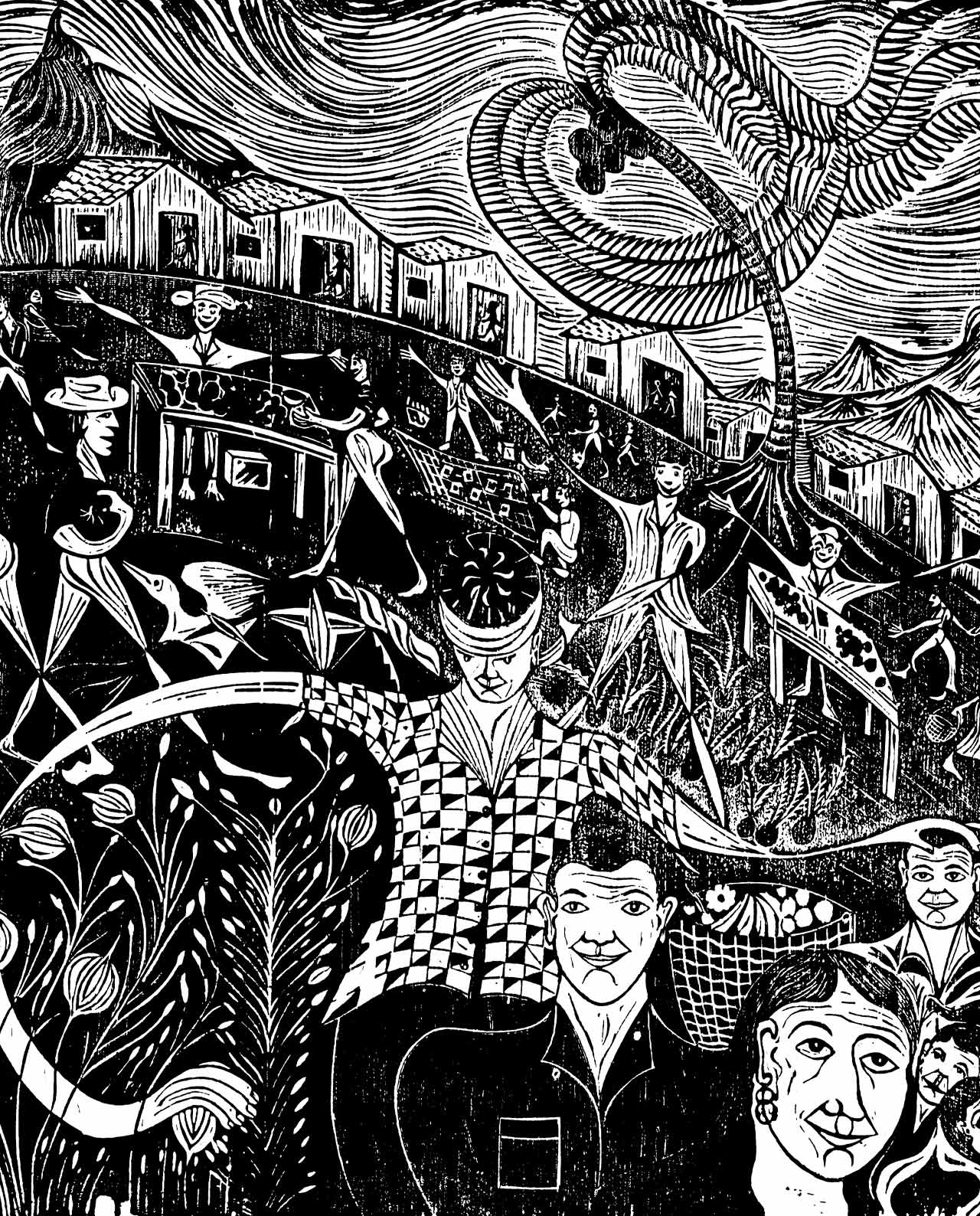
What set Borges apart was his ability to transform the everyday into the extraordinary. His subjects ranged from the mundane—"Caju e Abacaxi" (Cashew and Pineapple)—to the fantastical, from local festivals to universal human experiences. Each print was a narrative compressed into a single frame, rich with symbolism that spoke to both local audiences and international collectors.
The technical mastery required for xilogravura cannot be overstated. Unlike other printmaking techniques, woodcut demands that the artist think in reverse—what is carved away becomes white space, what remains becomes black ink. Every line must be deliberate, every curve calculated. There are no second chances once the knife cuts too deep.

Image from Google Images search. Educational use.
Borges worked primarily with imburana wood, a local species known for its fine grain and durability. His tools were simple—sharp knives and gouges—but in his hands, they became instruments of cultural preservation. Each block could produce hundreds of prints, yet as he noted, "each impression of a print is unique." The slight variations in inking, the subtle differences in pressure, meant that no two prints were exactly alike—much like the oral stories that inspired them.
The recognition that eluded many popular artists during their lifetimes came to Borges while he could still enjoy it. In 2006, The New York Times featured his work, introducing international audiences to an artist who had been quietly revolutionizing Brazilian folk art for decades. The legendary writer Ariano Suassuna, himself a champion of Northeast culture, declared Borges "the best popular xylographer in the Northeast"—praise that carried enormous weight in a region that had produced generations of master craftsmen.

Image from Google Images search. Educational use.
But perhaps the most meaningful recognition came from his home state of Pernambuco, which declared him a "Living Heritage"—an acknowledgment that Borges wasn't just an artist but a repository of cultural knowledge that risked disappearing in an increasingly globalized world.
His international reach extended beyond galleries and museums. Nobel Prize-winning author José Saramago commissioned Borges to illustrate "The Lizard," while Eduardo Galeano featured his work in "Walking Words." These collaborations demonstrated how Borges's visual language transcended linguistic barriers, speaking to universal themes through distinctly Brazilian imagery.

Image from Google Images search. Educational use.
The exhibition of Borges's work at institutions like the Louvre and Smithsonian represented more than personal achievement—it was validation of an entire artistic tradition that had long been dismissed as mere "folk art." His success opened doors for other xilogravura artists and helped establish Northeast Brazilian visual culture as worthy of serious academic and curatorial attention.
Yet Borges never forgot his roots. Even as his prints commanded high prices in international art markets, he continued to work from his modest studio in Bezerros, training apprentices and maintaining connections to the cordel tradition that had shaped his artistic vision. He understood that authenticity couldn't be manufactured—it had to be lived.
In a rapidly changing Brazil, where urbanization and digital media threaten traditional cultural practices, Borges's work serves as both documentation and inspiration. His prints preserve not just images but entire ways of seeing, thinking, and being that risk extinction. They remind us that art's highest calling may not be decoration but memory—the preservation of human experience across time and space.
The master's blade has fallen silent, but the stories carved into wood continue to speak. In every market where cordel literature is sold, in every workshop where young artists learn to cut against the grain, in every museum where his prints hang beside works by Picasso and Matisse, J. Borges lives on—not as memory, but as living culture, as vibrant as the day he first pressed ink to paper and brought the soul of Northeast Brazil into the light.
Fontes:
(1) Wikipedia - https://en.wikipedia.org/wiki/Jos%C3%A9_Francisco_Borges
(2) instagram.com - https://www.instagram.com/reel/DP4p3o7D3hy/
(3) indigoarts.com - https://indigoarts.com/artists/jos-francisco-borges
Keywords: xilogravura, Brazilian folk art, Northeast Brazil
Imagem de capa: Image from Google Images search. Educational use.
This article is part of the CASCA Archive, documenting visual artists from Northeast Brazil. Story about J. Borges.