The Master of Northeast Brazil's Soul: José Francisco Borges and the Art of Xilogravura
J. Borges elevated Northeast Brazilian
In the dusty streets of Bezerros, a small town in the interior of Pernambuco, a quiet revolution was taking place. Armed with nothing more than wooden blocks, carving tools, and an inexhaustible imagination, José Francisco Borges—known simply as J. Borges—was transforming the ancient art of woodcut printing into a powerful voice for Northeast Brazilian culture. His xilogravuras (woodcut prints) would eventually travel far beyond the cobblestone squares of his hometown, carrying with them the stories, struggles, and dreams of an entire region.
Born in Bezerros, Pernambuco, J. Borges emerged from the rich cultural tapestry of Brazil's Northeast, a region where oral tradition, folk art, and popular culture interweave like threads in a vibrant textile. Bezerros itself sits in the heart of Pernambuco's interior, where the landscape shifts from coastal plains to the semi-arid sertão, and where cultural traditions have been preserved and passed down through generations like precious heirlooms.
The Northeast of Brazil has always been a crucible of artistic expression, where African, Indigenous, and European influences merged to create something uniquely Brazilian. It's the birthplace of literatura de cordel (string literature), where stories are told through illustrated pamphlets hung on strings in markets and town squares. It's here that J. Borges found his calling, not just as an artist, but as a cultural guardian and storyteller.

Image from Google Images search. Educational use.
Borges didn't simply stumble into xilogravura—he was drawn to it by the magnetic pull of tradition and the urgent need to give voice to his community's experiences. The art form itself has deep roots in Northeast Brazil, having arrived with Portuguese colonizers but quickly adapting to local themes, stories, and aesthetic sensibilities. What makes J. Borges exceptional is how he elevated this folk art tradition into something that speaks both locally and universally.
J. Borges is not merely a xilogravurista (woodcut artist)—he is also a poet, and this dual identity is crucial to understanding his artistic practice. In the tradition of Northeast Brazilian folk art, visual and literary expression are inseparable. His woodcuts often illustrate stories, both traditional and contemporary, carved with the same rhythmic precision that marks his verse.

Image from Google Images search. Educational use.
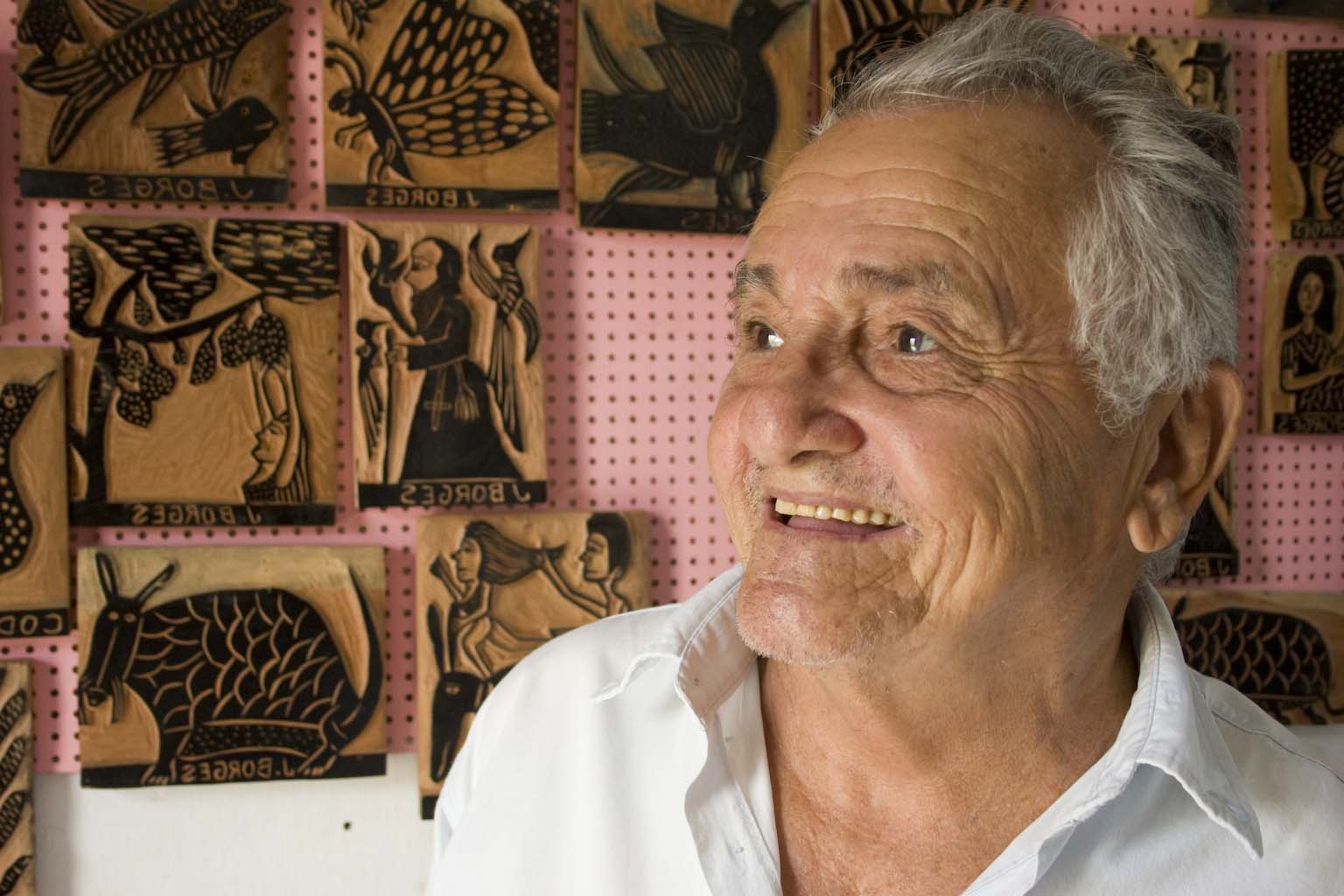
The process of creating xilogravura is both meditative and physically demanding. Using tools that have remained essentially unchanged for centuries, Borges carves into blocks of wood—traditionally umburana or imbuia—removing material to create raised surfaces that will hold ink. Each line must be deliberate; there is no room for hesitation or easy correction. The wood itself becomes a collaborator, its grain and texture influencing the final image.
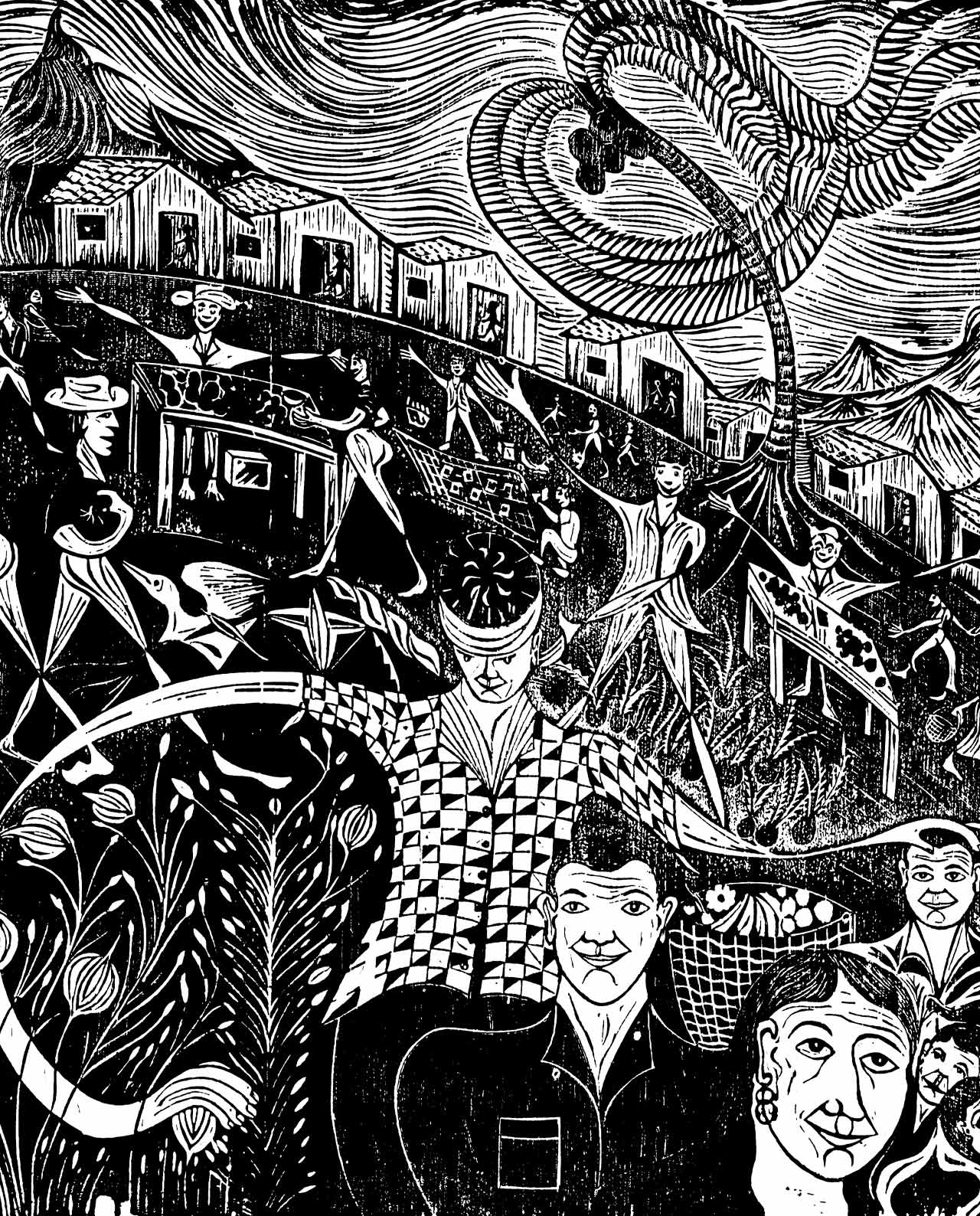
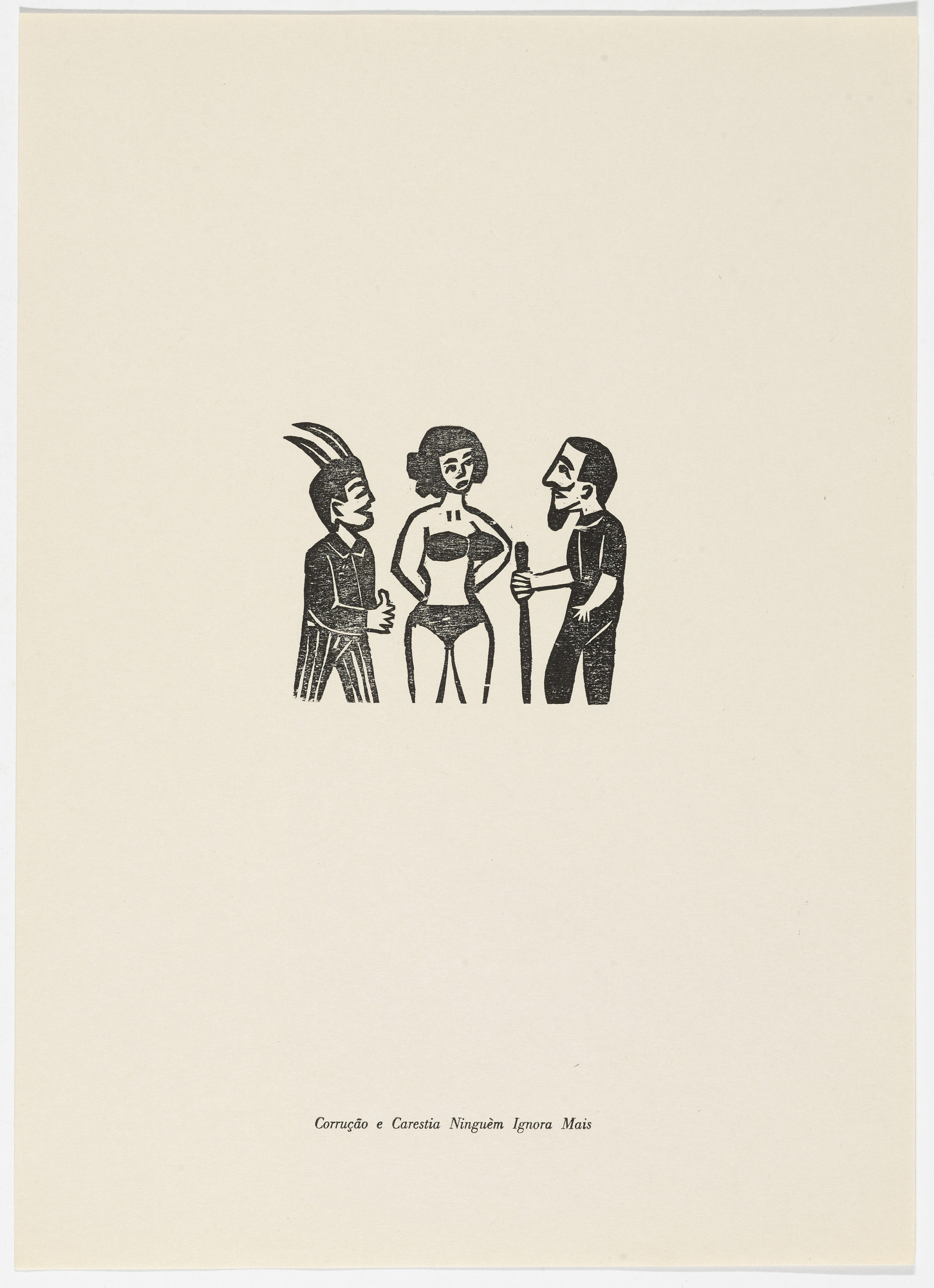
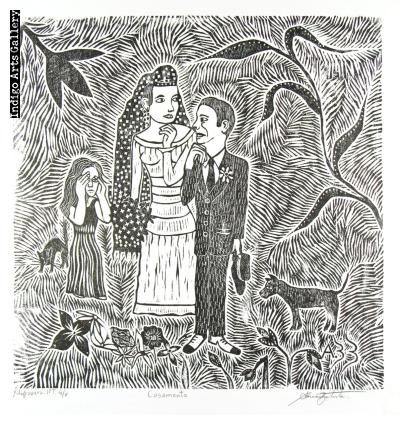
Borges's subjects range from biblical scenes and folk tales to contemporary social commentary. His figures are bold and expressive, characterized by strong outlines and dramatic contrasts between black and white. There's an immediacy to his work that reflects the urgency of the stories he tells—whether depicting the struggles of rural life, celebrating local festivals, or preserving myths that might otherwise be lost to time.

Image from Google Images search. Educational use.
The aesthetic of his xilogravuras is unmistakably Brazilian, yet it speaks to universal themes. His characters possess a raw emotional honesty that transcends cultural boundaries. A mother mourning her child, a worker bent under the weight of labor, a couple dancing at a festa junina—these images carry the weight of lived experience, rendered with the kind of authenticity that can only come from deep cultural roots.
What sets J. Borges apart in the pantheon of Brazilian visual artists is his role as both preserver and innovator of cultural tradition. In a rapidly modernizing Brazil, where globalization threatens to homogenize local cultures, his work serves as a vital link to the past while remaining vibrantly contemporary.

Image from Google Images search. Educational use.
His xilogravuras function on multiple levels: they are works of art, historical documents, and vehicles for storytelling. Through his prints, viewers encounter the Northeast Brazil that exists beyond tourist brochures and media stereotypes—a region of profound cultural richness, where ancient wisdom coexists with modern challenges.
The international recognition of J. Borges's work speaks to the growing appreciation for Brazilian folk art and its sophisticated artistic traditions. His pieces have found their way into collections and exhibitions far from Bezerros, introducing global audiences to the aesthetic and narrative richness of Northeast Brazilian culture. This international presence is particularly significant given the historical marginalization of the Northeast within Brazil's cultural hierarchy, which has traditionally privileged the more economically developed South and Southeast.

Image from Google Images search. Educational use.
Yet Borges has never lost sight of his roots. His success has not led him away from his community but has instead strengthened his commitment to it. He continues to work in Bezerros, training younger artists and ensuring that the tradition of xilogravura remains alive and evolving.
Today, J. Borges stands as one of Brazil's most important folk artists, a master whose influence extends far beyond the boundaries of his medium. His work demonstrates that traditional art forms need not be museum pieces—they can be living, breathing expressions that continue to evolve and speak to new generations.

Image from Google Images search. Educational use.
In an era when digital media dominates visual culture, there's something profoundly moving about Borges's commitment to this ancient craft. Each print bears the physical evidence of human hands at work—the slight irregularities that mark handmade objects, the texture of wood grain, the variations in ink coverage that give each impression its unique character.
His legacy lies not just in the thousands of prints he has created, but in his demonstration that regional art can achieve universal resonance without losing its specific cultural identity. J. Borges has shown that the stories of Bezerros, Pernambuco, are also the stories of humanity—tales of love, loss, struggle, and celebration that speak across all boundaries.
Through his xilogravuras, José Francisco Borges has carved out more than images in wood; he has carved out a space for Northeast Brazilian culture in the global conversation about art and identity. His tools may be simple, but his vision is profound—a reminder that great art often emerges from the deepest roots of cultural tradition.
Fontes:
(1) Itaú Cultural - https://enciclopedia.itaucultural.org.br/pessoa9326/j-borges
(2) Wikipedia - https://pt.wikipedia.org/wiki/J._Borges
Keywords: Brazilian folk art, xilogravura, Northeast Brazil
This article is part of the CASCA Archive, documenting visual artists from Northeast Brazil. Story about José Francisco Borges.