The Master Who Taught a Legend: Amaro Francisco and the Hidden Roots of Brazilian Woodcut Art
Picture this scene from around 1972: In the small city of Escada, nestled in the agreste region of Pernambuco, an established cordel seller and woodcut artist named Amaro Francisco encounters his former student.
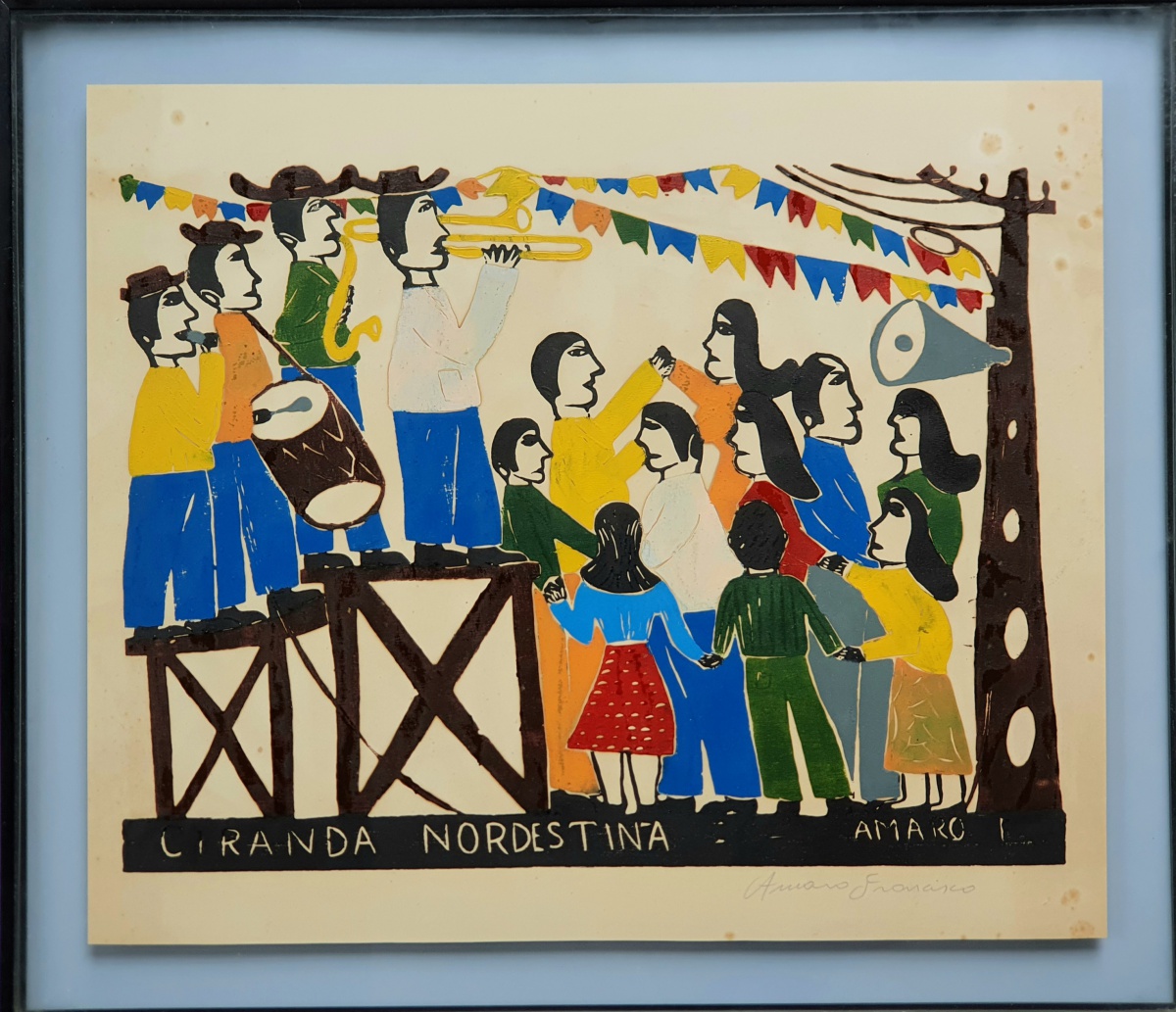
In the rich tapestry of Brazilian folk art, some threads shine brighter than others, while equally important ones remain hidden in the shadows. The story of Amaro Francisco is one of those hidden threads—a master xilogravura artist from Pernambuco whose name may not echo through galleries and museums, but whose influence reverberates through one of Brazil's most celebrated woodcut artists: J. Borges.
Picture this scene from around 1972: In the small city of Escada, nestled in the agreste region of Pernambuco, an established cordel seller and woodcut artist named Amaro Francisco encounters his former student. J. Borges arrives looking transformed—wearing a nice hat, good shoes, fine clothes, carrying a bag at his side. The older master, perhaps with a mix of curiosity and paternal pride, jokes: "Hey man, did your situation improve? Did you win the lottery?" Borges responds with excitement: "Nothing like that, man, I'm into something else now." He had been selling cordel literature for twenty years at the local fair, but this time he appeared with what he called "this woodcut thing."
This moment, captured in academic records from the Federal University of Pernambuco, offers us a rare glimpse into the transmission of artistic knowledge in Northeast Brazil—a region where cultural traditions pass from master to apprentice through informal networks that often go undocumented by official art history.
Amaro Francisco represents a phenomenon common in Brazilian folk art: the master craftsman whose legacy lives primarily through his students rather than through personal fame. Working in the tradition of xilogravura—the distinctive Brazilian form of woodcut printing that emerged in the Northeast—Francisco operated within the vibrant ecosystem of cordel literature that has defined popular culture in the region for over a century.
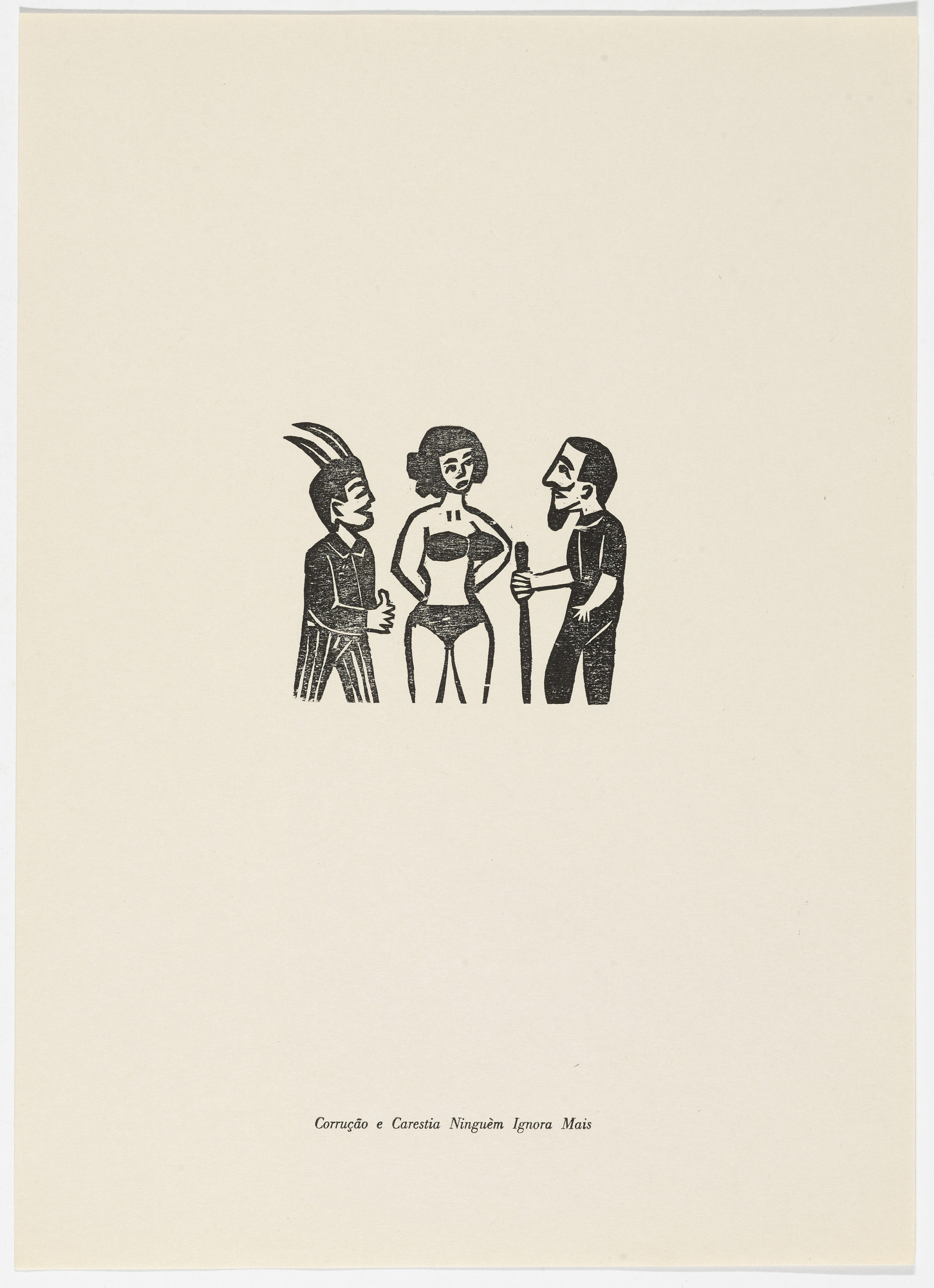
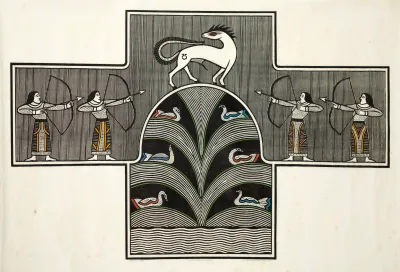
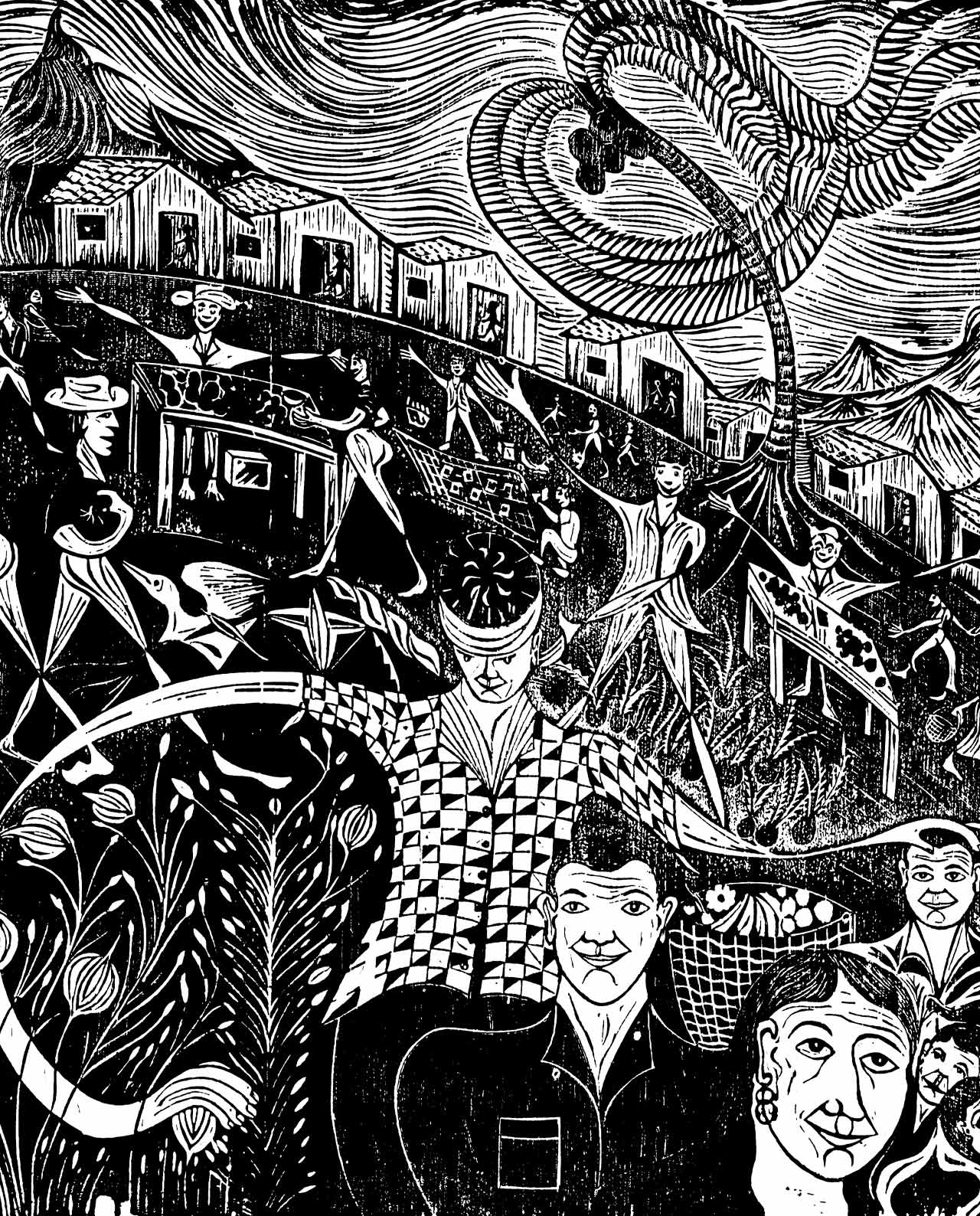
In the world of cordel, xilogravura serves as both illustration and advertisement. These small-format woodcut prints, carved into blocks of umburana wood—the preferred medium of Northeastern engravers and saint carvers—tell stories of love, adventure, politics, and folklore. The images are bold, expressive, and immediate, designed to catch the eye of potential buyers browsing the literature hanging from strings (cordéis) at local fairs and markets.

Verified via Claude Vision. Educational use.
Francisco's workshop in Escada became a crucial node in this cultural network. Here, the techniques of carving, printing, and storytelling were passed down through direct observation and practice. The relationship between master and student in this tradition extends beyond mere technical instruction—it encompasses an entire worldview about art's role in community life, the importance of accessible storytelling, and the dignity of manual craftsmanship.
The significance of Amaro Francisco's teaching becomes clear when we consider the trajectory of his most famous student. J. Borges, born in nearby Bezerros, would go on to become one of Brazil's most internationally recognized folk artists. His woodcuts have been exhibited in galleries worldwide, his works collected by major museums, and his techniques studied by art historians across the globe.
But in 1972, when Borges returned to visit his old master, he was still discovering the potential of xilogravura as an independent art form. The "woodcut thing" he mentioned to Francisco represented a pivotal moment in Brazilian folk art—the recognition that these prints, originally created as illustrations for cordel literature, possessed their own artistic merit and market value.
This transformation didn't happen in isolation. The early 1970s marked a period when Brazilian popular culture was gaining new appreciation both domestically and internationally. Artists like Ivan Marqueti and José Maria de Souza were traveling from Rio de Janeiro to the Northeast, seeking out authentic expressions of Brazilian visual culture. This external validation helped create new opportunities for artists like Borges, who could suddenly imagine their work reaching audiences far beyond the local feira.

Verified via Claude Vision. Educational use.
Today, the tradition that Amaro Francisco helped nurture continues to evolve. Contemporary workshops in cities like Porto Alegre offer instruction in Northeastern xilogravura techniques, teaching students to carve umburana wood and create prints in the distinctive style developed in Pernambuco. These workshops, led by experienced practitioners, maintain the pedagogical approach that Francisco would have recognized—hands-on learning that covers the entire process from initial drawing to final print.
The enduring appeal of this art form lies in its accessibility and directness. Unlike academic art traditions that require formal training and expensive materials, xilogravura can be learned through apprenticeship and practiced with relatively simple tools. This democratic quality has allowed it to serve as a vehicle for storytelling and cultural expression across generations of Northeastern artists.
Yet the example of Amaro Francisco also reminds us of the countless unnamed masters who have shaped Brazilian culture. In a society that often privileges formal education and urban sophistication, the knowledge held by rural craftsmen and folk artists can be overlooked or undervalued. Francisco's story, glimpsed through the testimony of his famous student, suggests the depth of artistic wisdom that exists within these informal networks of cultural transmission.
Amaro Francisco may not have galleries dedicated to his work or monographs analyzing his artistic development, but his influence on Brazilian art is undeniable. Through his teaching, he helped shape not only J. Borges but likely numerous other artists whose names remain unknown to art history. His legacy lives in every umburana block carved by his students, in every bold line that captures the spirit of Northeastern storytelling, and in the continued vitality of xilogravura as a living tradition.
In the end, Francisco's story reminds us that artistic greatness often lies not in individual achievement but in the generous sharing of knowledge and technique. In the small city of Escada, an unsung master quietly changed the course of Brazilian art, one student at a time.
Fontes:
(1) Universidade Federal de Pernambuco - https://periodicos.ufpe.br/revistas/CARTEMA/article/viewFile/251701/39306
(2) instagram.com - https://www.instagram.com/p/DOeujS6DEpv/
(3) Wikipedia - https://en.wikipedia.org/wiki/Jos%C3%A9_Francisco_Borges
Imagem de capa: Verified via Claude Vision. Educational use.
This article is part of the CASCA Archive, documenting visual artists from Northeast Brazil. Story about Amaro Francisco.