The Mystical Universe of Gilvan Samico
In the bustling cultural landscape of mid-20th century Brazil, few artists managed to capture the mystical essence of Northeast Brazilian folklore with the precision and poetry of Gilvan Samico.
In the bustling cultural landscape of mid-20th century Brazil, few artists managed to capture the mystical essence of Northeast Brazilian folklore with the precision and poetry of Gilvan Samico. Born in Recife, Pernambuco in 1928, Samico would become one of Brazil's most celebrated masters of xilogravura (woodcut), creating a visual language that bridged the gap between traditional popular culture and contemporary fine art.
Samico's journey began in the vibrant artistic community of Recife during the 1950s, a period of cultural renaissance in Northeast Brazil. In 1952, at just 24 years old, he co-founded the Collective Atelier of the Society of Modern Art of Recife (SAMR) alongside other emerging artists, under the visionary leadership of engraver Abelardo da Hora. This collective would become a crucial incubator for a new generation of Brazilian artists who sought to create a distinctly national artistic identity, one that honored regional traditions while engaging with modernist innovations.
The formation of SAMR represented more than just an artistic collaboration; it was a cultural statement. At a time when Brazilian art was still heavily influenced by European models, these young artists from the Northeast were determined to forge their own path, drawing inspiration from the rich folkloric traditions, popular festivals, and mystical beliefs that permeated their region. For Samico, this meant diving deep into the world of cordel literature, religious processions, and the magical realism that colored everyday life in Pernambuco.
Samico's artistic evolution took a decisive turn in 1957 when he traveled to São Paulo to study xilogravura with Lívio Abramo at the School of Craftsmanship of the Museum of Modern Art. This apprenticeship was transformative, not just technically but philosophically. Under Abramo's guidance, Samico learned to see woodcut not merely as a printmaking technique, but as a medium capable of extraordinary expressive power.

Image from Google Images search. Educational use.
The following year, in 1958, Samico continued his artistic education in Rio de Janeiro, studying engraving with the legendary Oswaldo Goeldi. This period of intensive learning equipped him with the technical mastery that would become the foundation of his distinctive style. However, what set Samico apart was not just his technical skill, but his ability to infuse the ancient technique of woodcut with the spiritual and mythological richness of Northeast Brazilian culture.
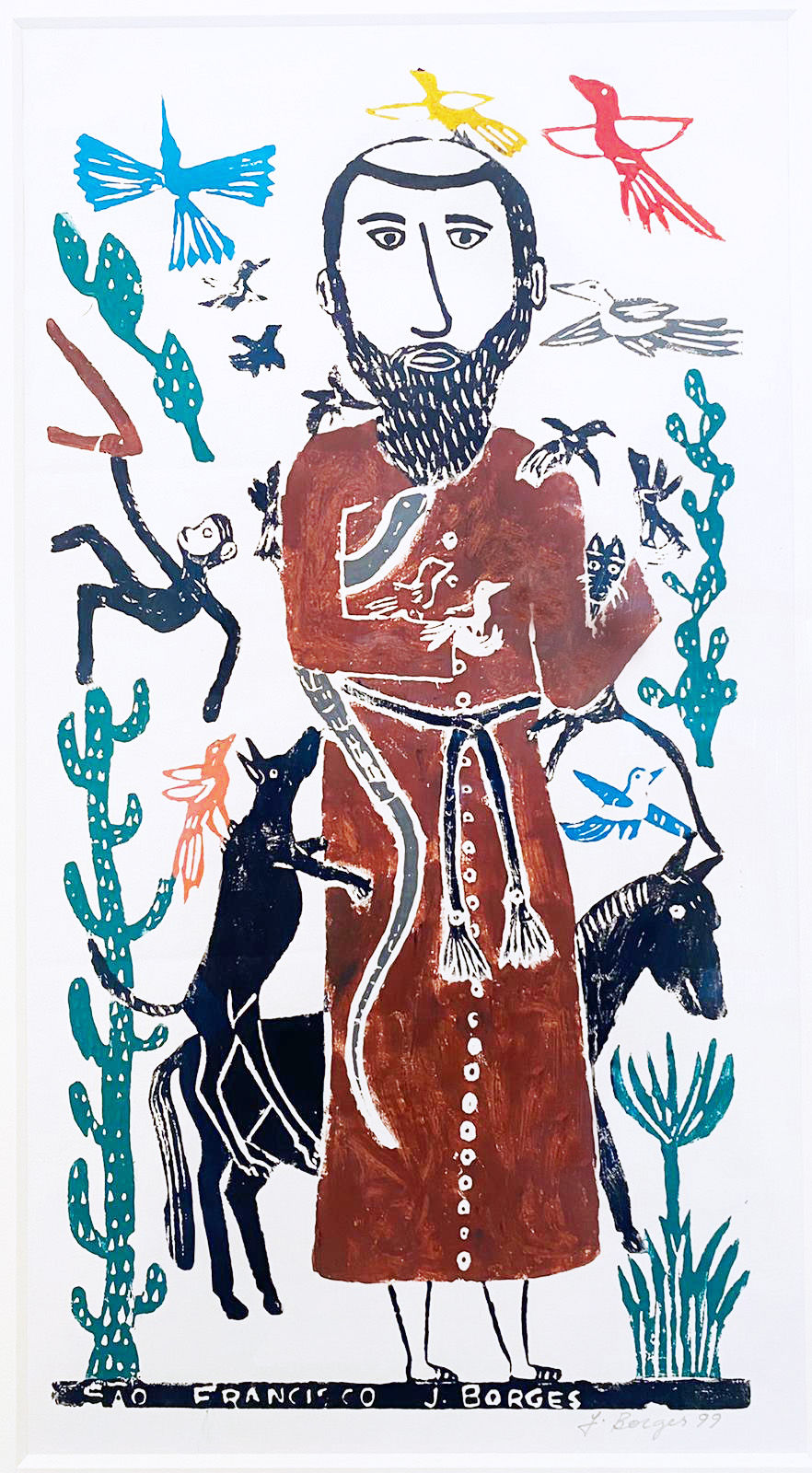
Xilogravura, originally brought to Brazil by European colonizers, found new life in Samico's hands. He transformed this imported technique into a vehicle for expressing the most authentic aspects of Brazilian popular culture. His woodcuts became windows into a world populated by mythical creatures, religious figures, and folkloric characters that seemed to emerge from the collective unconscious of the Northeast.
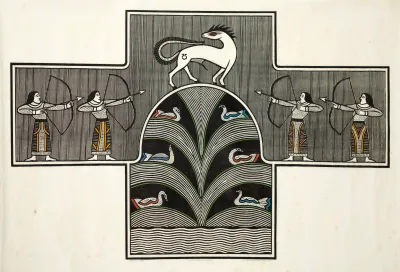
What made Samico's work revolutionary was his ability to create a personal iconography that was simultaneously deeply rooted in local tradition and universally compelling. His compositions often featured fantastical birds, mysterious human figures, and intricate patterns that seemed to pulse with life. These weren't mere illustrations of folklore; they were visual manifestations of the spiritual dimension of Northeast Brazilian culture.

Image from Google Images search. Educational use.
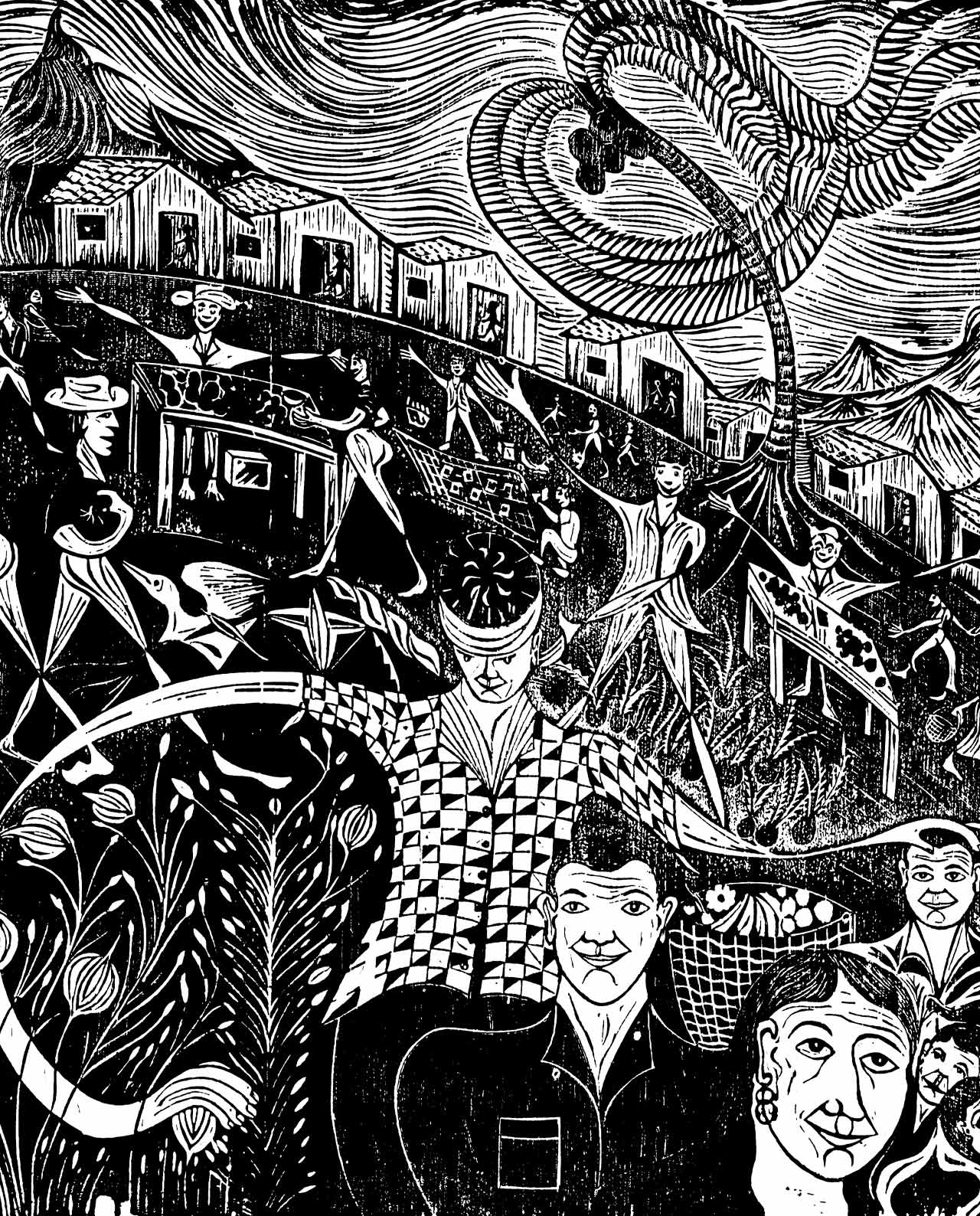
Samico's artistic practice was characterized by meticulous attention to detail and a profound understanding of the symbolic power of images. Each line carved into wood was deliberate, each figure carefully positioned to create compositions that functioned as visual narratives. His works often depicted scenes that could have been drawn from cordel literature – those popular booklets sold at markets throughout the Northeast, filled with stories of love, adventure, and supernatural encounters.
The artist's commitment to his craft extended beyond the studio. As a teacher, Samico played a crucial role in transmitting both the technical knowledge and cultural significance of xilogravura to new generations of artists. His pedagogical work ensured that this traditional art form would continue to evolve and find new expressions in contemporary Brazilian art.
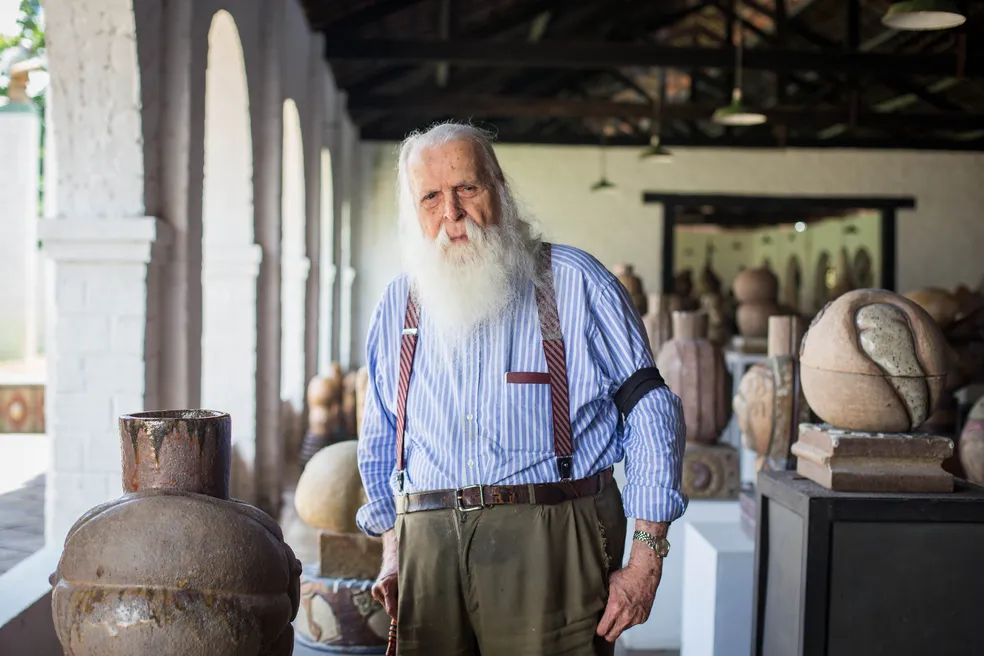
Throughout his career, which spanned over five decades until his death in Recife in 2013, Samico remained steadfastly committed to his vision of art as a bridge between popular and erudite culture. His work gained recognition not only in Brazil but internationally, introducing global audiences to the rich visual traditions of Northeast Brazil.

Image from Google Images search. Educational use.
Samico's influence extended far beyond the realm of fine art. His imagery became part of the visual vocabulary of Brazilian culture, appearing in book illustrations, album covers, and cultural productions that sought to capture the essence of Northeast Brazilian identity. His work demonstrated that regional art could speak to universal themes while maintaining its specific cultural character.
The artist's dedication to xilogravura also helped elevate the status of this medium within the Brazilian art world. What had often been dismissed as mere craft or popular art gained recognition as a sophisticated form of artistic expression capable of profound aesthetic and cultural significance.
Gilvan Samico's legacy lies not just in the beautiful works he created, but in his demonstration that authentic artistic expression emerges from deep engagement with one's cultural roots. His xilogravuras continue to captivate viewers with their mysterious beauty and their ability to transport us into the magical realm of Northeast Brazilian folklore.

Image from Google Images search. Educational use.
In an era of globalization and cultural homogenization, Samico's work reminds us of the power of regional traditions to speak to universal human experiences. His mystical birds still soar across gallery walls, his enigmatic figures still whisper stories of love and transformation, and his intricate patterns still reveal the hidden connections between the visible and invisible worlds.
Through his mastery of xilogravura, Gilvan Samico created more than art – he created a visual mythology that continues to enrich our understanding of Brazilian culture and the enduring power of traditional artistic practices in contemporary expression.
Fontes:
(1) escritoriodearte.com - https://www.escritoriodearte.com/artista/gilvan-samico
(2) art.blombo.com - https://art.blombo.com/artists/gilvan-samico
(3) escritoriodearte.com - https://www.escritoriodearte.com/en/artista/gilvan-samico
Imagem de capa: Image from Google Images search. Educational use.
This article is part of the CASCA Archive, documenting visual artists from Northeast Brazil. Story about Gilvan Samico.