The Sacred Wood: Mestre Noza and the Soul of Northeast Brazilian Folk Art
In 1912, a fifteen-year-old boy named Inocêncio da Costa Nick embarked on a pilgrimage that would forever change the landscape of Brazilian folk art.
In 1912, a fifteen-year-old boy named Inocêncio da Costa Nick embarked on a pilgrimage that would forever change the landscape of Brazilian folk art. Walking barefoot from Crato to Juazeiro do Norte in Ceará, this young man from Taquaritinga do Norte, Pernambuco, carried with him nothing but faith and an innate artistic sensibility that would eventually earn him recognition as Mestre Noza, one of Northeast Brazil's most revered masters of xilogravura (woodcut printing) and religious sculpture.
Born in September 1897 in the small town of Taquaritinga do Norte, Inocêncio would later adopt the artistic name "Mestre Noza," becoming a bridge between the sacred and secular worlds of Brazilian popular art. His story embodies the rich cultural tapestry of the Northeast, where religious devotion, folk traditions, and artistic expression interweave to create something uniquely Brazilian.
Juazeiro do Norte in the early 20th century was a city pulsing with religious fervor and artistic activity. It was here that young Inocêncio's artistic destiny would unfold, thanks to a fortuitous encounter with European craftsmanship. When an Italian artist named Agostini arrived in town, contracted to sculpt the doors of the Igreja da Matriz (Main Church), he established an atelier that would become a crucible for local artistic talent.
This workshop became Mestre Noza's artistic university. Throughout the 1920s, he studied alongside other aspiring artists, learning the ancient arts of wood carving and engraving. Under Agostini's guidance, Noza absorbed European techniques while maintaining his deep connection to Northeast Brazilian folk traditions and religious imagery.
The influence of this multicultural artistic environment cannot be overstated. Here, Renaissance sculpting techniques met the raw spiritual energy of Brazilian popular religion, creating a unique synthesis that would define Mestre Noza's artistic voice. His early works already demonstrated the profound religiosity that would characterize his entire career, beginning with the creation of sacred images and religious sculptures.
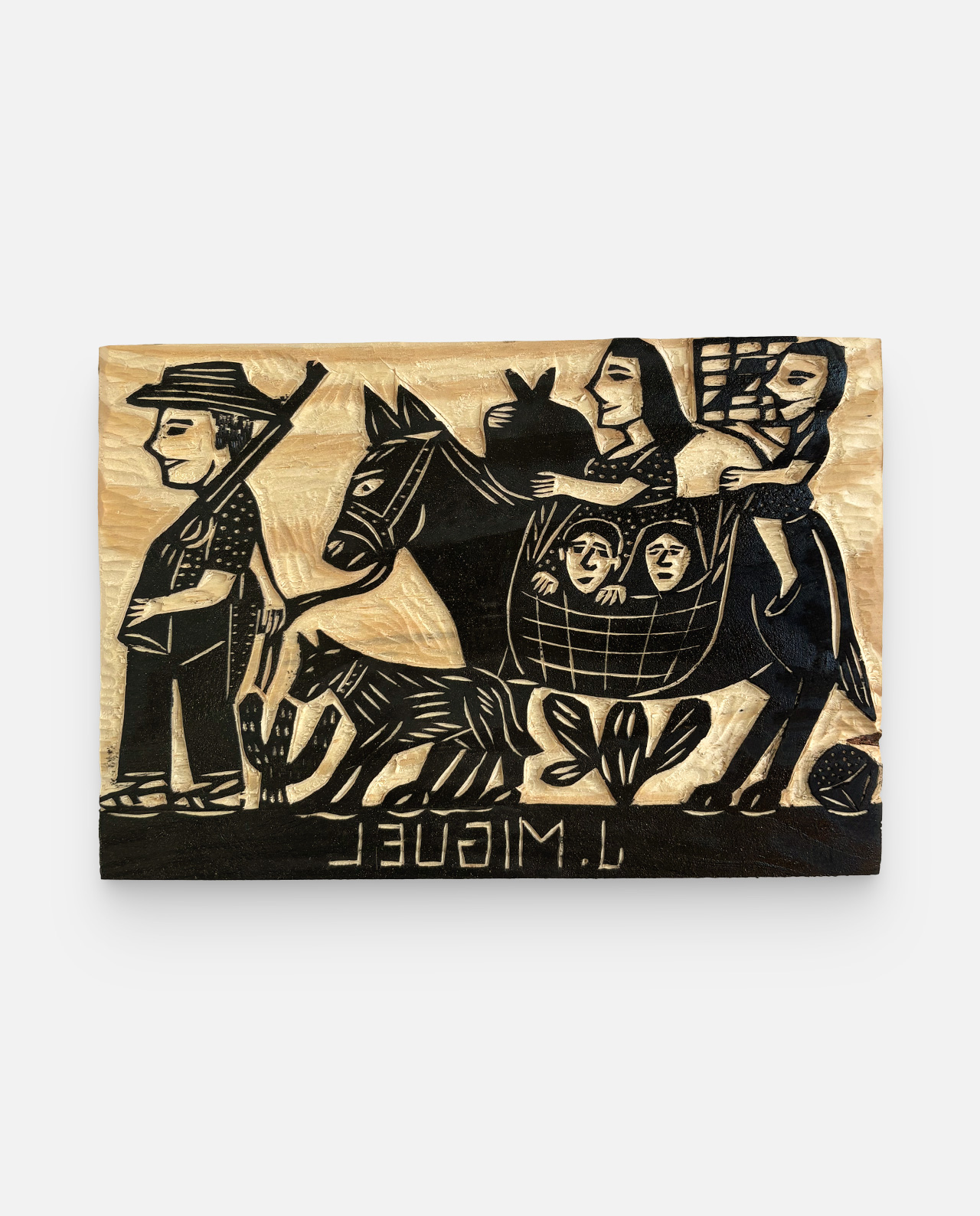
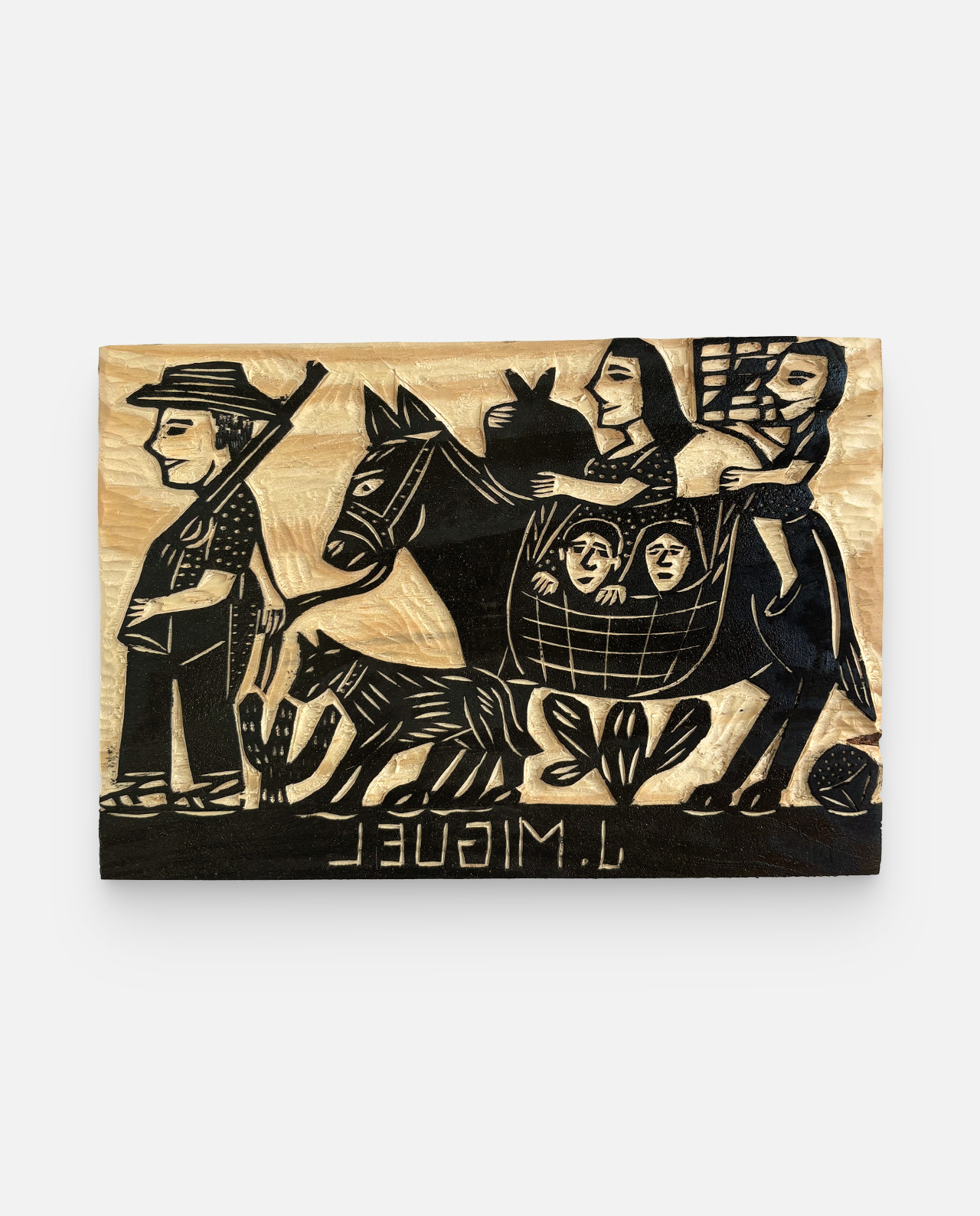
Mestre Noza's artistic practice encompassed multiple disciplines, but he is perhaps best known for his masterful xilogravuras. Initially, his commercial work included creating labels for cachaça (sugarcane liquor) brands, a common practice among Northeast Brazilian woodcut artists who needed to support their more artistic endeavors through commercial commissions.

Verified via Claude Vision. Educational use.
However, it was in his religious and narrative works that Mestre Noza truly excelled. His deep faith, nurtured during his pilgrimage years earlier, infused his sacred sculptures with an authenticity that resonated powerfully with the faithful. As a santeiro (maker of saint images), he created devotional objects that served not merely as art pieces but as conduits for spiritual connection.
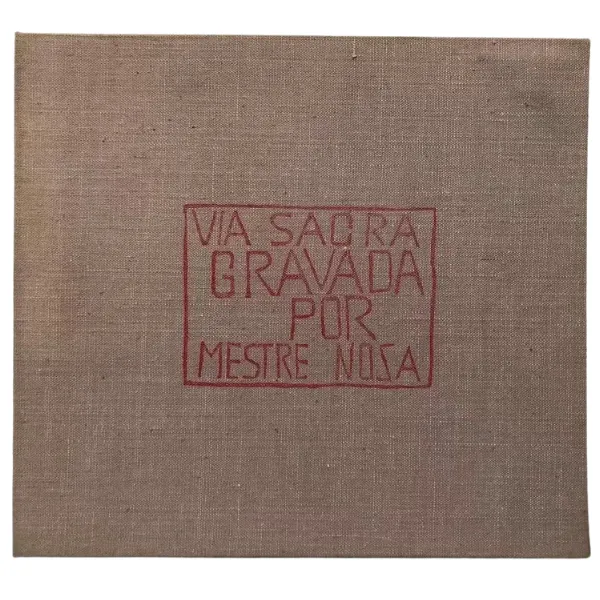
The 1960s marked a pivotal period in Mestre Noza's career with the creation of two seminal xilogravura series: "Vida de Lampião" (Life of Lampião) and "Os Doze Apóstolos" (The Twelve Apostles). These works demonstrated his remarkable ability to move between the sacred and the profane, capturing both the legendary bandit Lampião—a folk hero of the Northeast—and the Christian apostles with equal skill and reverence.
The "Vida de Lampião" series particularly showcased Mestre Noza's understanding of Northeast Brazilian culture. Lampião, the most famous cangaceiro (bandit) of the region, represented a complex figure in popular imagination—simultaneously outlaw and folk hero, feared and admired. Through his woodcuts, Mestre Noza contributed to the mythologization of this controversial figure, creating images that would become iconic representations of Northeast Brazilian identity.
Xilogravura holds a special place in Northeast Brazilian culture, serving as both an artistic medium and a form of popular communication. Traditionally used to illustrate literatura de cordel (string literature)—the region's distinctive form of narrative poetry—woodcut prints made stories accessible to largely illiterate populations through powerful visual imagery.
Mestre Noza elevated this folk art form, bringing sophisticated technique and profound spiritual insight to a medium often dismissed as merely decorative. His works demonstrate the potential of xilogravura to serve as high art while maintaining its roots in popular culture. The bold lines, dramatic contrasts, and expressive figures characteristic of his style reflect both the harsh beauty of the Northeast landscape and the intense spirituality of its people.

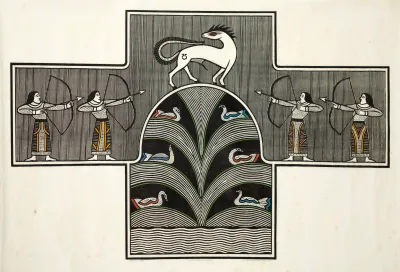
Verified via Claude Vision. Educational use.
His religious sculptures, meanwhile, served the practical needs of a devoutly Catholic population while achieving remarkable artistic merit. These pieces were not museum artifacts but living objects of devotion, used in homes and churches throughout the region. In this way, Mestre Noza's art remained connected to the daily lives and spiritual practices of ordinary people.
Mestre Noza's artistic journey from Pernambuco to Ceará, and eventually to São Paulo where he died in 1983, mirrors the broader migration patterns of Northeast Brazilians seeking opportunity in the country's industrial centers. Yet throughout his travels, he remained faithful to the cultural traditions of his homeland, serving as an ambassador for Northeast Brazilian folk art.
His work gained recognition beyond regional boundaries, contributing to a broader appreciation of Brazilian popular art. The fact that his series were later published and distributed widely speaks to their enduring appeal and cultural significance. Through his art, Mestre Noza helped establish xilogravura as a legitimate artistic medium worthy of serious study and collection.
Today, Mestre Noza's legacy lives on in the countless artists he influenced and in the continued vitality of Northeast Brazilian folk art. His life story—from teenage pilgrim to master artist—embodies the transformative power of dedication, faith, and cultural pride. In a rapidly modernizing Brazil, his work serves as a reminder of the enduring value of traditional artistic practices and the spiritual dimensions of creative expression.
Mestre Noza proved that art rooted in folk tradition could achieve universal significance without losing its authentic voice. His sacred wood continues to speak to new generations, carrying forward the stories, beliefs, and artistic traditions of Northeast Brazil.
Fontes:
(1) blombo.com - https://blombo.com/artistas/mestre-noza/?srsltid=AfmBOooqqj0SACKUshGU-pV_PTztQdf9vXunFqzlWOa5YBIxblnvR_Tp
(2) blog.bbm.usp.br - https://blog.bbm.usp.br/2018/o-entalhe-do-nordeste-mestre-noza-e-a-xilogravura-popular/
(3) escritoriodearte.com - https://www.escritoriodearte.com/artista/mestre-noza
Keywords: Mestre Noza, xilogravura, Brazilian folk art, Northeast Brazil, religious sculpture
Imagem de capa: Source: blombo.com. Credibility: 0.7.
This article is part of the CASCA Archive, documenting visual artists from Northeast Brazil. Story about Mestre Noza.