The Visionary Carver: Stênio Diniz and the Renaissance of Northeastern Xilogravura
At the center of this transformation stands Mestre Stênio Diniz, an artist whose intricate carvings have earned comparisons to Van Gogh's post-impressionist paintings and Max Ernst's surrealist canvases.
In the sun-baked landscape of Ceará, where the Atlantic meets the Brazilian Northeast's rich cultural tapestry, a quiet revolution has been taking place in the world of xilogravura—the traditional art of woodcut printing that has defined popular Brazilian art for generations. At the center of this transformation stands Mestre Stênio Diniz, an artist whose intricate carvings have earned comparisons to Van Gogh's post-impressionist paintings and Max Ernst's surrealist canvases.
While many associate xilogravura with the rustic literatura de cordel booklets sold at northeastern markets, Diniz has elevated this humble craft into something approaching fine art, proving that tradition and innovation need not be mutually exclusive. His work represents a bridge between the ancestral knowledge of Cariri's artisans and contemporary artistic expression, creating pieces that speak to both local communities and international art collectors.
Stênio Diniz emerged from the Cariri region of Ceará, a area renowned for its rich cultural heritage and artistic traditions. The Cariri, with its unique geological formations and deep-rooted folk customs, has long been a cradle of northeastern popular art. Here, where the landscape shifts between caatinga scrubland and dramatic rock formations, artistic expression has always been intertwined with daily life and spiritual practice.
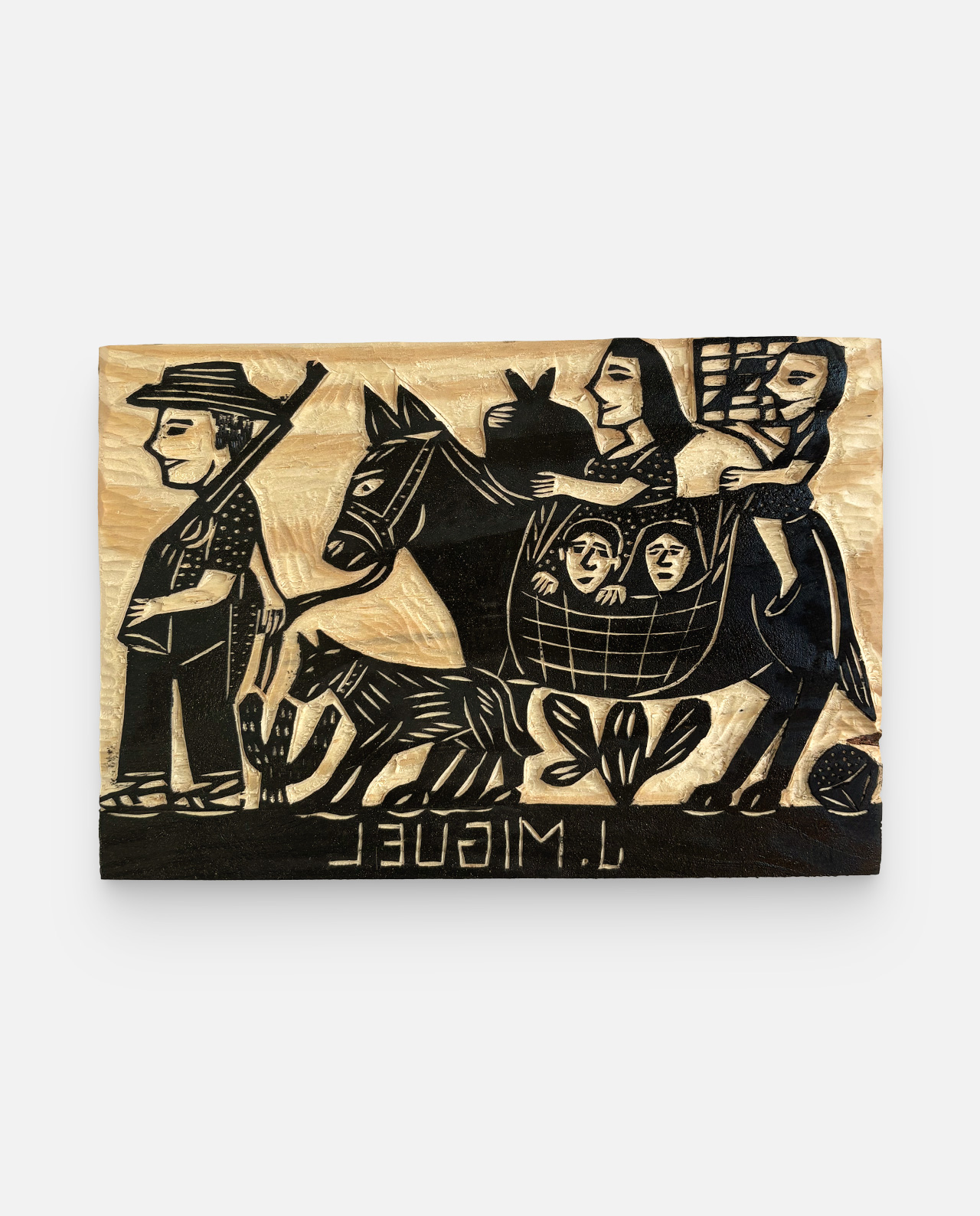
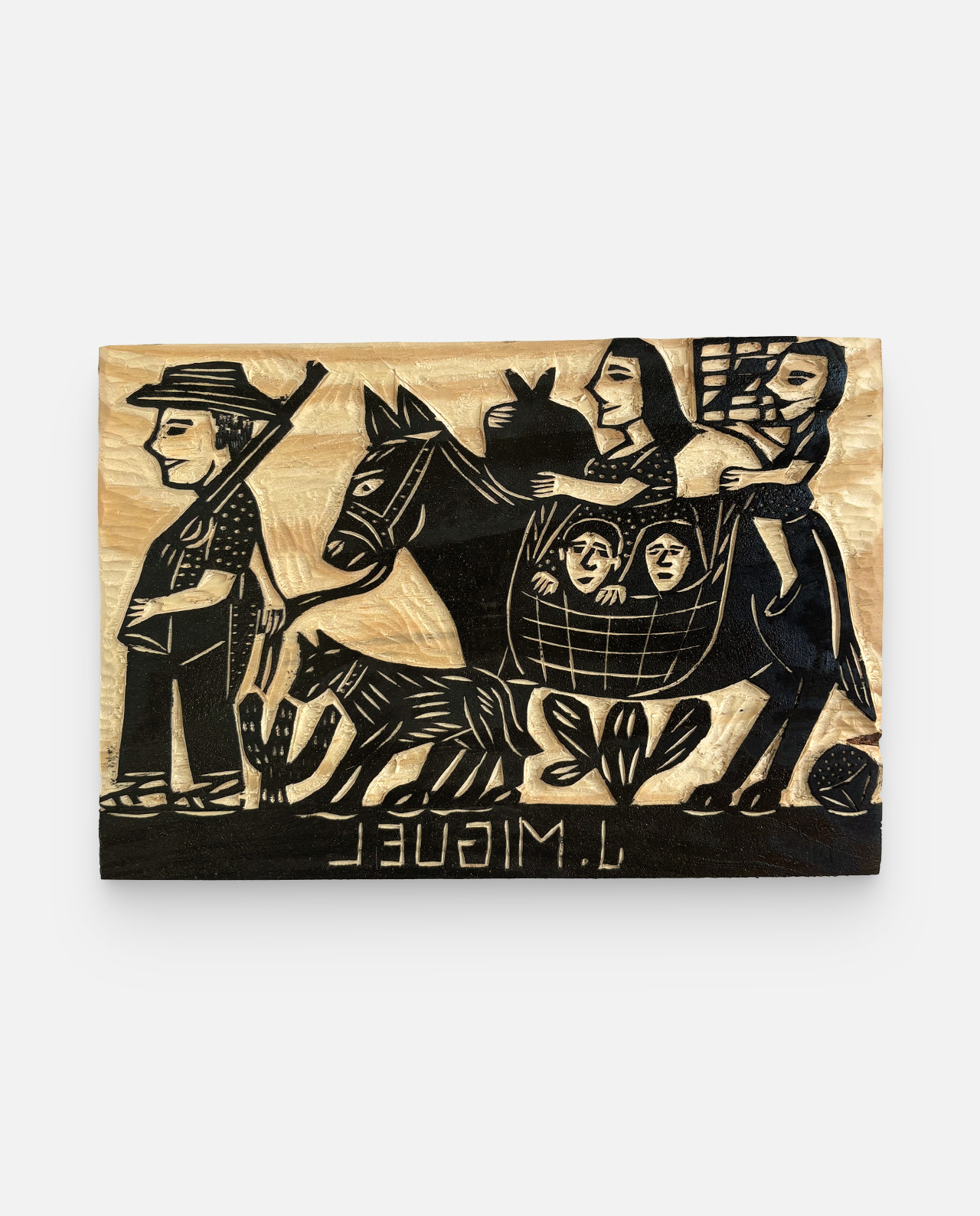
The tradition of xilogravura in Northeast Brazil dates back to the 19th century, initially serving as illustrations for cordel literature—narrative poems printed on inexpensive paper and sold at markets and fairs. These woodcuts were functional art, designed to catch the eye of potential readers with bold, simple images that told stories of love, heroism, and folklore. What Diniz brought to this tradition was an unprecedented level of detail and artistic sophistication that transformed xilogravura from commercial illustration into gallery-worthy art.
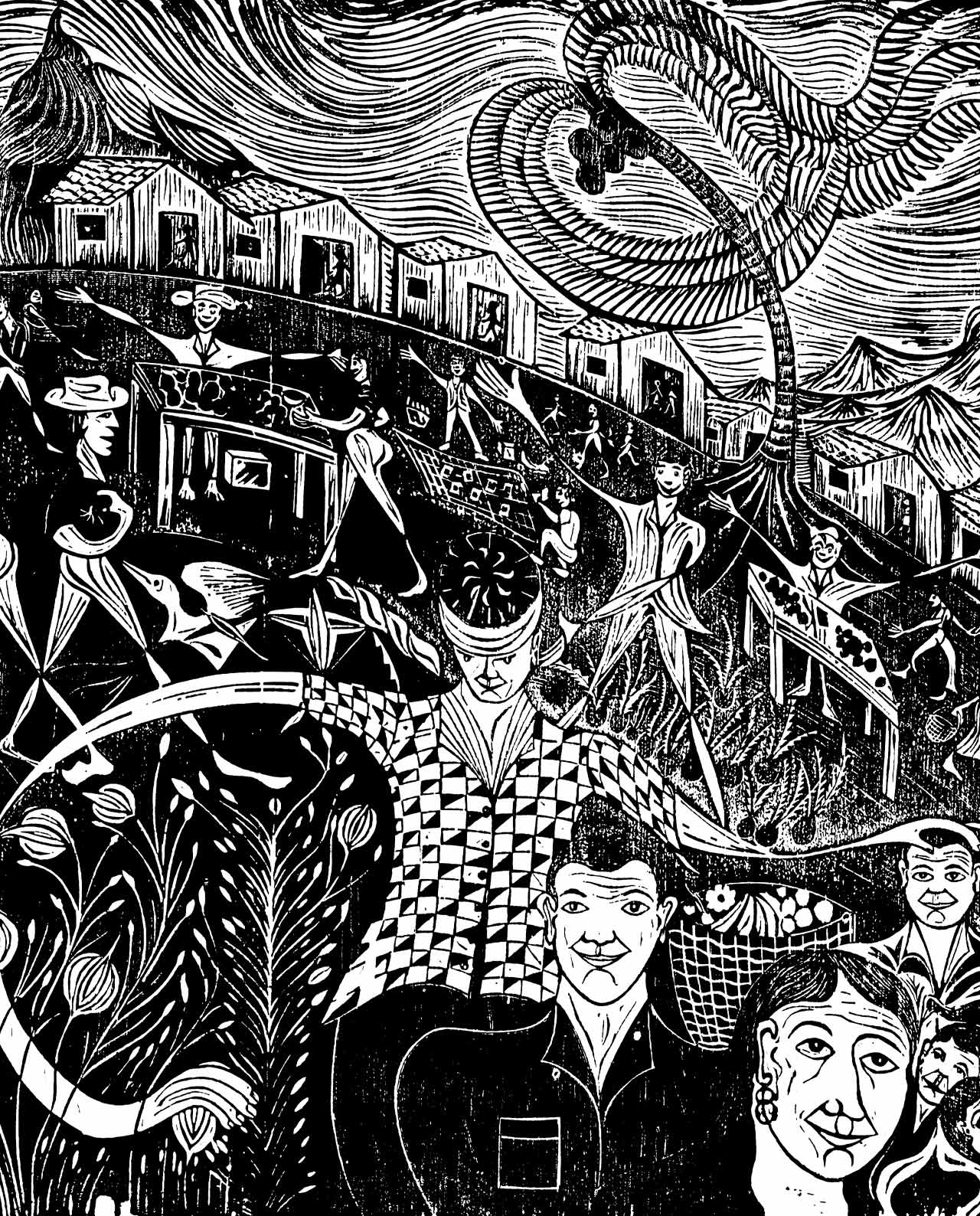
Diniz's approach to xilogravura is characterized by an extraordinary attention to detail that sets his work apart from traditional practitioners. Where conventional cordel illustrations rely on bold, simplified forms, Diniz creates intricate compositions that reward close examination. His woodblocks become canvases for complex narratives, filled with symbolic elements and visual textures that reveal new meanings with each viewing.
The comparison to Van Gogh is not merely hyperbolic—there is something in Diniz's handling of line and pattern that echoes the Dutch master's dynamic brushstrokes. Both artists share an ability to infuse their work with movement and emotion through the manipulation of their chosen medium. Where Van Gogh achieved this through paint, Diniz accomplishes it through the careful carving of wood, creating prints that seem to vibrate with life and energy.

Verified via Claude Vision. Educational use.
Similarly, the references to Max Ernst speak to Diniz's ability to create dreamlike, surreal compositions that challenge viewers' perceptions. His prints often feature fantastical elements and unexpected juxtapositions that transform familiar northeastern imagery into something otherworldly yet deeply rooted in regional culture.
Perhaps equally important as his artistic production is Diniz's role as an educator and cultural transmitter. The recent xilogravura workshop he conducted in Quixadá exemplifies his commitment to passing on traditional techniques to new generations. This educational aspect of his practice ensures that the knowledge accumulated over generations of northeastern artisans continues to evolve rather than simply being preserved as a museum piece.
The workshop results, displayed alongside his own work in recent exhibitions, demonstrate the reach of his formative influence. Students' pieces show not only technical proficiency but also an understanding of xilogravura as a living, breathing art form capable of expressing contemporary concerns while maintaining its cultural roots.
This teaching role positions Diniz within a long tradition of mestre-artisans in Brazilian popular culture—figures who serve not only as artists but as keepers and transmitters of cultural knowledge. In a rapidly globalizing world where traditional crafts often struggle to maintain relevance, Diniz's approach offers a model for how ancient techniques can remain vital and meaningful.
The recognition of Diniz's work by cultural institutions in Ceará reflects a broader acknowledgment of popular art's importance within Brazilian cultural identity. Recent exhibitions celebrating his legacy demonstrate how xilogravura has transcended its origins as commercial art to become recognized as a legitimate artistic medium worthy of institutional support and scholarly attention.

Verified via Claude Vision. Educational use.
This institutional recognition is significant not only for Diniz personally but for the entire tradition of northeastern popular art. When galleries and cultural centers present xilogravura alongside other art forms, they validate the artistic worth of practices that have often been marginalized as "craft" rather than "fine art." Diniz's detailed, sophisticated approach to the medium has played a crucial role in this elevation.
What makes Stênio Diniz's contribution to Brazilian art particularly significant is his demonstration that traditional forms need not be static to remain authentic. His work proves that xilogravura can evolve and grow while maintaining its essential character and cultural significance. By pushing the boundaries of what's possible within the medium, he has opened new possibilities for future generations of artists.
In an era when globalization threatens to homogenize cultural expression, artists like Diniz represent something precious: the ability to honor tradition while embracing innovation. His detailed, sophisticated xilogravuras stand as testament to the enduring power of regional artistic traditions to speak to universal human experiences.
Through his art and teaching, Mestre Stênio Diniz ensures that the ancient craft of xilogravura remains not just alive but thriving, continuing to evolve as it has for generations while maintaining its deep roots in northeastern Brazilian soil. His legacy lies not only in the beautiful prints he creates but in the knowledge he passes on, guaranteeing that this remarkable tradition will continue to transform and inspire for generations to come.
Fontes:
(1) secult.ce.gov.br - https://www.secult.ce.gov.br/2025/11/26/exposicao-celebra-legado-de-mestre-stenio-diniz-na-casa-de-saberes-cego-aderaldo/
(2) instagram.com - https://www.instagram.com/p/CplybCMLuAs/?hl=en
(3) instagram.com - https://www.instagram.com/reel/DSSyN4Yl3b_/
Keywords: xilogravura, Brazilian popular art, Ceará, Northeast Brazil
Imagem de capa: Verified via Claude Vision. Educational use.
This article is part of the CASCA Archive, documenting visual artists from Northeast Brazil. Story about Stênio Diniz.