The Woodcut Legacy: J. Miguel's Journey from Apprentice to Master
In the dusty streets of Bezerros, Pernambuco, where the scent of wood shavings mingles with the arid air of Brazil's Northeast, a young man named José Miguel da Silva picked up his first carving knife.
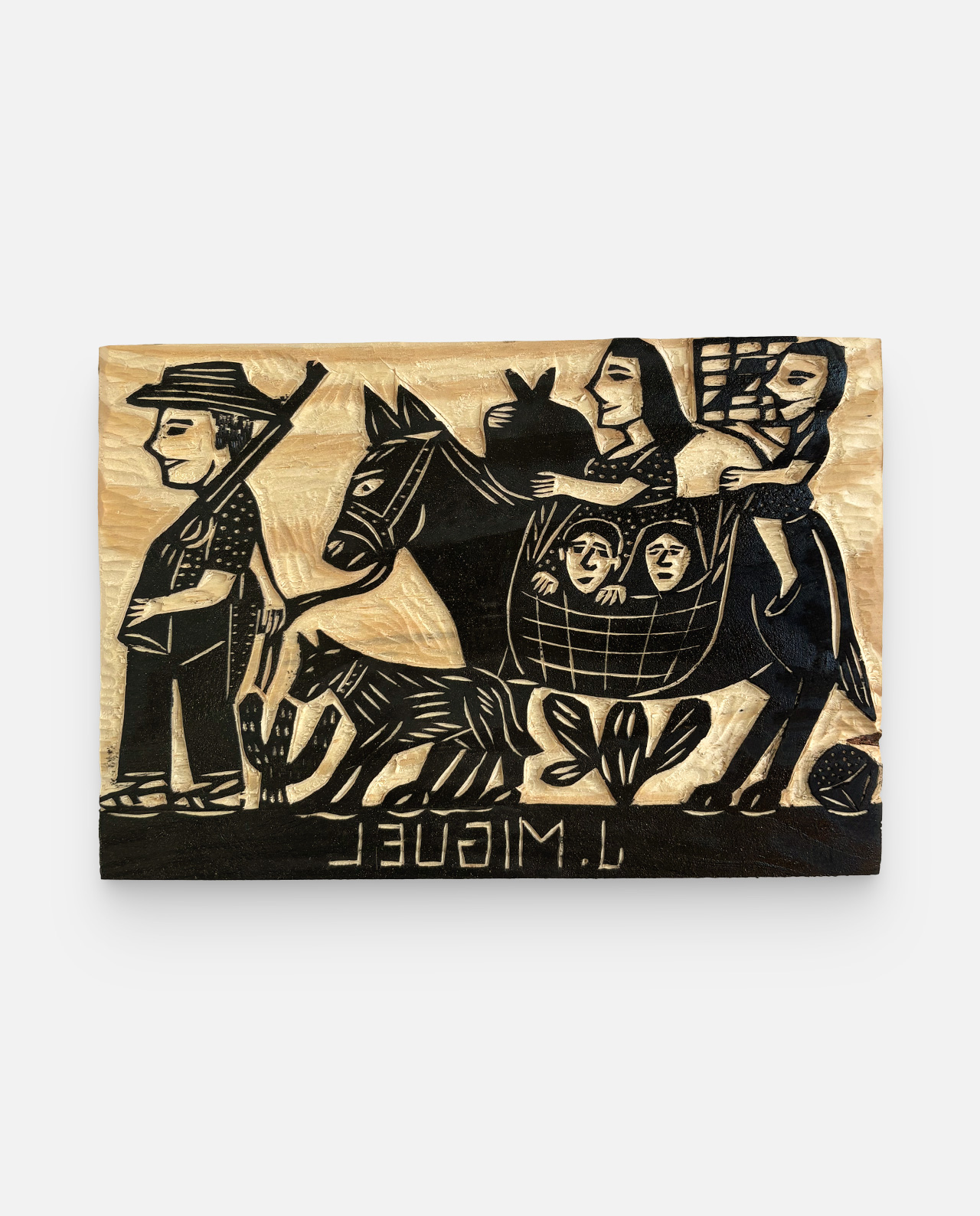
In the dusty streets of Bezerros, Pernambuco, where the scent of wood shavings mingles with the arid air of Brazil's Northeast, a young man named José Miguel da Silva picked up his first carving knife. The year was likely in the late 1970s, and he was learning from one of Brazil's most renowned xilogravura masters—his adoptive father, J. Borges. What began as family apprenticeship would evolve into a distinguished artistic career that has captivated collectors from Recife to Rio de Janeiro.
Known professionally as J. Miguel, José Miguel da Silva represents the beautiful continuity of Northeast Brazilian folk art traditions. Born in 1961 in Pernambuco, he embodies the way artistic knowledge passes through generations—not just through blood, but through chosen family and dedicated mentorship. His story illuminates how traditional crafts survive and thrive in contemporary Brazil, adapting to new markets while maintaining their cultural essence.
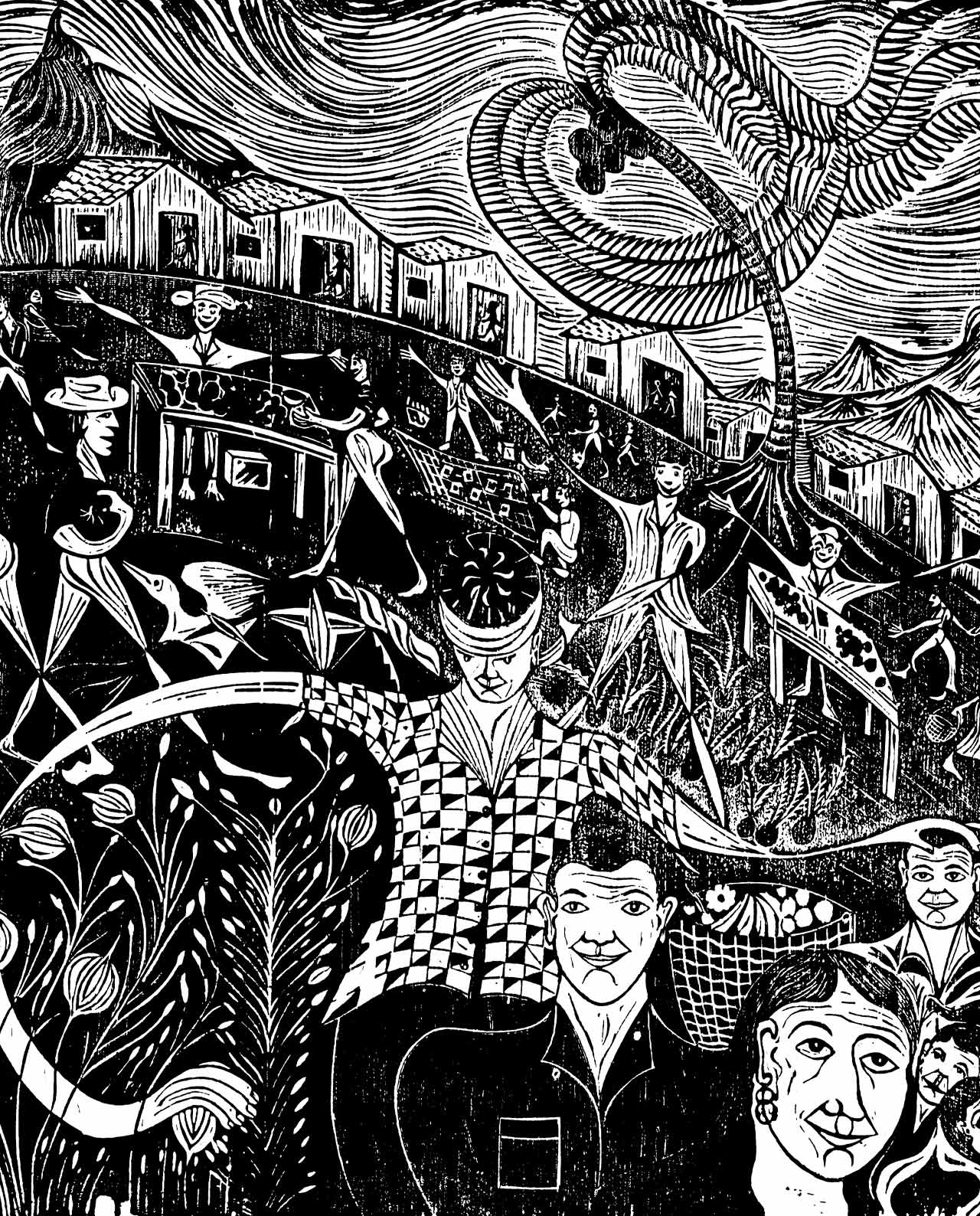
J. Miguel's artistic journey began under extraordinary circumstances. As the adopted son of J. Borges—widely considered one of Brazil's greatest living xilogravura artists—he had unprecedented access to master-level instruction in this traditional printmaking technique. Xilogravura, the Portuguese term for woodcut printing, has deep roots in Northeast Brazilian culture, traditionally used to illustrate cordel literature (string literature), those small pamphlets of popular poetry that tell stories of love, heroism, and regional folklore.
Under J. Borges' tutelage, J. Miguel learned not just the technical aspects of carving wood and pulling prints, but also the cultural significance embedded in every line. He discovered how to translate the rhythms of northeastern life into visual language—the celebration of festivals, the hardship of droughts in the sertão (backlands), the devotion to Catholic saints, and the rich tapestry of daily life that defines the region.
Working alongside his stepbrother Manasses, J. Miguel developed his own artistic voice while respecting the traditions passed down to him. This collaborative dynamic reflects the communal nature of folk art production in Northeast Brazil, where individual creativity flourishes within established cultural frameworks.
What makes J. Miguel's career particularly remarkable is his trajectory from creating small, modest prints to becoming a sought-after artist whose work graces galleries in major Brazilian cities. Starting with pequenas gravuras (small prints), his work quickly caught the attention of art dealers and collectors who recognized something special in his approach to traditional themes.

Verified via Claude Vision. Educational use.
His artistic range demonstrates the versatility that has made xilogravura such an enduring art form. J. Miguel's prints encompass religious imagery—saints rendered with the folk baroque sensibility characteristic of northeastern devotional art—alongside unflinching depictions of regional hardships, particularly the devastating droughts that periodically ravage the sertão. These works serve as both artistic expression and social commentary, documenting the resilience of northeastern communities in the face of environmental and economic challenges.
The celebration of regional festivals also features prominently in his work, capturing the explosive joy and cultural richness of events like São João festivities, where communities come together in defiant celebration despite ongoing struggles. Through his prints, J. Miguel preserves and transmits the visual culture of his homeland to audiences far beyond Pernambuco's borders.
J. Miguel's career illustrates the complex economics of traditional art in contemporary Brazil. Like many xilogravura artists, he initially sold his work through regional fairs—those vibrant marketplaces where folk artists, musicians, and writers converge to share their creations with local communities. This grassroots distribution system has historically sustained northeastern folk artists, creating direct connections between creators and their audiences.
However, J. Miguel's growing reputation opened doors to gallery representation in major urban centers. His work has been exhibited in Garanhuns, Recife, and Rio de Janeiro, marking his transition from regional folk artist to nationally recognized creator. This evolution reflects broader changes in how Brazilian folk art is perceived and valued, as urban collectors and institutions increasingly recognize the sophistication and cultural importance of traditional practices.
Interestingly, despite his success, J. Miguel has made the strategic decision to sell many of his original woodblocks (matrices). This practice, while providing immediate income, also means that future prints from those blocks may be produced by others. However, he has carefully maintained a personal collection of over 100 works, ensuring that a significant portion of his artistic legacy remains under his control.

Verified via Claude Vision. Educational use.
J. Miguel's significance extends beyond his individual artistic achievements. As an adopted son who mastered his stepfather's craft, he embodies the way cultural traditions adapt and survive through chosen families and dedicated apprenticeships. His success demonstrates that folk art traditions can evolve without losing their essential character, finding new audiences while maintaining their roots in regional culture.
His work serves as a bridge between traditional northeastern culture and contemporary Brazilian art markets. Through galleries and exhibitions, urban audiences encounter authentic representations of northeastern life, fostering greater understanding and appreciation of Brazil's regional diversity. This cultural exchange is particularly important in a country where economic and political power remains concentrated in the South and Southeast.
Moreover, J. Miguel's career path offers a model for other traditional artists seeking to expand their reach without compromising their cultural authenticity. His ability to maintain artistic integrity while adapting to market demands provides valuable lessons for the sustainability of folk art practices in the modern era.
Today, J. Miguel stands as a testament to the enduring vitality of Northeast Brazilian visual culture. His xilogravuras continue to circulate through both traditional and contemporary channels, carrying forward centuries-old techniques while speaking to contemporary concerns. In an era of digital reproduction and mass media, his hand-carved prints offer something increasingly rare: authentic, culturally rooted artistic expression that connects viewers directly to the lived experience of northeastern Brazil.
Through his work, J. Miguel ensures that the visual vocabulary of his region—its saints and sinners, its celebrations and struggles, its profound connection to landscape and community—remains vivid and accessible to new generations. In doing so, he honors both his adoptive father's legacy and the broader cultural traditions that shaped them both, proving that the most meaningful artistic inheritance often comes not from blood, but from love, dedication, and the generous sharing of knowledge.
Fontes:
(1) convida.org - http://www.convida.org/j.miguel.html
(2) instagram.com - https://www.instagram.com/p/DBV4S5sxQoe/
(3) instagram.com - https://www.instagram.com/reel/DQb-irLDrhZ/
Keywords: xilogravura, Northeast Brazil, folk art
Imagem de capa: Source: instagram.com. Credibility: 0.7.
This article is part of the CASCA Archive, documenting visual artists from Northeast Brazil. Story about J. Miguel.