José Altino: Where Stark Lines Reveal the Northeast's Anatomy
Origins
José Altino belongs to the graphic tradition of Paraíba through the discipline of gravura: images built from pressure, cut, contrast, and narrative compression. Public biographical detail around him is limited, but the available records from collections, galleries, and institutional image archives point to an artist whose work sits close to the visual culture of the Northeast. His prints do not need theatrical scale to establish force. They use line as structure, black and white as atmosphere, and the carved surface as a way to hold memory. In Altino's hands, printmaking becomes a language for stories that feel popular, severe, and intimate at once. See also Cordel Does Not Fit in Drawers: Marina Nabuco on the Living Archive of Instituto Brincante.
The first thing to notice is the precision of his graphic thinking. Altino's figures and scenes are not soft illustrations; they are assembled through firm contours, abrupt contrasts, and an anatomy of marks that gives every body, animal, or landscape a sense of pressure. A face can feel weathered by the same force that shapes a tree trunk or a road. A leg, a hand, or a bird may appear almost emblematic, less as naturalistic detail than as a sign carved into the image. This is where his work connects with a broader Northeastern print tradition without becoming anonymous inside it: the image remains direct, but the construction is careful. See also Carybé: Bahia Drawn as Ritual and Movement.

Public collections
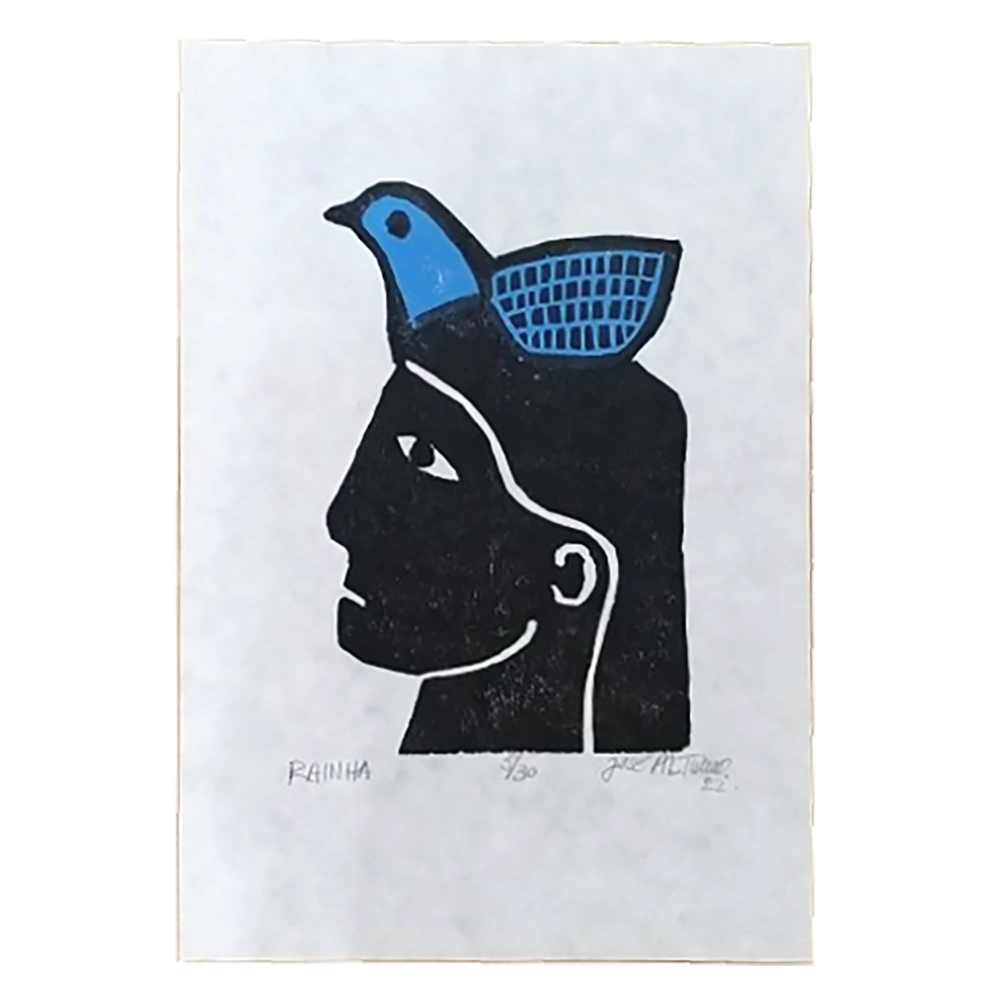
The works gathered for this post show that range clearly. Rainha do Miramar e Azulão do Nordeste and Rainha do Miramar e Cajueiro carry the frontal clarity and narrative charge associated with popular print culture, while the Auction Daily xilogravure points to a market and collection trail that helps confirm the persistence of his work beyond local circulation. These are images made to be read as much as seen. Their strength comes from the way each cut simplifies the scene while making it more loaded: sky, bird, crown, branch, and human posture become a compact vocabulary of place and myth. The result is not illustration as ornament, but image as compressed testimony. See also Maurício Arraes: The Body's Leg and Anatomy Through the Brush.
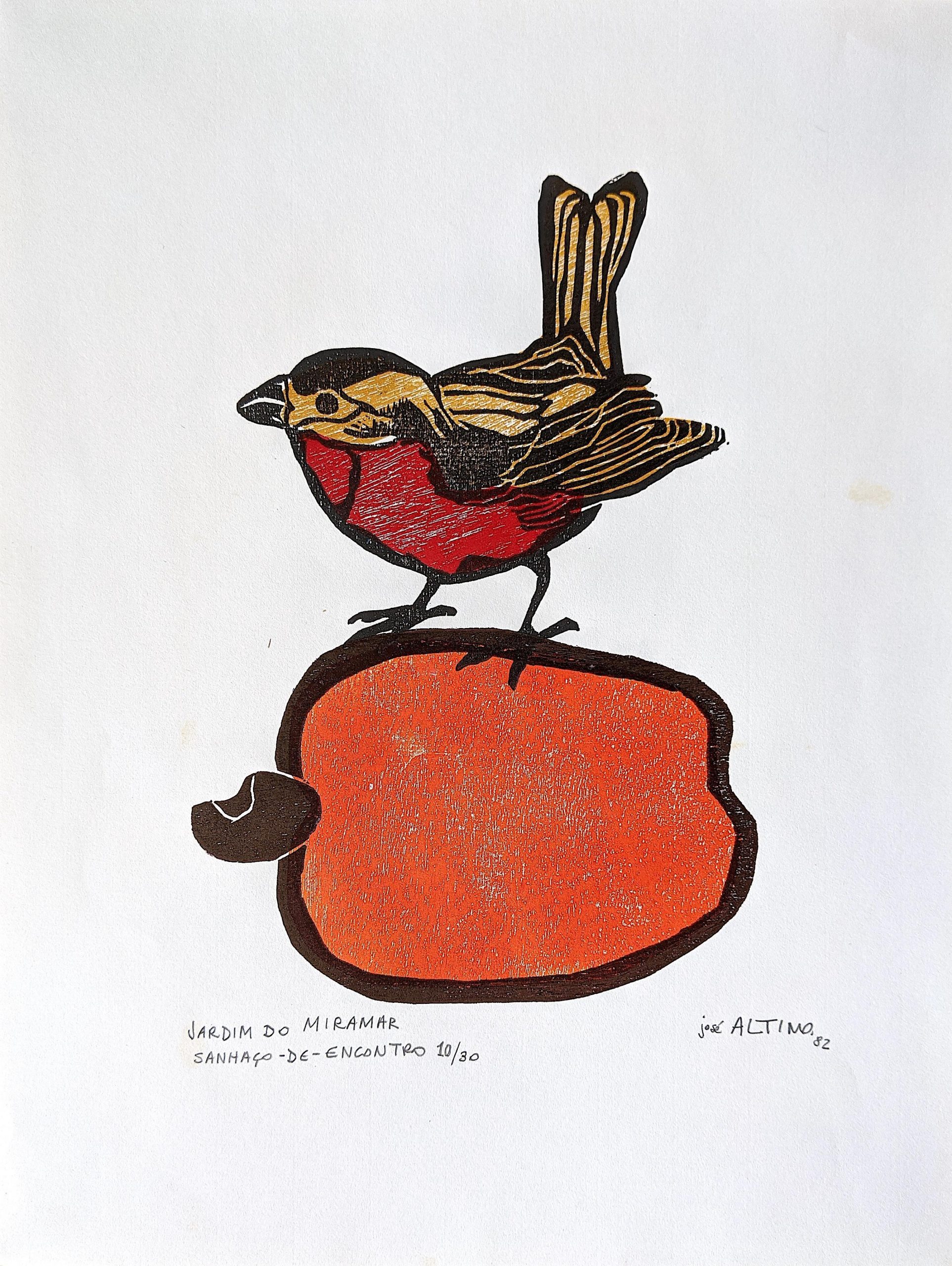
Altino's importance also depends on the material intelligence of the print itself. Gravura asks the artist to decide what can survive reduction: which contour carries the scene, which shadow gives weight, which interruption lets the image breathe. That economy suits the Northeast's long print culture, where stories, saints, animals, and ordinary figures often become legible through a few decisive marks. Altino works inside that inheritance, but the best images remain specific to his hand. They feel carved rather than merely drawn, and that physical pressure gives them their authority. See also Eduardo Eloy and the Precise Anatomy of Printmaking.
Altino matters because he reminds us that Northeastern visual culture is not only preserved through famous names or museum retrospectives. It also survives in artists whose records are scattered, whose images travel through galleries, archives, and small collections, and whose work keeps the print tradition materially alive. His gravuras hold the region through rhythm rather than explanation. They are austere, but not dry; narrative, but not decorative. Looking at José Altino today means paying attention to an artist who carved the Northeast into durable signs, turning ordinary pressure on a block into an image with cultural weight. See also Sérvulo Esmeraldo: Geometry in Motion.