Sante Scaldaferri: Bahia's Anatomy of Painted Devotion
Origins
Sante Scaldaferri belongs to the generation that made Bahia's modern art feel inseparable from theater, popular devotion, and the rough intelligence of painted matter. Born in Salvador in 1928, he trained at the School of Fine Arts of the Federal University of Bahia and moved through painting, engraving, tapestry, stage design, teaching, and writing without treating those disciplines as separate careers. That movement matters because his images do not behave like polite easel pictures. They feel staged, frontal, and charged, as if each figure has entered the canvas carrying a ritual role, a private wound, and a memory of the sertao translated into paint. See also Cordel Does Not Fit in Drawers: Marina Nabuco on the Living Archive of Instituto Brincante.
The works selected here show why Scaldaferri is stronger for CASCA than the documentary material that slipped through earlier. In O Tutor and Os Abaixadinhos, the body is not recorded from life but rebuilt as a pictorial anatomy: swollen knees, simplified hands, a heavy torso, a bent leg, watchful eyes, and skin-colored fields rubbed into the surface. The figures are deliberately awkward, almost votive, but never casual. Their proportions make social and spiritual pressure visible. Instead of using the human figure as illustration, Scaldaferri turns it into structure, giving the Northeast a bodily grammar of weight, imbalance, endurance, and theatrical presence. The skin of the painting is as important as the body it describes: scraped, stained, and worked until the figure seems to have emerged from the same ground that wounds it. See also Carybé: Bahia Drawn as Ritual and Movement.

Public collections
His language also carries the history of Bahia's artistic institutions. Scaldaferri worked near the Museum of Modern Art of Bahia, taught in formative art programs, assisted Lina Bo Bardi, and later wrote about the beginnings of modern art in the state. That institutional proximity did not flatten his work into academic modernism. The paintings keep contact with ex-votos, processions, folk theater, Catholic imagery, and the expressive distortion of popular sculpture. In Procissao no Monte Santo, a red field and a mass of mask-like faces turn pilgrimage into a compressed architecture of bodies. The crowd is not background; it is the engine of the composition, a vertical pressure that pushes devotion, anonymity, and collective ritual into one image. See also Waldomiro de Deus Turns the Space Race into Popular Vision.
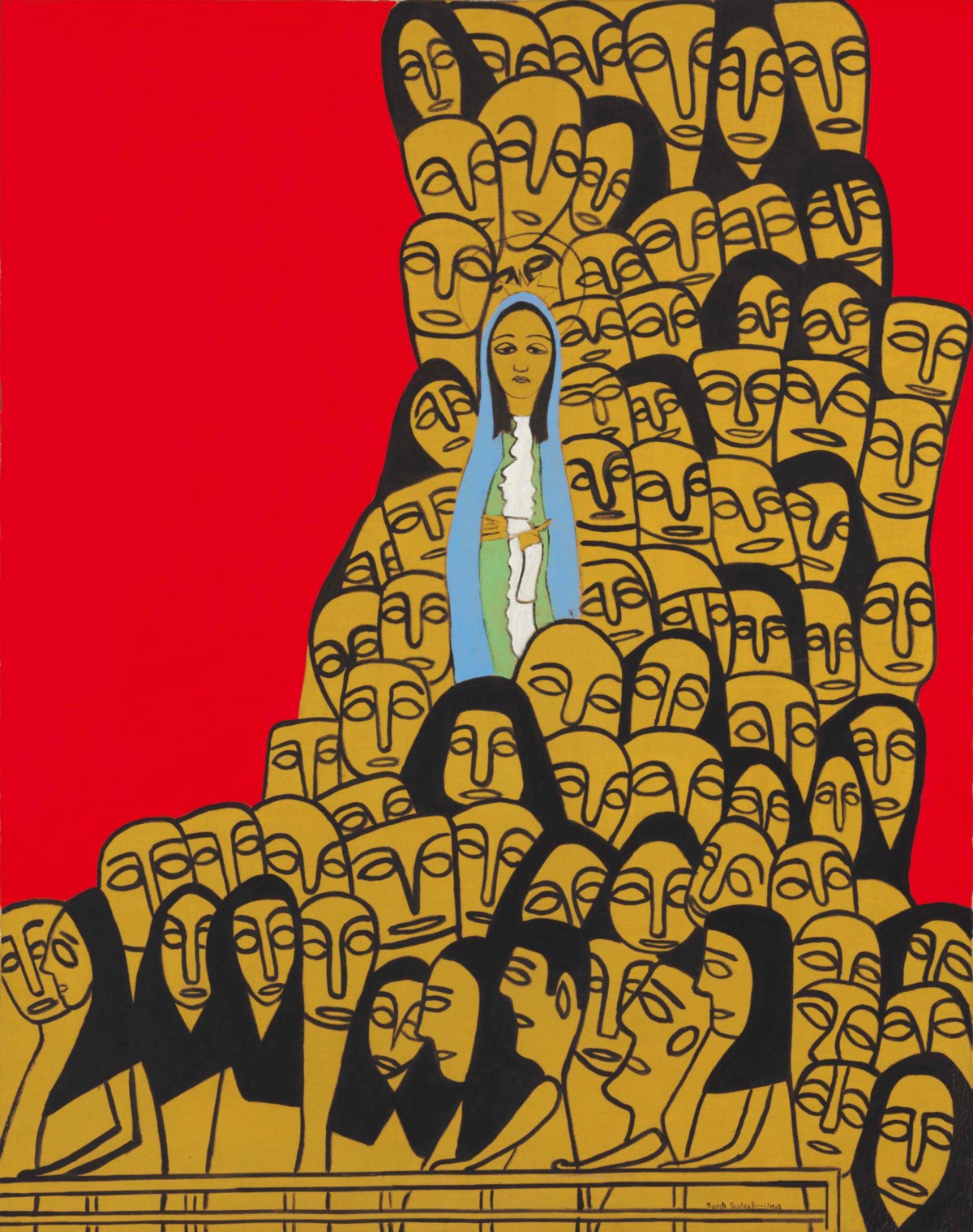
Seen together, these works place Scaldaferri in a precise visual-artist lineage: not documentary observer, but maker of painted bodies and symbolic scenes. His figures are direct enough to feel immediate and strange enough to resist anecdote. The rough surfaces, ochres, reds, and frontal faces give his art a bodily density that suits CASCA's interest in anatomy without reducing anatomy to medical description. Scaldaferri's best paintings make the leg, the face, the crowd, and the damaged surface into signs of a larger regional drama, where Bahia's popular imagination becomes modern painting through pressure, distortion, and nerve. This is exactly the kind of material the queue should privilege: finished work, clear authorship, and images that carry the article visually before the first sentence is read. See also Sérvulo Esmeraldo: Geometry in Motion.