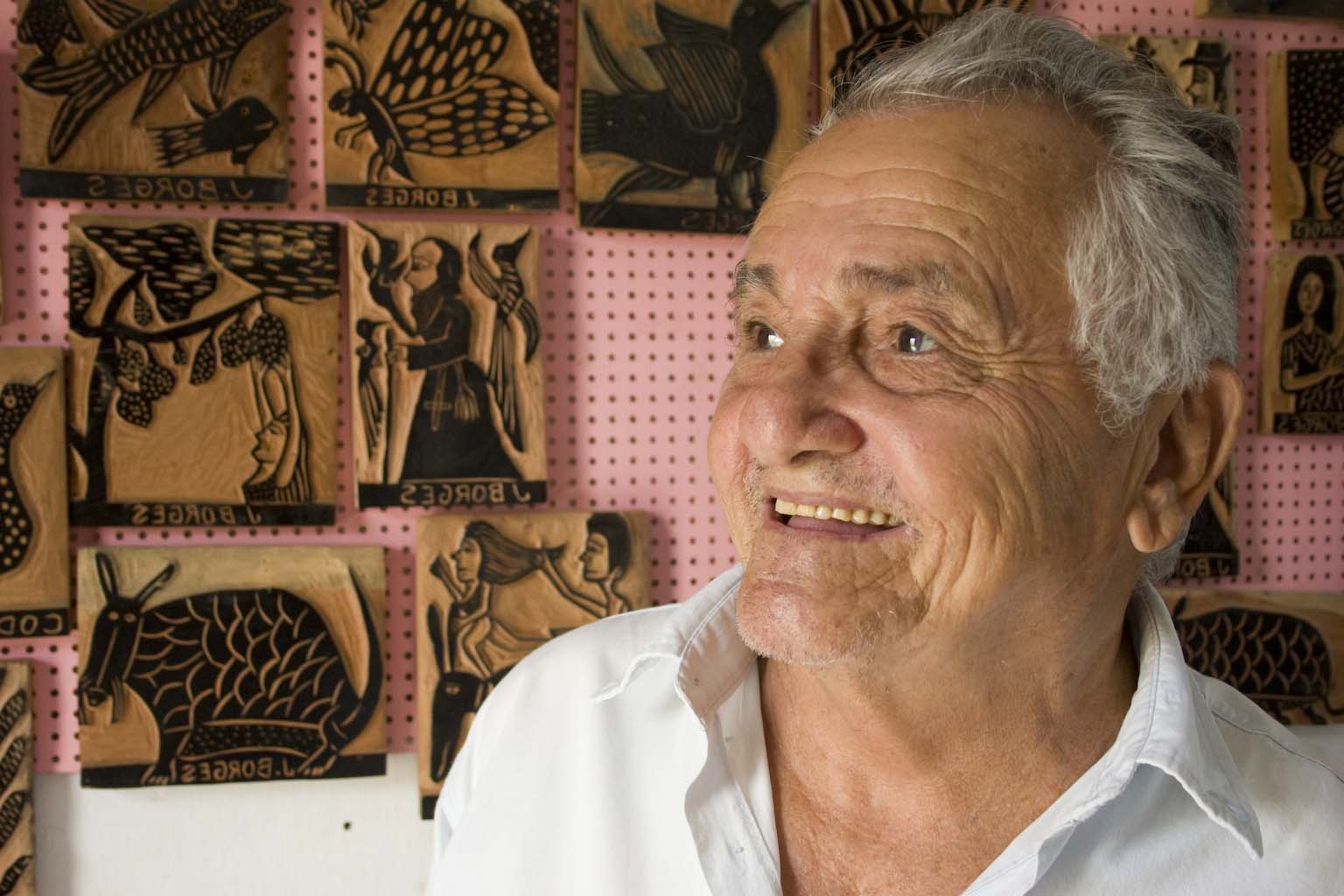
The Satirical Blade: Abraão Batista's Woodcuts Carve Truth from Brazilian Reality
In the dusty streets of Juazeiro do Norte, where pilgrims gather to honor Padre Cícero and the arid landscape of Ceará stretches endlessly toward the horizon, an unlikely artistic revolution was brewing.
In the dusty streets of Juazeiro do Norte, where pilgrims gather to honor Padre Cícero and the arid landscape of Ceará stretches endlessly toward the horizon, an unlikely artistic revolution was brewing. It was here, on April 4th, 1935, that Abraão Batista was born—a man who would grow to wield his carving knife like a satirical sword, cutting through the pretenses of contemporary Brazilian society with the ancient art of xilogravura.
Batista's story reads like a folheto de cordel itself—one of those popular literature booklets that have long been the voice of Brazil's common people. Orphaned at seven when his father died, this son of a Pernambuco mother and Rio Grande do Norte father found himself navigating the complexities of Northeast Brazilian identity from an early age. His childhood in Juazeiro, followed by secondary education at the Lyceu in Fortaleza, might have led him down a conventional path. Indeed, it initially did.
Batista's academic journey took him through the Federal University of Ceará, where he earned his degree in Pharmaceutical Biochemistry. For years, he embodied the respectable professional his education had prepared him to be, teaching Physics, Geometric and Projective Drawing, Ecology, and Biophysics in both public and private institutions, eventually joining the faculty at the Regional University of Cariri (URCA). Yet beneath this veneer of scientific rationality, a different kind of intelligence was stirring—one that spoke in images and verses, one that understood the world through the language of popular culture.
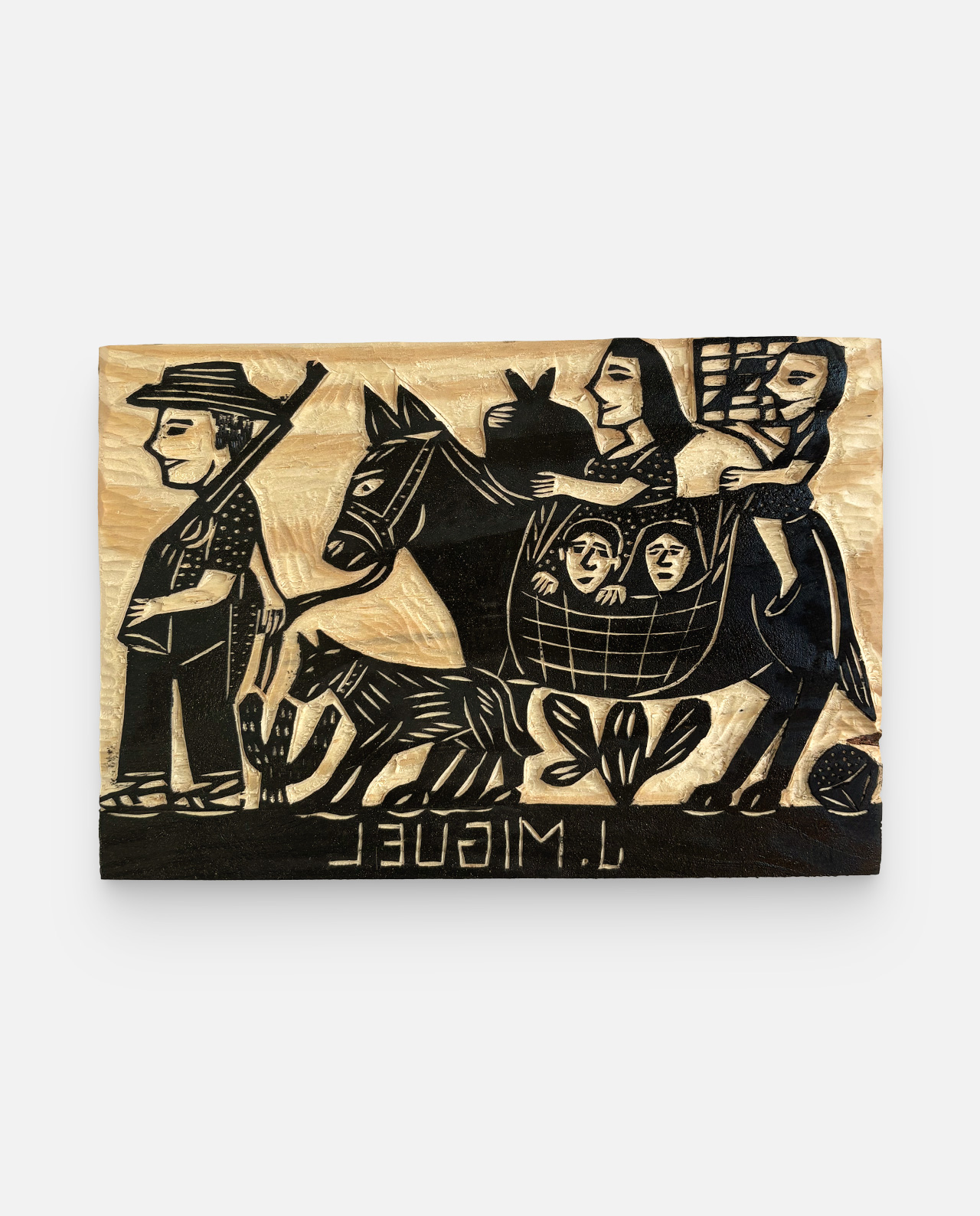
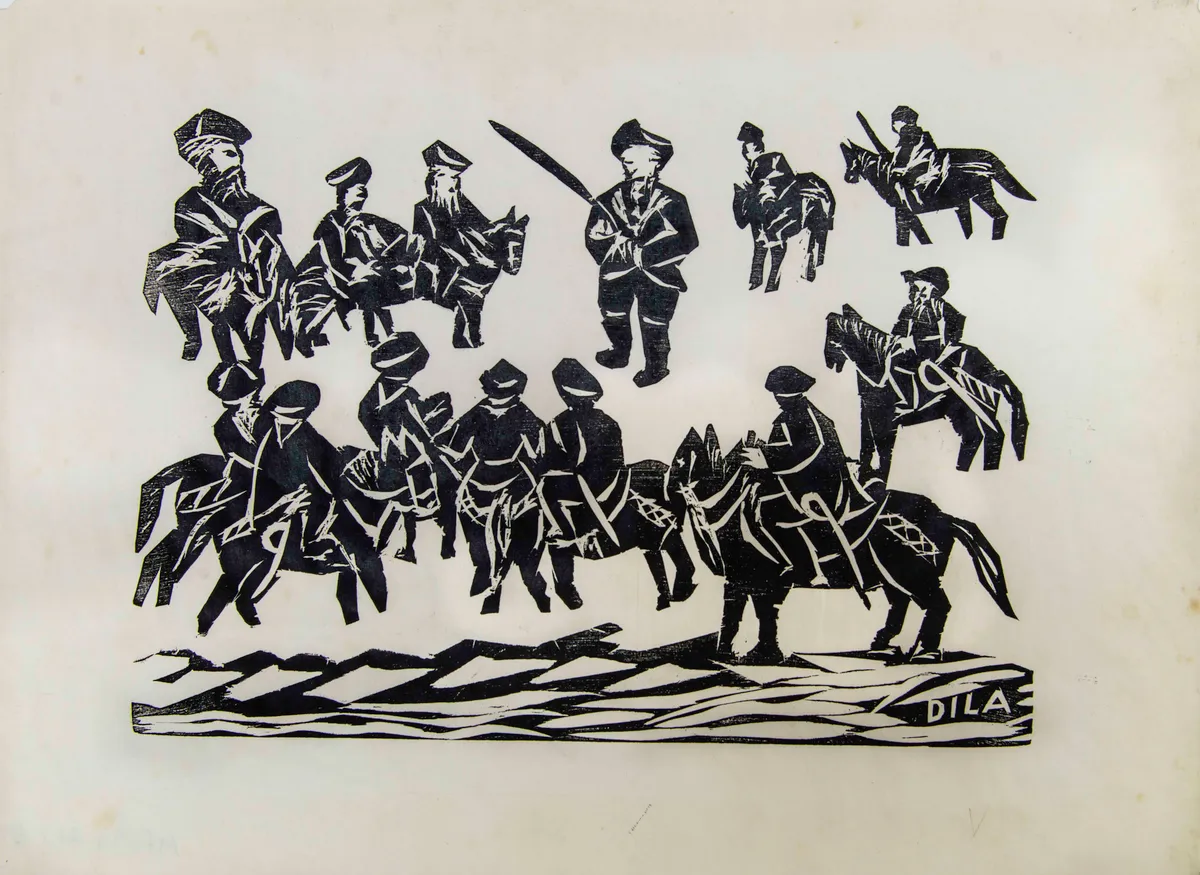
The transformation from pharmacist to folk artist wasn't sudden but organic, rooted in childhood experiences and a deep connection to the cultural rhythms of his homeland. Batista's artistic awakening came through xilogravura, the woodcut printing technique that has been the visual language of Northeast Brazilian popular culture for generations. But where traditional xilogravura often depicted religious scenes, folk tales, or regional legends, Batista's blade carved something entirely different: a satirical commentary on contemporary life that bridged the gap between ancient tradition and modern reality.
What sets Abraão Batista apart in the pantheon of Brazilian xilogravura artists is his fearless engagement with current events and popular culture. His expressionist style—a hallmark of Ceará's artistic tradition—serves as the perfect vehicle for his irreverent social commentary. Consider his folheto titled "The Meeting of Lampião with Kung Fu in Juazeiro, Ceará," which imagines the legendary cangaceiro bandit encountering martial arts cinema. Or his boldly titled "Os sexorais do Presidente Bil Clintom namorador e Monica Levinsque" (The Sexuals of Philandering President Bill Clinton and Monica Lewinsky), which brings international political scandal into the realm of cordel literature with characteristic Brazilian humor and directness.
These works reveal Batista's genius: his ability to process global events through the lens of Northeast Brazilian popular culture, creating art that is simultaneously local and universal, traditional and contemporary. His woodcuts don't merely illustrate stories—they create new mythologies, transforming political figures and cultural phenomena into characters that would feel at home in any cordel narrative.
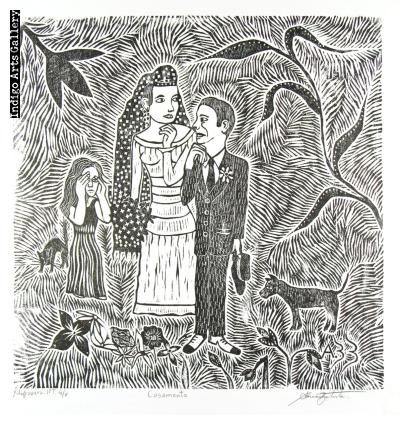
Batista's artistic practice embodies the expressionist tradition that defines much of Ceará's visual culture. His woodcuts are characterized by bold lines, dramatic contrasts, and an emotional intensity that speaks directly to viewers' hearts rather than their intellects. This expressionist approach allows him to capture not just the appearance of his subjects, but their essential character—the corruption of politicians, the absurdity of celebrity culture, the enduring power of folk wisdom in a rapidly changing world.

Source: instagram.com. Credibility: 0.9.
As a poet, xylographer, engraver, sculptor, and ceramist, Batista demonstrates the multimedia approach that characterizes many Northeast Brazilian artists. His artistic practice refuses to be contained within a single medium, instead flowing freely between poetry and visual art, between traditional craft techniques and contemporary themes. This versatility reflects the holistic nature of popular culture in the Northeast, where art, music, literature, and daily life interweave seamlessly.
Beyond his individual artistic practice, Batista has played a crucial role in institutionalizing and preserving cordel culture. As a founding member of the Brazilian Academy of Cordel Literature, based in Rio de Janeiro, he has helped elevate popular literature from street corners to academic recognition. His work has found its way into international collections, including the virtual cordel library at the University of Poitiers in France, demonstrating the global appeal of this distinctly Brazilian art form.
Even in retirement, Batista continues his mission as a cultural ambassador, participating in fairs, delivering lectures, and ensuring that the traditions of xilogravura and cordel literature continue to evolve and find new audiences. His presence at these events represents more than artistic exhibition—it's a living connection to the cultural roots that continue to nourish Brazilian identity.
Abraão Batista's career illustrates the remarkable capacity of traditional art forms to remain vital and relevant in contemporary society. His satirical xilogravuras prove that popular culture need not be passive entertainment—it can be sharp social commentary, cultural preservation, and artistic innovation all at once. In a world increasingly dominated by digital media, Batista's hand-carved woodcuts remind us of the irreplaceable power of human craft and the enduring relevance of folk wisdom.
From the religious pilgrim city of Juazeiro do Norte to international art collections, Batista's journey embodies the global reach of authentically local art. His work stands as testimony to the continued vitality of Northeast Brazilian culture and its capacity to speak truth to power with humor, humanity, and unflinching honesty.
Fontes:
(1) indigoarts.com - https://indigoarts.com/artists/abra-o-batista
(2) instagram.com - https://www.instagram.com/p/DNLDOkhAPuI/
(3) instagram.com - https://www.instagram.com/p/DK7Wx0dRDON/
Keywords: Brazilian art, xilogravura, Northeast Brazil, cordel literature
Imagem de capa: Source: indigoarts.com. Credibility: 0.9.
This article is part of the CASCA Archive, documenting visual artists from Northeast Brazil. Story about Abraão Batista.