Mestre Dila and the Woodcut Theatre of the Agreste
José Soares da Silva, known as Mestre Dila, made the woodcut into a compact theatre for the Northeast's spoken memory. Born in 1937 and associated with the Agreste of Pernambuco, he settled in Caruaru in the 1950s, where fairs, local newspapers, cordel pamphlets and small workshops formed the practical school of his image-making. His work moved between writing, editing, printing and carving: he composed cordel stories, cut blocks in wood and vulcanized rubber, printed labels, illustrated books and produced images for other poets, including J. Borges. In 2002, Pernambuco recognized him as a Patrimonio Vivo, an official acknowledgement that his craft belonged not only to one artist but to a shared cultural vocabulary. See also José Altino: Where Stark Lines Reveal the Northeast's Anatomy.
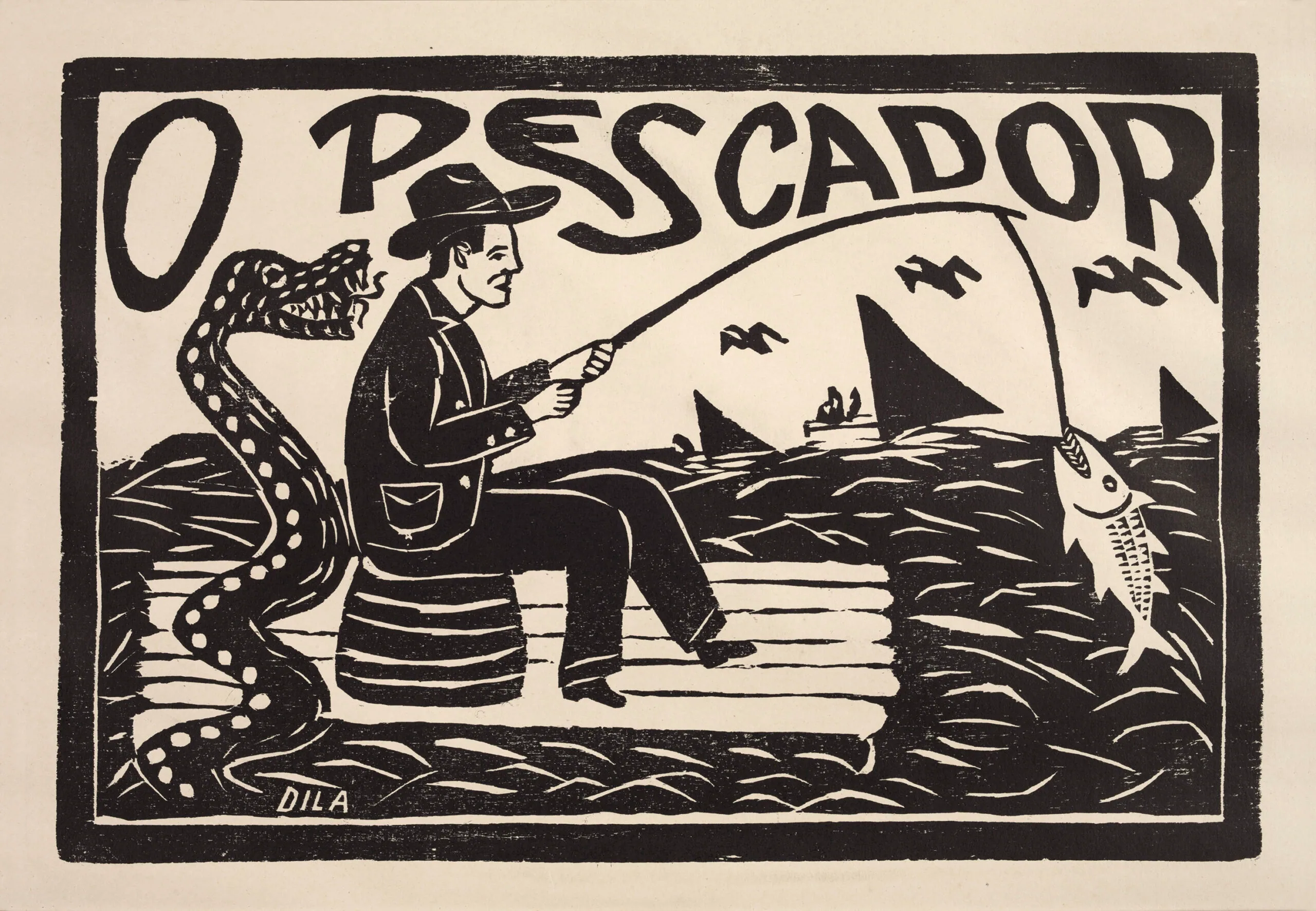
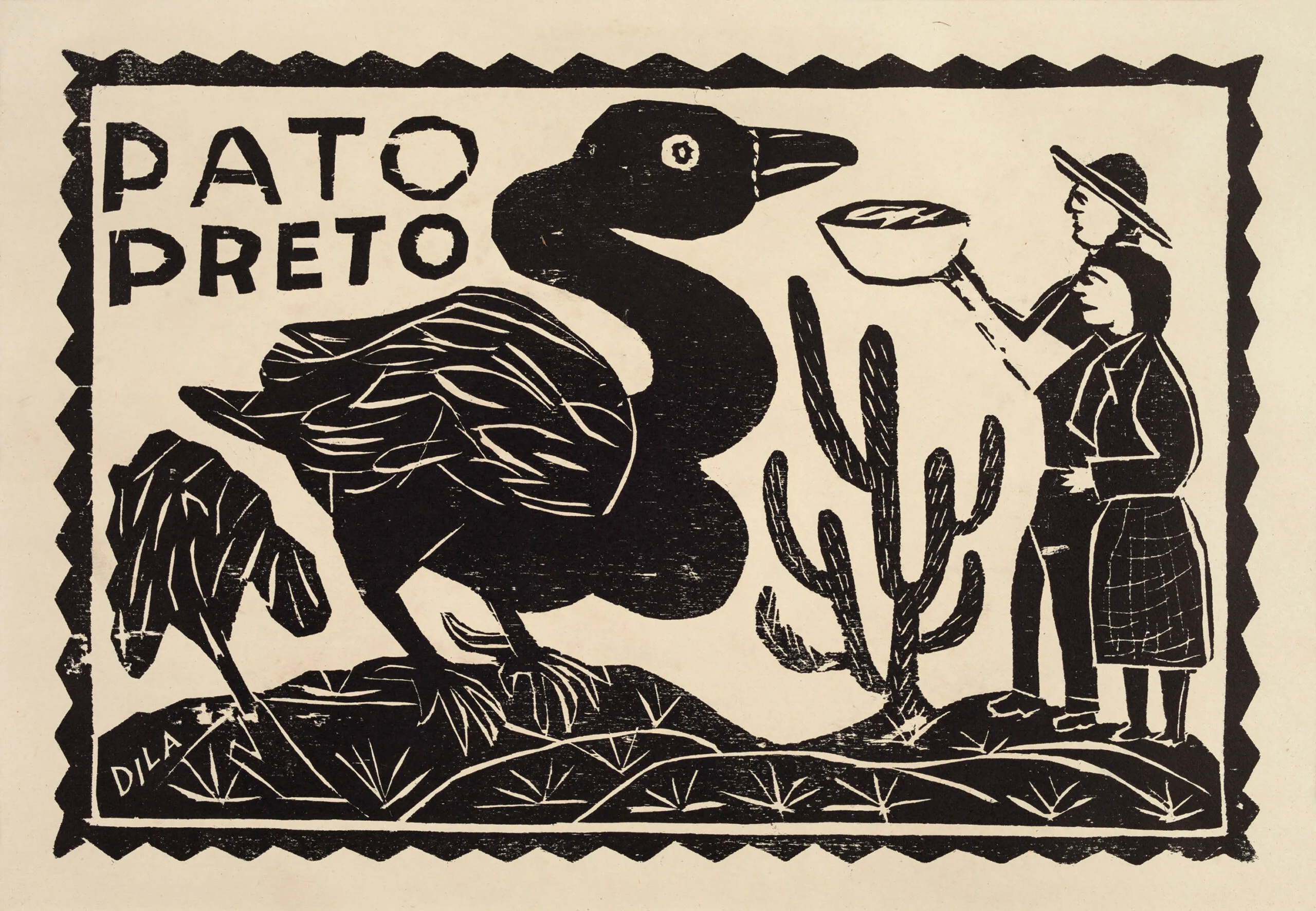
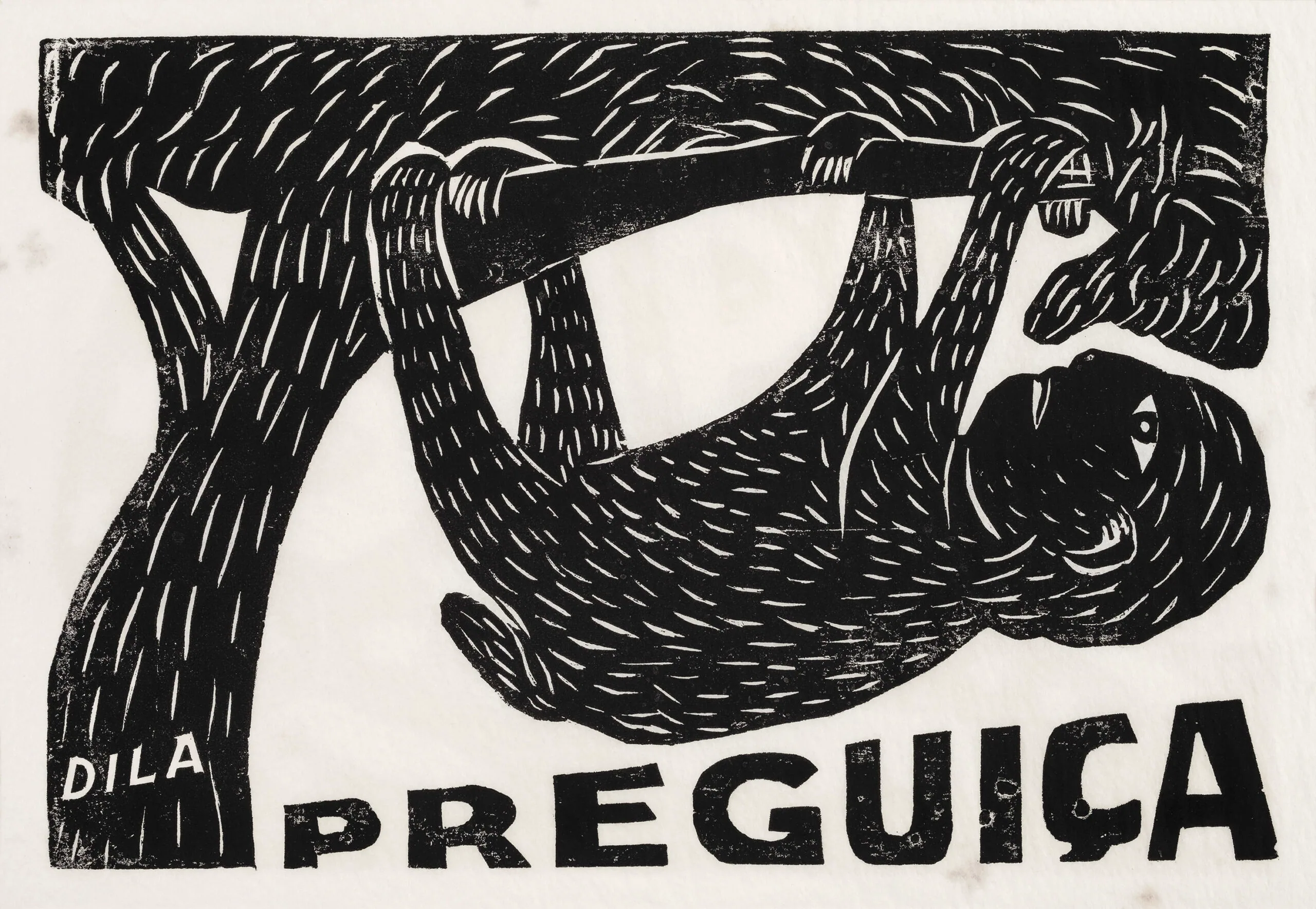
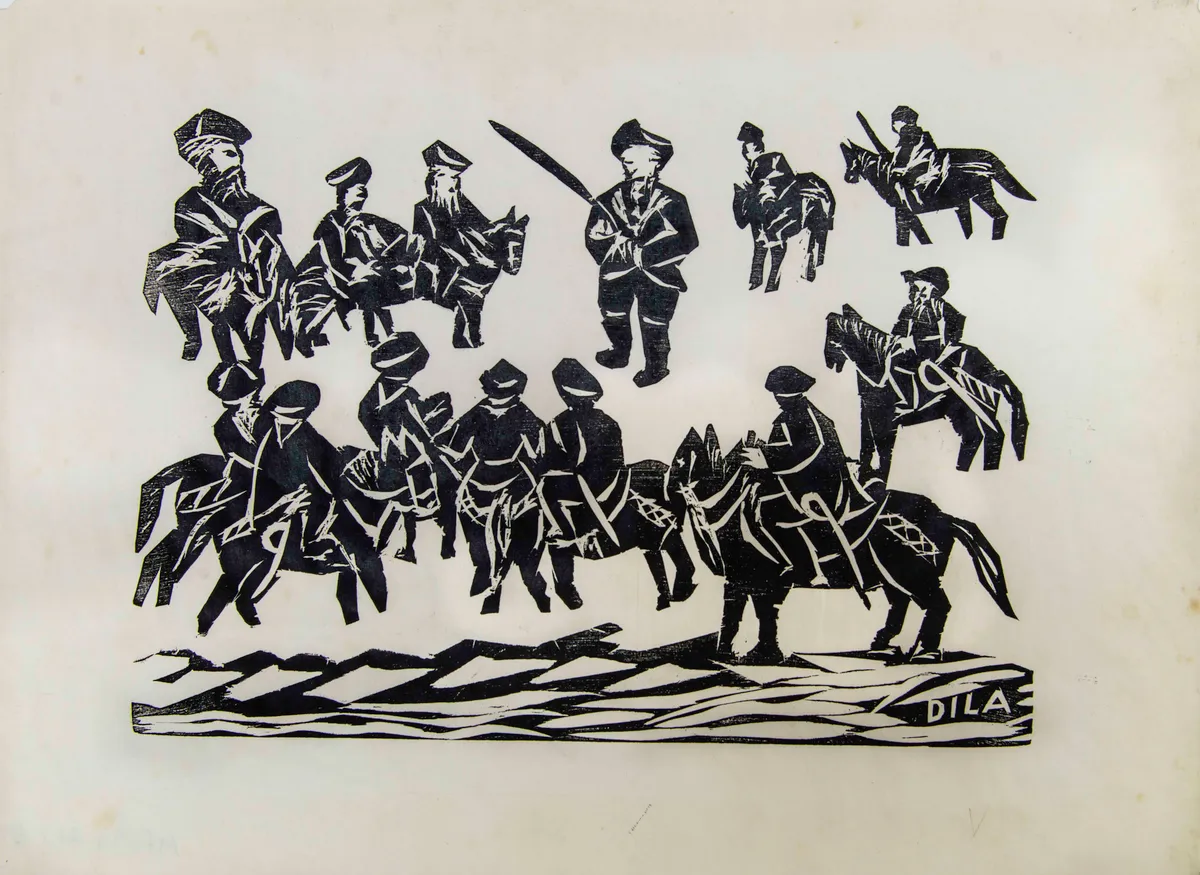
Dila's woodcuts are strongest when they seem to compress an entire tale into one decisive arrangement of black and white. The figures are frontal, rhythmic and slightly unruly; animals, devils, saints, cangaceiros and popular heroes appear less as illustrations than as actors entering a scene already in motion. Revista Continente described the studio in Caruaru as a world apart, filled with matrices, type, miniature objects and hand tools; that atmosphere helps explain the images' strange balance of discipline and fantasy. Dila cut with a printer's attention to legibility, but he refused plain realism, preferring the fantastic register that made Lampiao, Padre Cicero, diabolic tricks and sertanejo invention coexist on the same sheet. Three anchors help place the woodcuts in his orbit: Dila made the cover image for J. Borges's Encontro Vaqueiros (1964), developed the fantastic cangaco of Os Lampioes (1976), and appears in the Museu de Folclore Edison Carneiro collection with Roldao Argolinha (1978), part of the album A Historia de Roldao. "For cordel to sell well, it has to have a good woodcut," said Dila in a Pernambuco Cultura profile. See also Carolina Noemia and the Carnival Line of Recife.
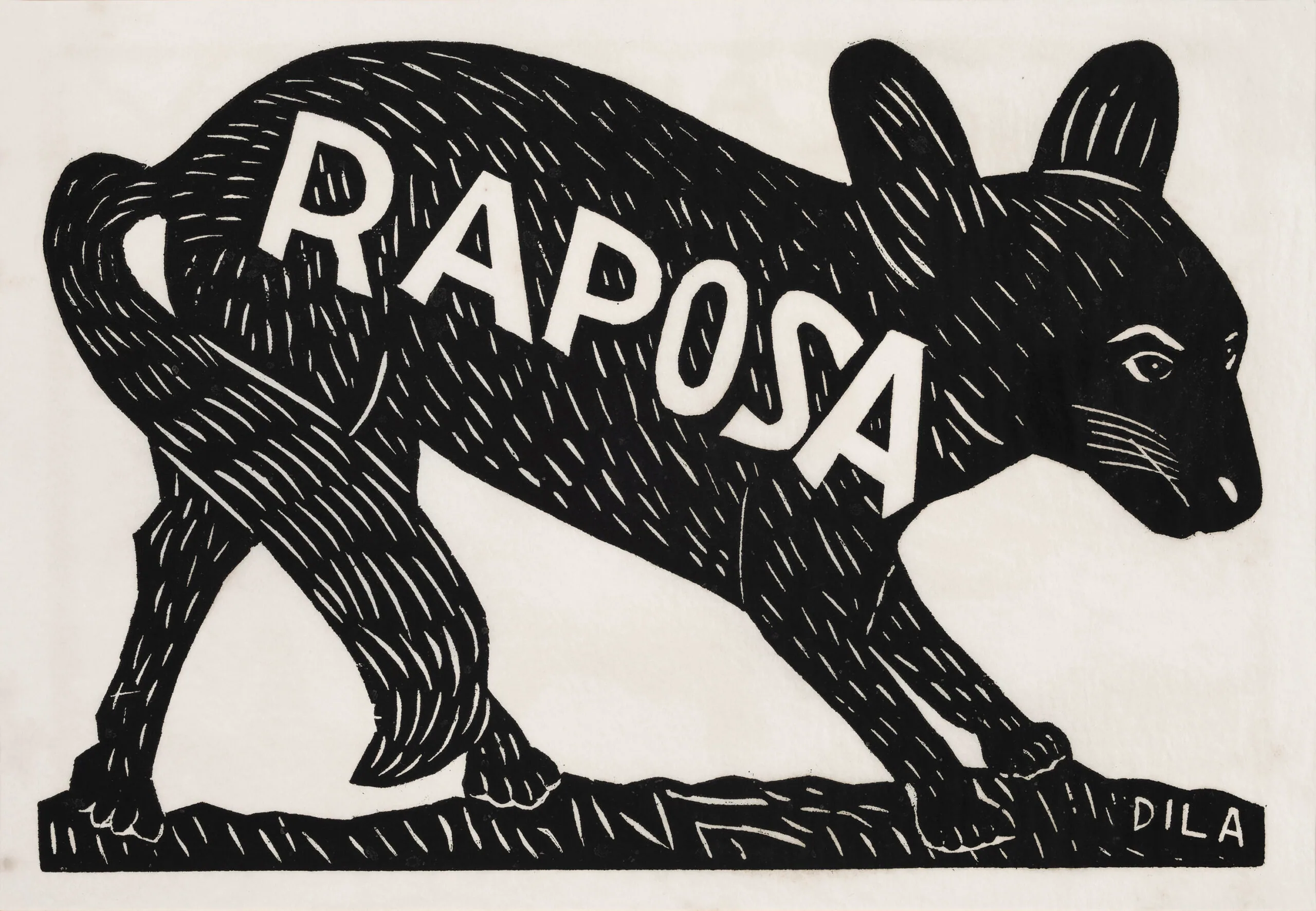
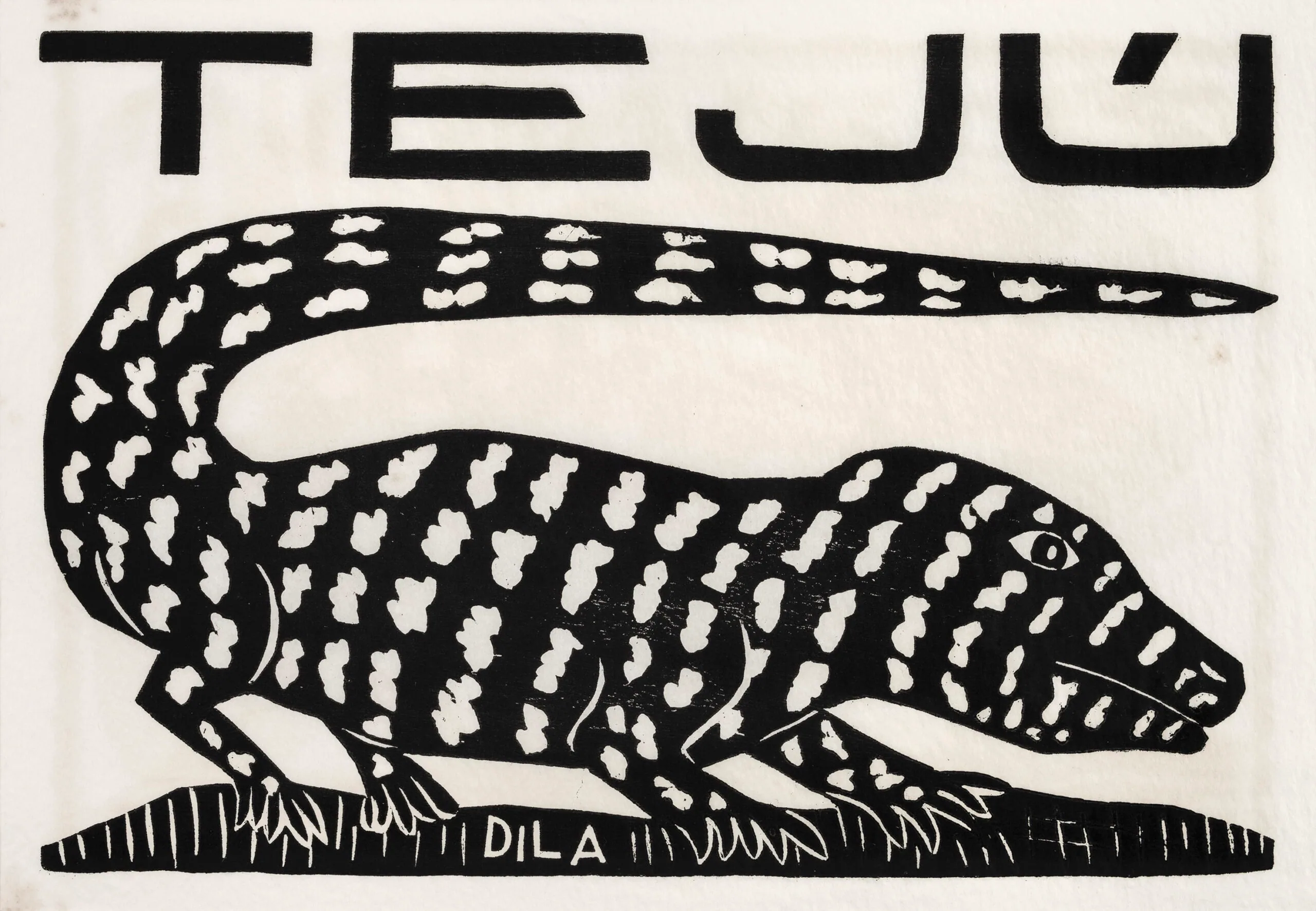
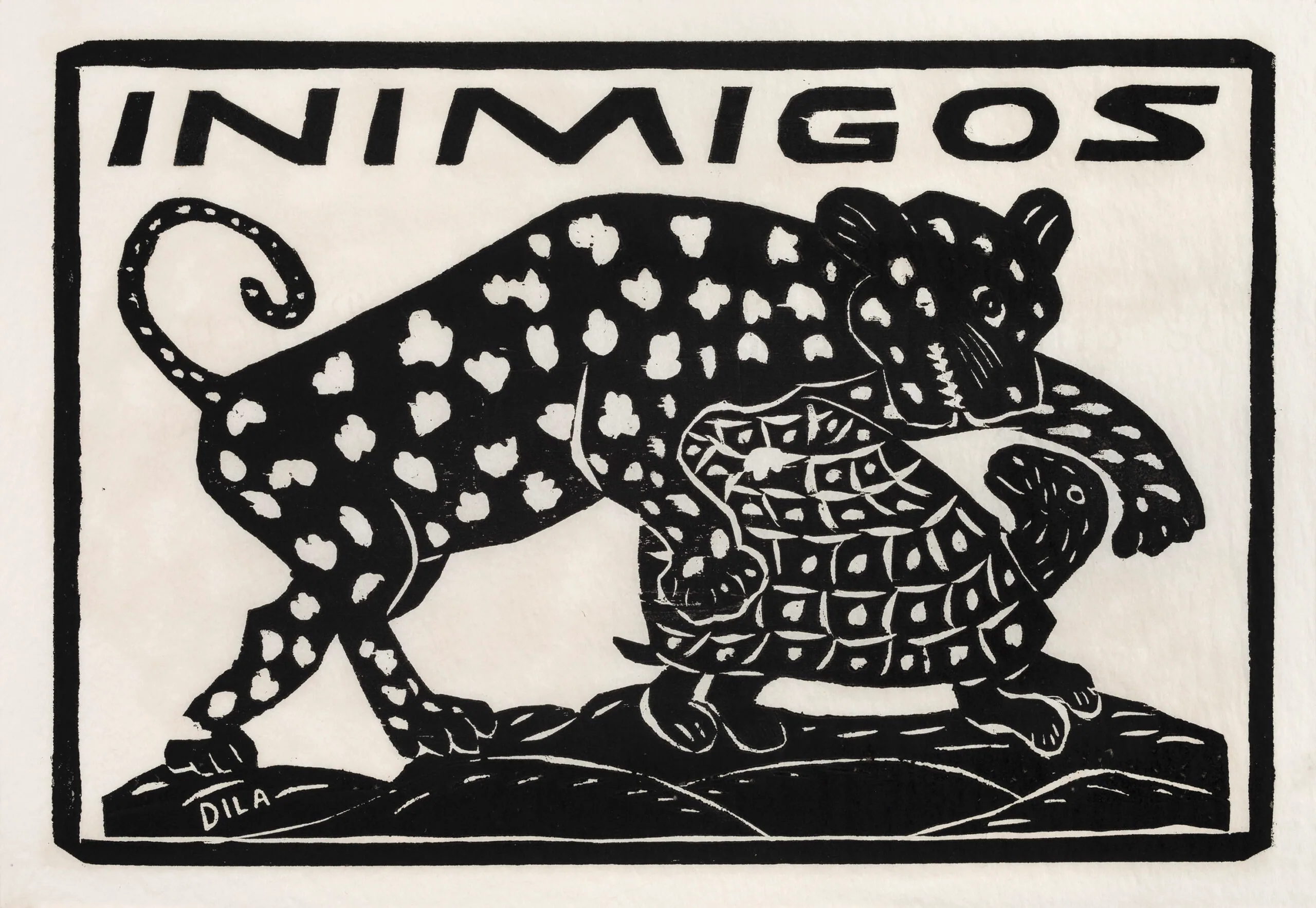
The ten woodcuts gathered here come from Galeria Pontes records dedicated to Mestre Dila and identified as xilogravura. Seen together, they show how little he needed to create narrative pressure: a tilted hat, a sharp profile, a border, a line of lettering, a raised arm, a beast or a saint could carry the whole drama. The scale is modest, often around 22 by 32 centimeters, but the images behave like public speech. They were made for circulation, memory and recognition, not for distance. That is why the printed line matters so much: it keeps the story available to the eye even before the text is read. See also Calasans Neto: Bahia's Vibrancy Through Paint.
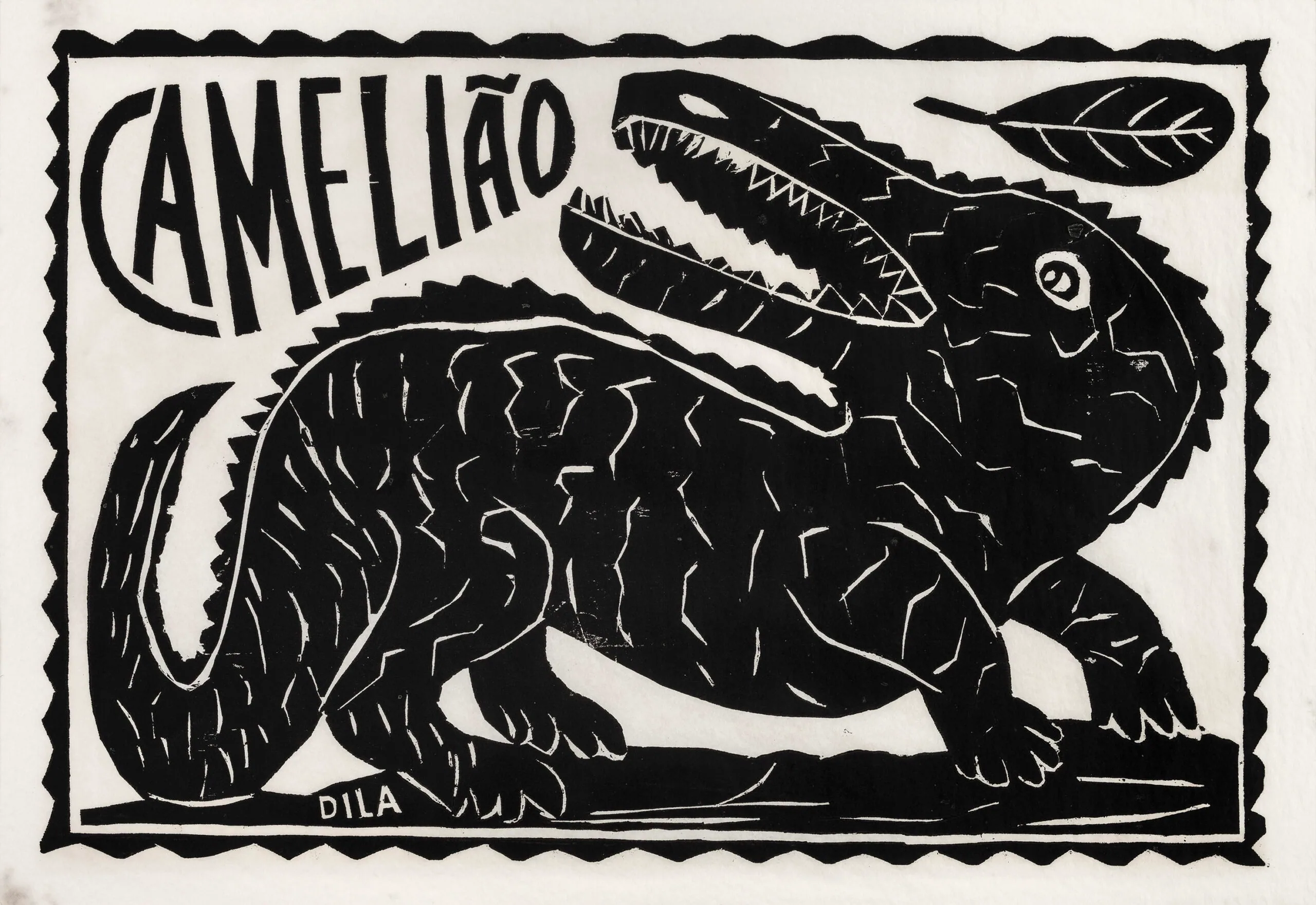
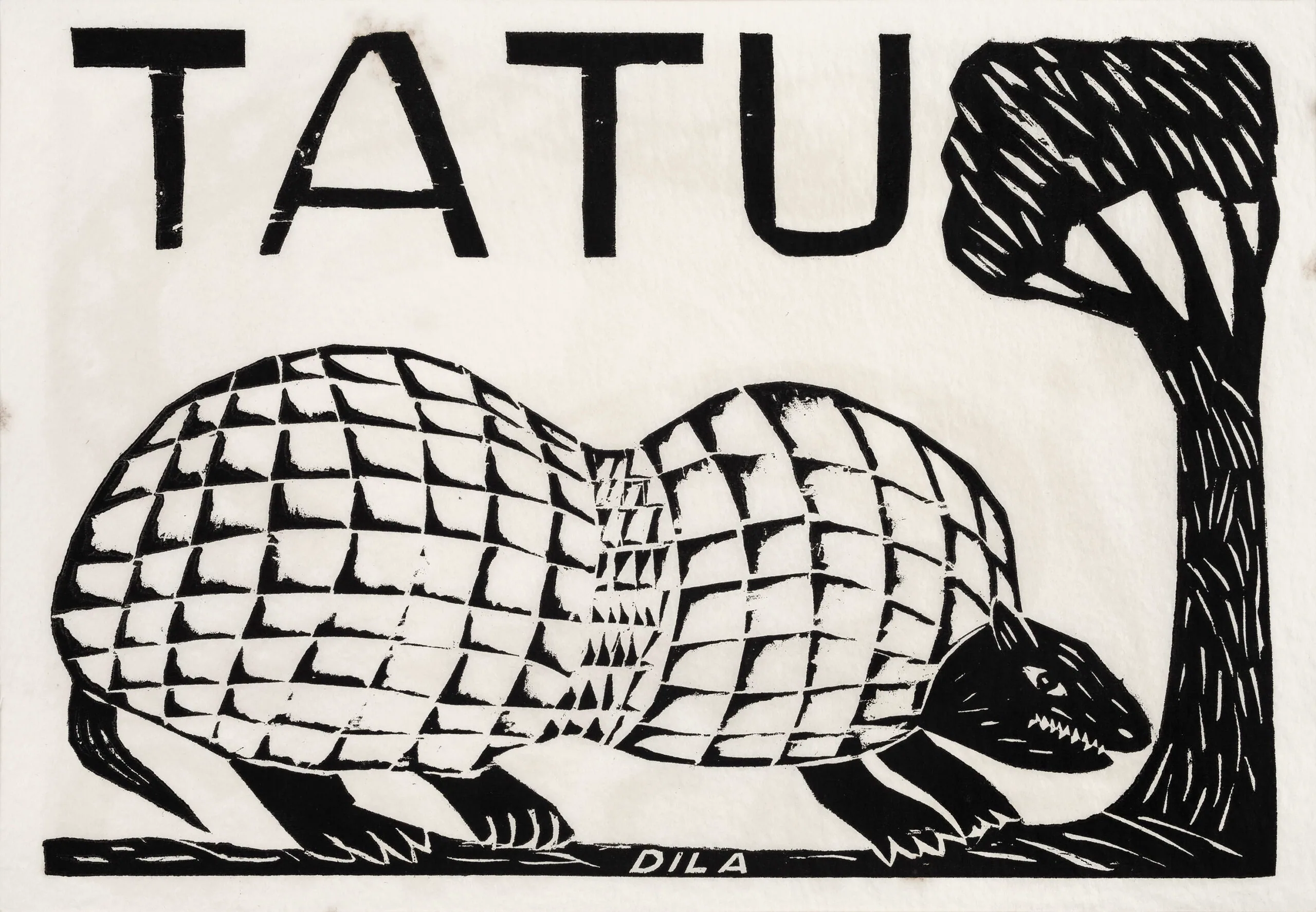
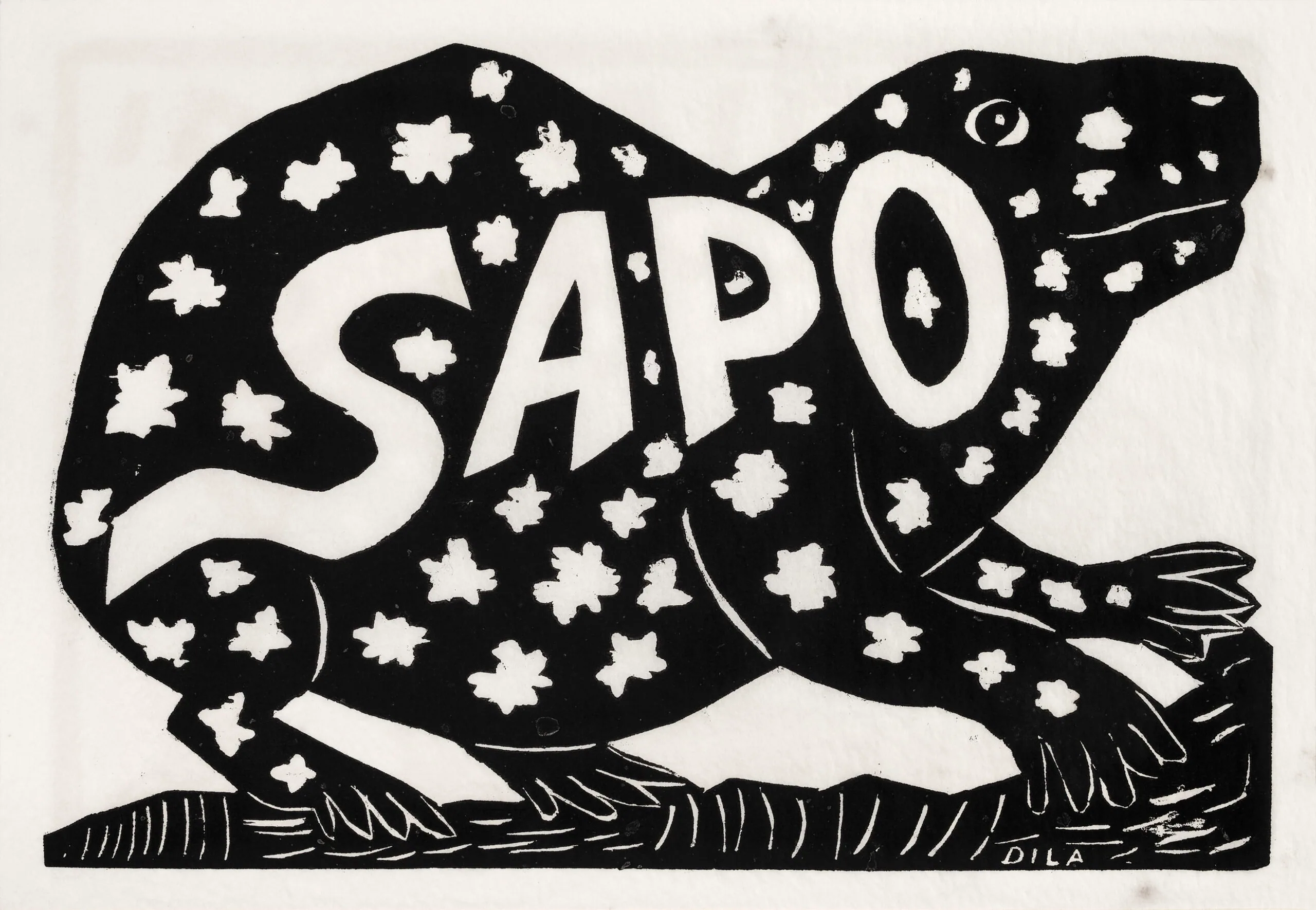
For CASCA Archive, Dila matters because his practice refuses to separate art from the systems that carried it: the fair, the pamphlet, the press, the label, the workshop, the oral tale and the market table. He died in Caruaru in December 2019, but his images still hold the energy of a working popular archive. They preserve cangaco as performance, belief as graphic form and humor as a form of intelligence. In each cut, Dila turns the woodblock into a place where the Northeast narrates itself with speed, exaggeration and exactness. See also Bozó Bacamarte and the Street's Fantastic Anatomy.