Rubem Valentim and the Symbols That Became Structure
Origins
From the culturally rich embrace of Bahia, a state synonymous with the vibrant heart of Afro-Brazilian traditions, emerged Rubem Valentim, a painter whose visual practice (pintura) redefined the intersection of sacred iconography and modern abstraction. While the specific details of his early life remain largely unchronicled in many records, Valentim's profound connection to his birthplace's spiritual landscape became the bedrock of an artistic language that would resonate far beyond Brazil's borders. He embarked on a journey to translate the complex cosmology of Candomblé into a vocabulary of bold shapes and primary colors, creating a unique synthesis that anchored Brazilian modernism firmly in its ancestral roots. His work, celebrated through numerous solo shows, stands as a testament to the power of art to bridge cultural specificity with universal aesthetic principles. See also J. Cunha and the Tropicalismo of His Carnival Canvas.
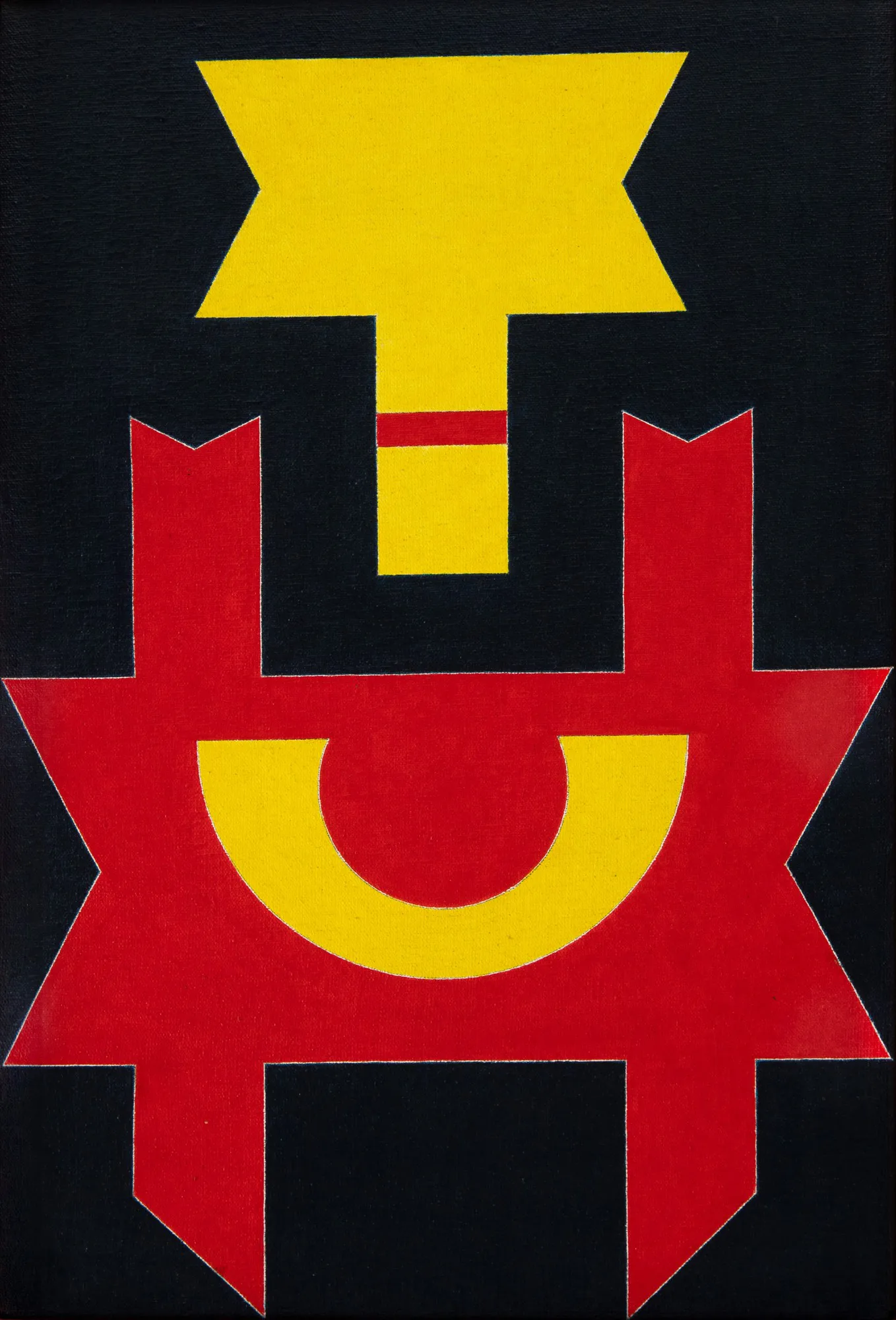
Valentim's visual language is unmistakable: a precise, geometric abstraction infused with the spiritual weight of Afro-Brazilian symbols. He meticulously transformed elements from Candomblé altars, ritual objects, and the sacred emblems of orixás (deities) into a series of stylized, almost hieroglyphic forms. These are not mere illustrations, but rather a profound reinterpretation, where the curved lines of a ferramenta (ritual iron object) or the triangular motif of a votive offering are distilled into powerful, clean-edged compositions. His canvases often feature a central, totemic arrangement, suggesting the presence of an altar or a sacred space, rendered with a deliberate monumentality that commands reverence. This recurring body of work, characterized by its rigorous formal structure and vibrant palette, presents a visual dialogue between the earthly and the divine, expressed through a uniquely Brazilian lens. See also Caetano Dias: Unlocking Bahia's Vernacular Canvas.
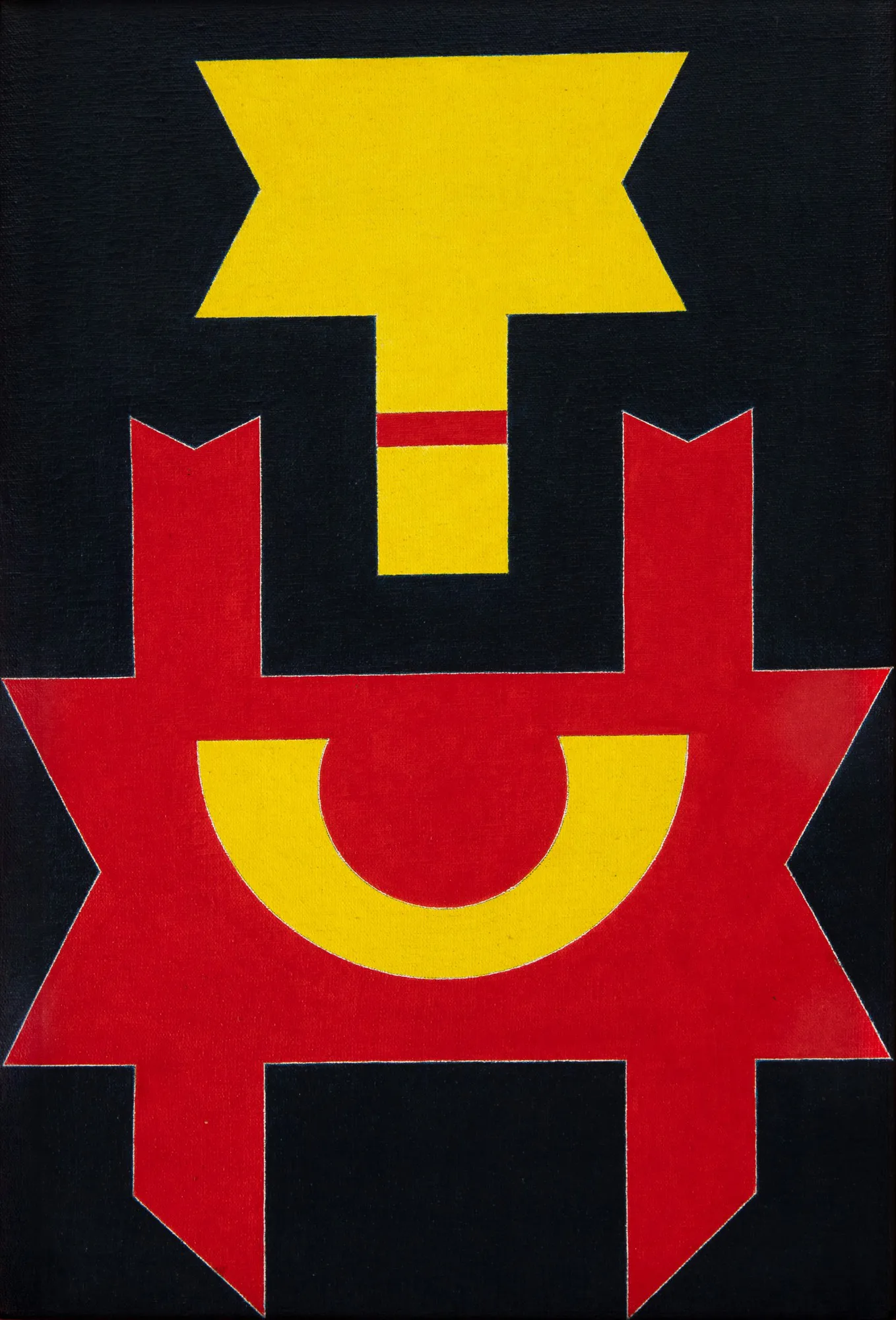
Source: escritoriodearte.com. Credibility: 0.9.
The cultural significance of Rubem Valentim's contribution lies in his audacious elevation of popular and sacred iconography to the realm of high art. By embedding the spiritual narratives of Northeast Brazil, particularly those of Bahia's Candomblé, into the universal language of geometric abstraction, Valentim asserted the profound relevance of these traditions within contemporary artistic discourse. His work actively resisted the colonial gaze, offering an authentic and dignified representation of Afro-Brazilian heritage. He demonstrated how the ancestral wisdom and artistic expressions of his people could not only coexist with but also enrich global modernism, providing a powerful counter-narrative to Eurocentric art historical perspectives. Valentim's art thus becomes a visual anchor for a distinct Brazilian identity, celebrating diversity while forging new aesthetic pathways. See also Genaro de Carvalho: Bahia's Legacy Woven in Thread.
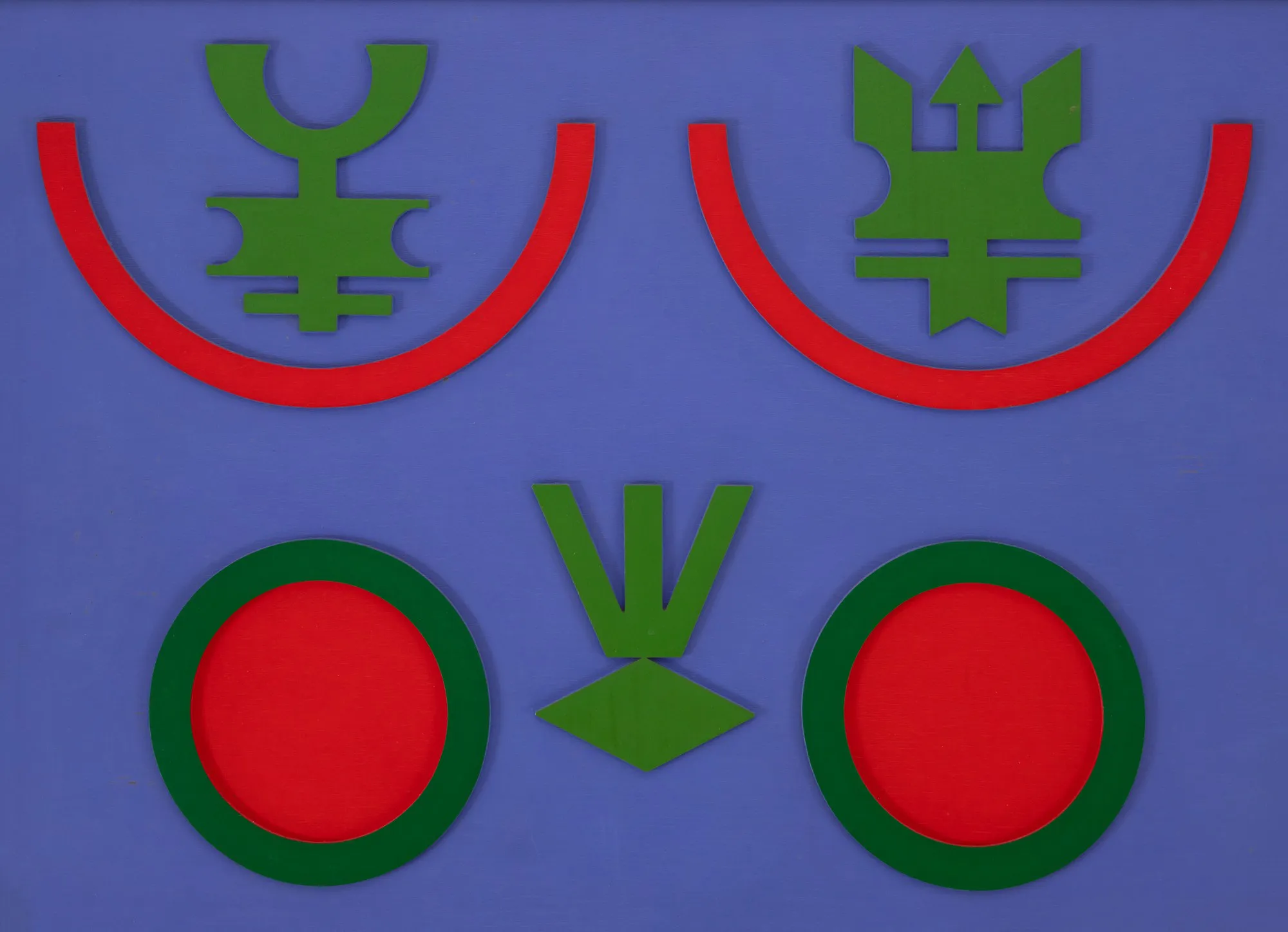
Source: escritoriodearte.com. Credibility: 0.9.
Visual language
Rubem Valentim's enduring legacy is that of an artist who masterfully fused the spiritual with the structural, creating a body of work that is both culturally specific and universally resonant. His paintings invite viewers to look beyond mere forms, prompting contemplation on the deeper meanings embedded within his sacred geometry. Through his disciplined approach to color, line, and composition, Valentim forged a powerful connection between the modern canvas and ancient spiritual practices. He proved that true innovation often lies in looking inward, transforming the rich tapestry of one's own heritage into an art that speaks to all, cementing his place as an indispensable figure in the pantheon of Brazilian visual arts. See also Cícero Dias: From Pernambuco's Soil to Parisian Skies.
Fontes:
(1) escritoriodearte.com - https://www.escritoriodearte.com/artista/rubem-valentim
(2) dailyartfair.com - https://dailyartfair.com/artist/rubem-valentim
(3) Wikipedia - https://en.wikipedia.org/wiki/Rubem_Valentim
Imagem de capa: Source: escritoriodearte.com. Credibility: 0.9.
This article is part of the CASCA Archive, documenting visual artists from Northeast Brazil. Story about Rubem Valentim. See also Hansen Bahia: Capturing Bahia's Pulse in Woodcut.