The Cangaço Chronicles: Mestre Dila's Woodcut Legacy Lives On
In the dusty streets of Caruaru, where the scent of leather mingles with the rhythm of forró music, a quiet revolution in Brazilian visual arts unfolded for over eight decades.
In the dusty streets of Caruaru, where the scent of leather mingles with the rhythm of forró music, a quiet revolution in Brazilian visual arts unfolded for over eight decades. José Soares da Silva, known to the world as Mestre Dila, wielded his woodcarving tools like a storyteller's pen, transforming blocks of wood into windows into Brazil's most captivating folk narratives. When he passed away in December 2019 at age 82, Brazil lost not just an artist, but a guardian of its cultural soul.
Born on September 23, 1937, in the small town of Bom Jardim, Pernambuco, Dila would eventually establish himself in Caruaru, becoming one of the most celebrated practitioners of xilogravura—the traditional Brazilian woodcut printing technique that has been the visual backbone of cordel literature for generations. His journey from a countryside boy to a "Patrimônio Vivo" (Living Heritage) of Pernambuco state reflects the enduring power of folk art to transcend social boundaries and speak universal truths.
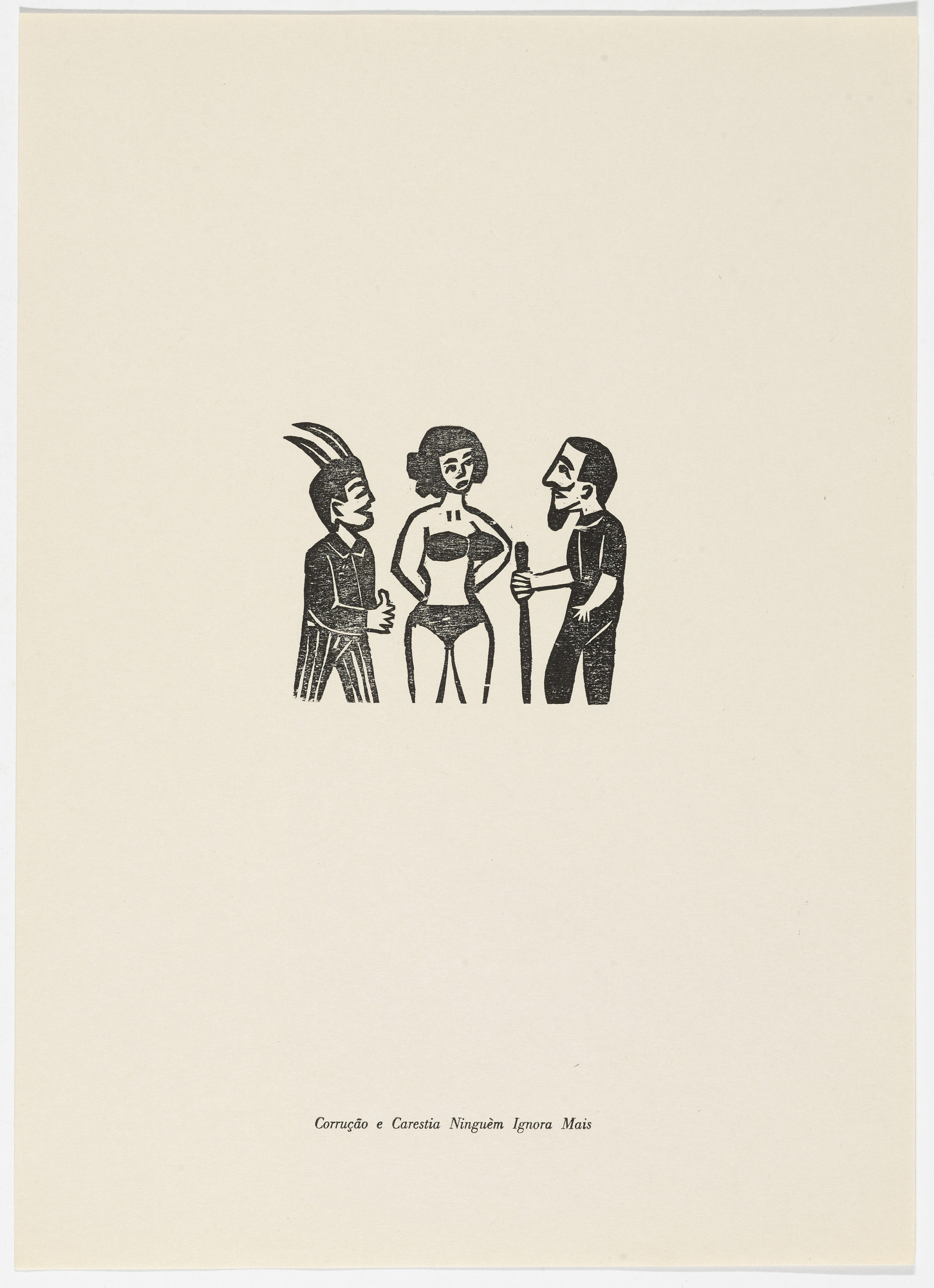
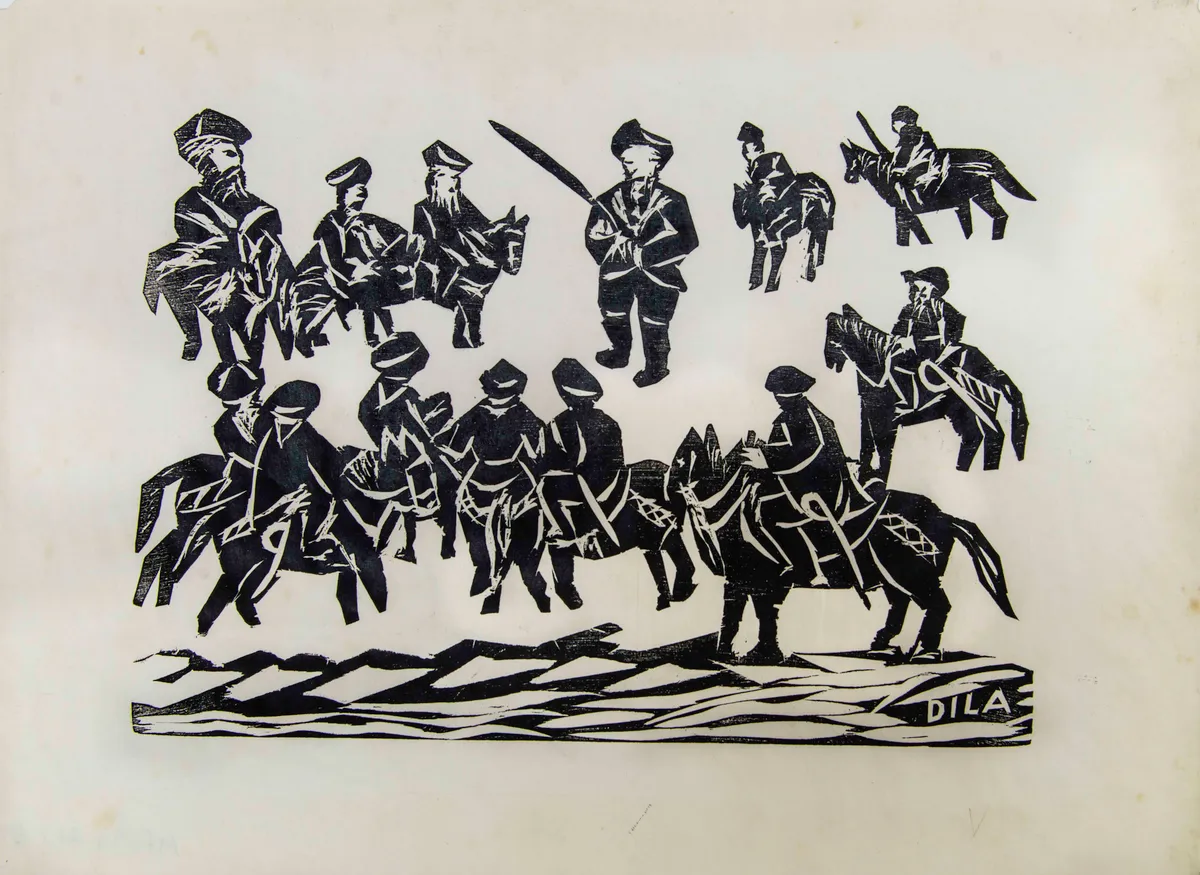
Dila's artistic universe was populated by two dominant themes that captured the imagination of Northeast Brazil: the legendary cangaço bandits and the mischievous adventures of diabolic characters. These weren't mere decorative illustrations—they were visual narratives that brought to life the oral traditions passed down through generations of sertanejo culture. His work served as both entertainment and historical documentation, preserving stories that might otherwise fade into memory.
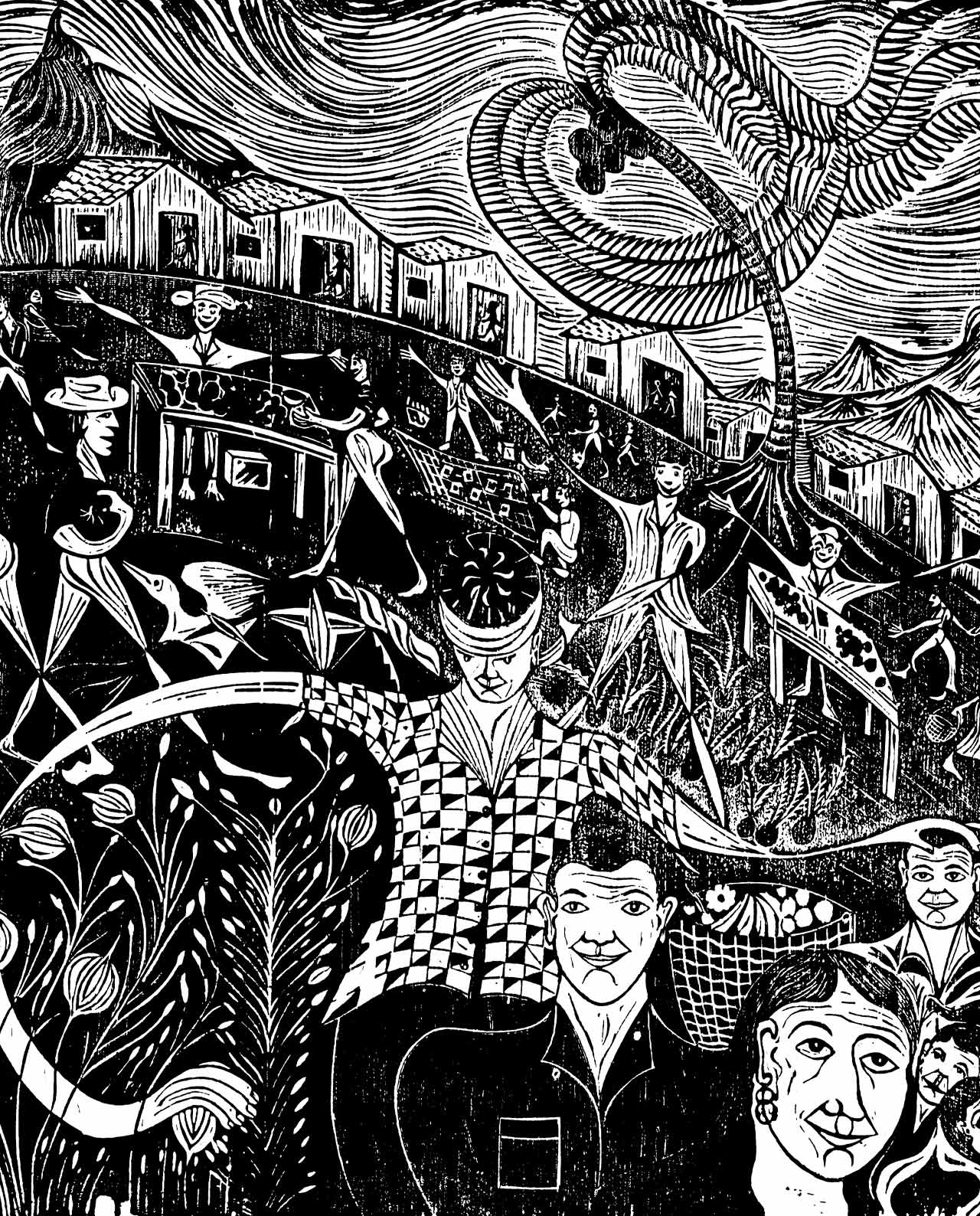
As a master of xilogravura, Dila's artistic practice extended far beyond the traditional cordel pamphlet covers. He created polychrome albums that showcased the full spectrum of his technical abilities, designed labels for local beverages and medicines, and illustrated books and various publications. Each piece demonstrated his remarkable ability to compress complex narratives into single, powerful images that could be understood instantly by both literate and illiterate audiences—a crucial quality in a region where oral tradition often superseded written culture.
The technique of xilogravura itself is deceptively simple yet infinitely complex. Using hand tools to carve into wood blocks, artists like Dila must think in reverse, envisioning how their carved lines will translate when pressed onto paper. Every stroke must be deliberate, every detail purposeful. There's no room for hesitation or correction—the wood block becomes a permanent record of the artist's vision and skill.
Dila's establishment in Caruaru was no accident. The city sits in the heart of Pernambuco's Agreste region, which remains a crucial center for the creation and dissemination of visual arts rooted in xilogravura tradition. Alongside contemporaries like Mestre J. Borges from nearby Bezerros, Dila helped maintain Pernambuco's position as the epicenter of Brazilian folk printmaking.
His self-proclaimed title as "marechal do cordel do cangaço" (marshal of cangaço cordel) wasn't mere bravado—it reflected his deep understanding of and authority over these cultural narratives. The cangaço, Brazil's unique form of social banditry that flourished in the Northeast during the early 20th century, provided rich material for artistic interpretation. Figures like Lampião and Maria Bonita became folk heroes whose exploits were immortalized in cordel verses and, through artists like Dila, in striking visual form.

Verified via Claude Vision. Educational use.
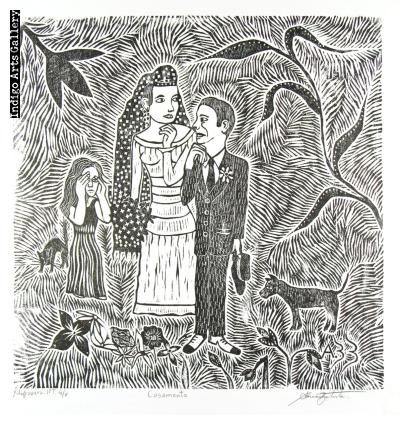
But Dila's diabolic characters were equally important to his artistic identity. These weren't the devils of Christian morality tales, but rather the trickster figures of Brazilian folklore—characters who embodied the sertanejo spirit of resourcefulness and rebellion against authority. Through his woodcuts, these figures became visual metaphors for the complex relationship between good and evil, authority and resistance, that defines much of Northeast Brazilian culture.
The recognition of Dila as a "Patrimônio Vivo" by the state of Pernambuco acknowledged something that local communities had known for decades: his work represented more than individual artistic achievement. It embodied the collective memory and cultural identity of an entire region. His xilogravuras served as visual archives, preserving stories, values, and worldviews that might otherwise be lost to modernization and urbanization.
When Dila passed away from pneumonia in December 2019, the loss reverberated throughout Brazil's cultural community. His death marked the end of an era, but also highlighted the urgent need to preserve and transmit these traditional arts to new generations. The social relations of a people, as cultural theorist Néstor García Canclini observed, are directly reflected in their popular cultural manifestations. Dila's work stands as testament to this principle—his art was inseparable from the social fabric of Northeast Brazil.
In an age of digital media and global connectivity, Mestre Dila's legacy reminds us of the irreplaceable value of handmade art rooted in local tradition. His xilogravuras weren't just illustrations—they were acts of cultural preservation, community building, and artistic innovation all rolled into one. They proved that traditional techniques could remain vital and relevant, speaking to contemporary audiences while honoring ancestral wisdom.
Today, as Brazil grapples with questions of cultural identity and historical memory, artists like Dila provide crucial guidance. Their work demonstrates that authentic cultural expression doesn't require abandoning tradition for modernity, but rather finding ways to make tradition speak to modern concerns. In every line carved into wood, in every story brought to visual life, Mestre Dila showed us that the past and present can coexist, creating something entirely new while honoring what came before.
The master may be gone, but his stories live on—carved in wood, printed on paper, and etched in the cultural memory of Northeast Brazil.
Fontes:
(1) educapes.capes.gov.br - https://educapes.capes.gov.br/bitstream/capes/742079/2/A%20Arte%20da%20Xilogravura%20(1).pdf
(2) cultura.pe.gov.br - https://www.cultura.pe.gov.br/pagina/patrimonio-cultural/imaterial/patrimonios-vivos/dila/
(3) g1.globo.com - https://g1.globo.com/pe/caruaru-regiao/noticia/2019/12/19/cordelista-e-xilografo-mestre-dila-morre-aos-82-anos-em-caruaru.ghtml
Imagem de capa: Verified via Claude Vision. Educational use.
This article is part of the CASCA Archive, documenting visual artists from Northeast Brazil. Story about Dila.