Getúlio Maurício and the Theater of Popular Life
Born in Olinda, Pernambuco, Getúlio Maurício is a self-taught painter and artisan whose work has focused on popular art and everyday life since 2017. His paintings gather customs, beliefs, games, celebrations, and ways of living that move through Northeastern Brazilian culture. This is not folklore treated as a distant or fixed repertory. Maurício begins with what surrounds him: neighborhood architecture, street vendors, religious images, improvised stages, animals, banners, musicians, dancers, and the visual surprises of carnival. By placing these elements together, he makes painting function as both observation and memory, attentive to the ordinary settings in which cultural traditions continue to be practiced. See also Gabriel Archanjo and the Figure as a Field of Resistance.
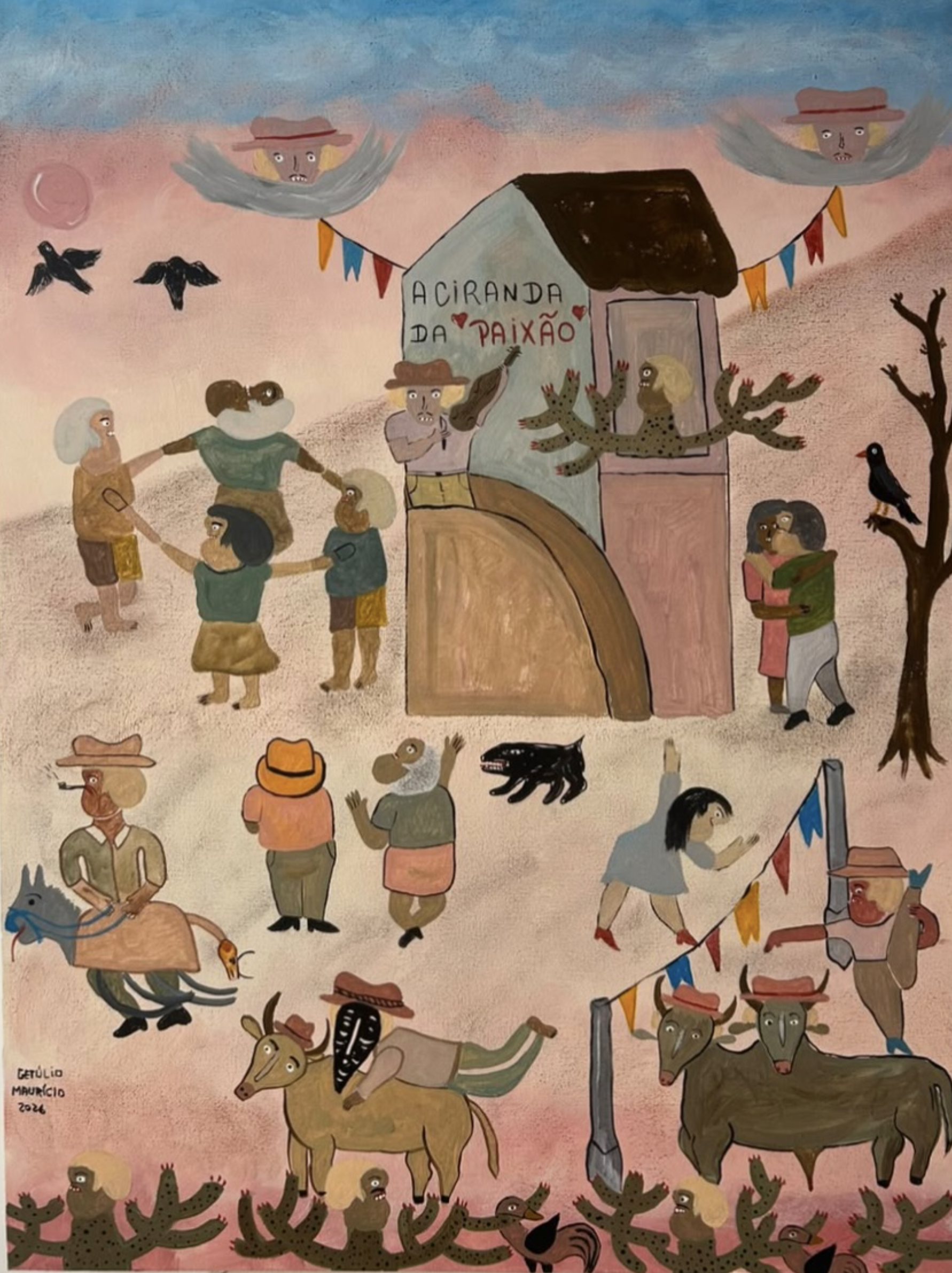
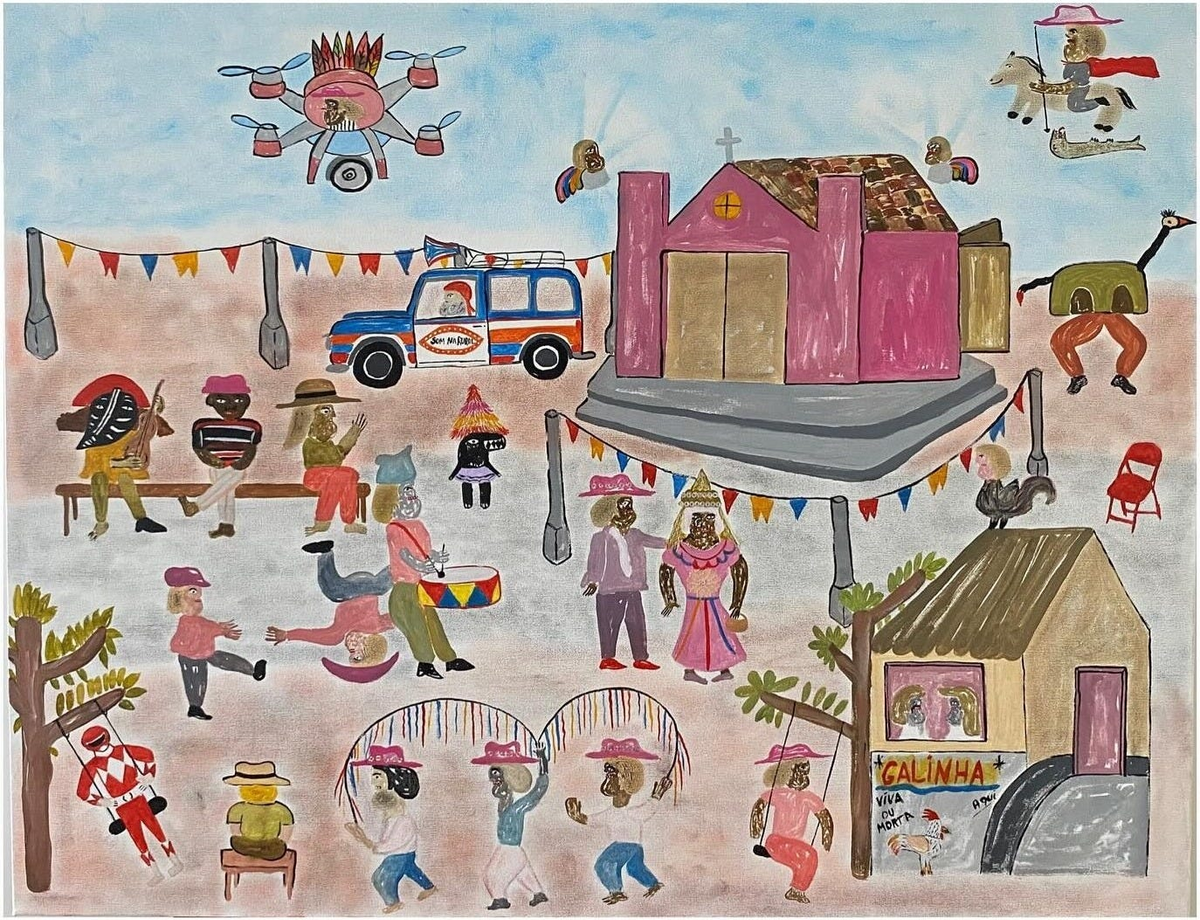
His compositions often resemble open-air theaters. Rather than organizing a scene around a single protagonist, Maurício distributes many small figures across the surface, each absorbed in a gesture, costume, joke, ritual, or encounter. Scale shifts freely, and everyday people share space with hybrid animals, fantastic creatures, saints, masked performers, superheroes, and objects from contemporary life. A church, a bar, or a modest house can anchor the scene while processions and games unfold around it. The pale grounds and direct contours give every figure room to be read, yet the accumulation produces a lively rhythm. His color is warm and muted rather than spectacular, allowing pinks, ochres, greens, blues, and browns to carry the atmosphere of recollection. See also Aurelino dos Santos and the City as a System of Signs.
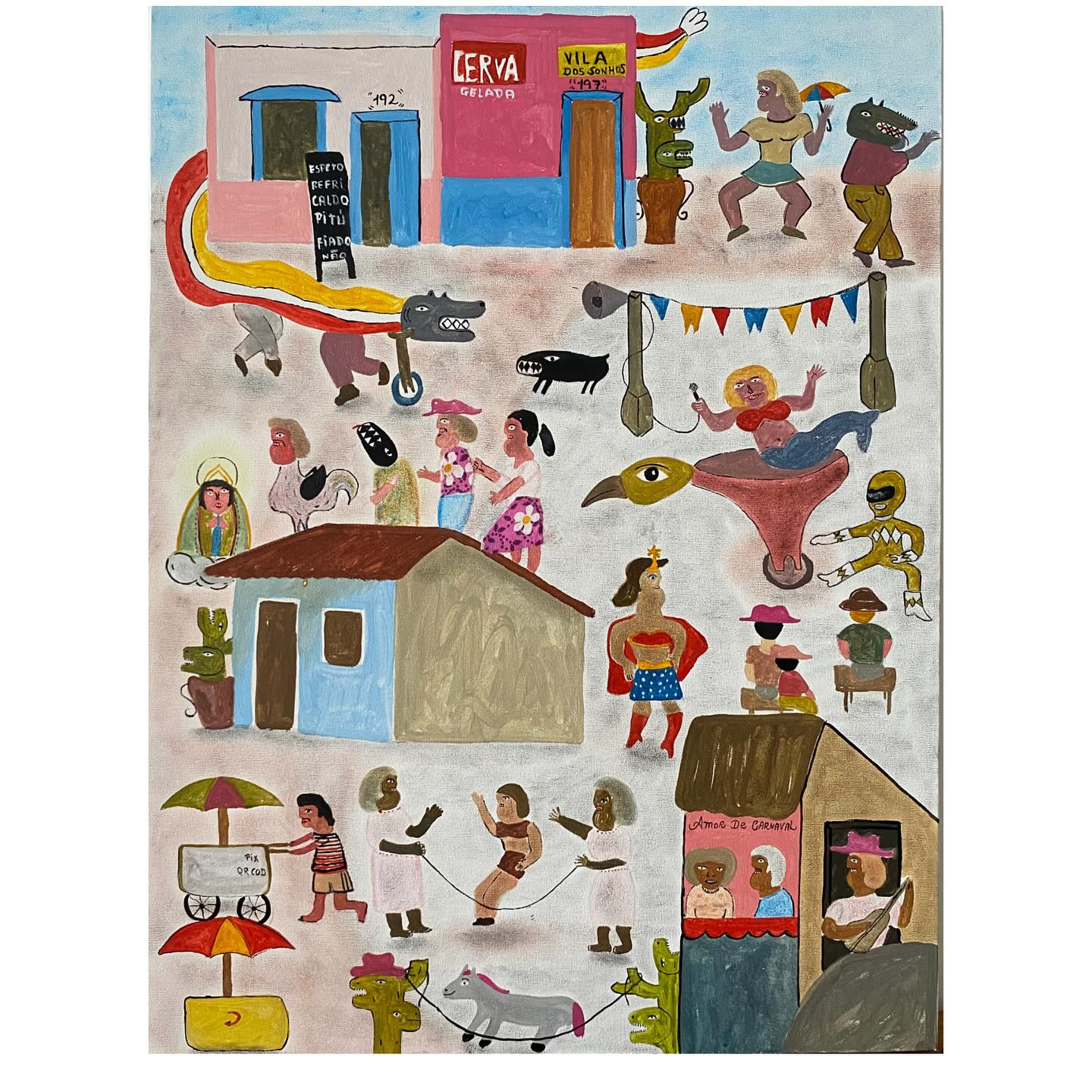
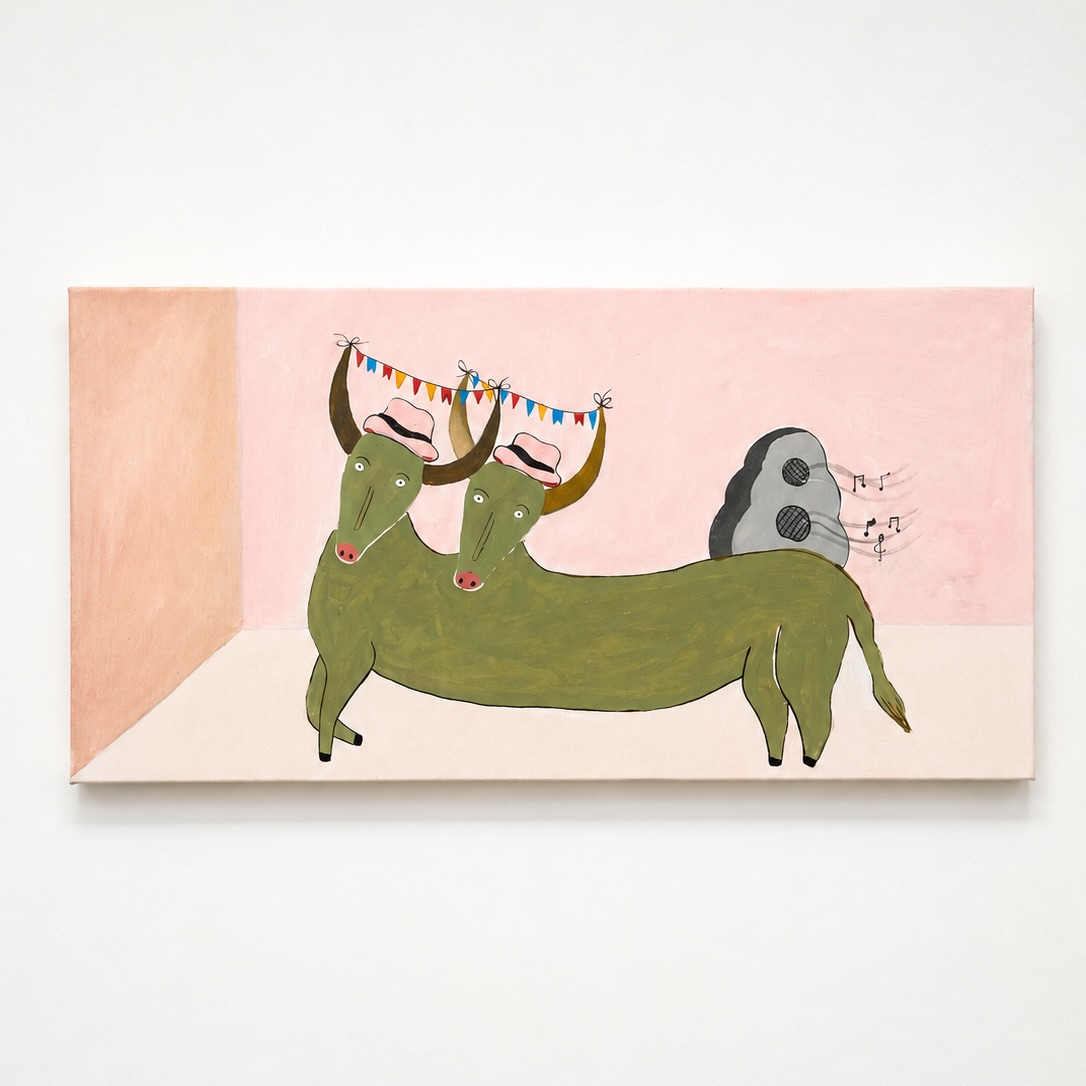
The selected paintings show how central popular festivities are to this vocabulary. Cavalo-marinho, carnival, and ciranda appear not simply as subjects but as structures for imagining community. In the double-headed ox, music seems to emerge from the animal itself, while banners turn its horns into a portable celebration. Elsewhere, dancers, musicians, horses, birds, black dogs, houses, and festive pennants form dense constellations of action. The works move between recognizable traditions and invention without treating either as secondary. Humor is especially important: bodies stretch, animals acquire human features, and unexpected encounters interrupt the expected order of the street. Through these transformations, Maurício preserves the freedom and improvisation that make popular performance a living language.
Maurício's paintings value culture as something made collectively and renewed through use. Their apparent simplicity is a deliberate way of keeping attention on storytelling, gesture, and relation. Each image becomes an archive without losing the pleasure of a tale: a record of how people dress, dance, play, worship, gather, and imagine other worlds. In a period when many communal traditions are reduced to spectacle or nostalgia, his work insists on their present tense. The Northeast that appears here is not a decorative backdrop but a field of knowledge carried by ordinary people. Between tradition and daily life, Getúlio Maurício creates a generous visual world in which popular culture remains active, changeable, and inseparable from belonging. It is a world sustained by memory, invention, and shared attention.