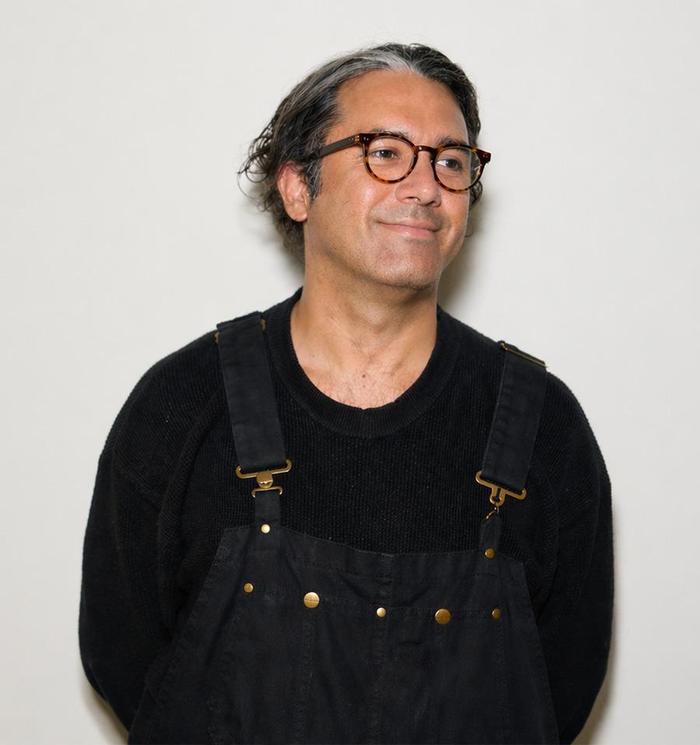
Calasans Neto: Bahia's Vibrancy Through Paint
Origins
José Júlio de Calasans Neto was born in Salvador, Bahia, in 1932 and became one of the defining artists of modern Bahian graphic art. He first studied painting with Genaro de Carvalho, then moved toward printmaking through classes with Mário Cravo Júnior at the Escola de Belas Artes da Universidade Federal da Bahia. That shift mattered: in wood and metal, Calasans found a language able to hold popular culture, literature, cinema, and the visual rhythm of Salvador without turning them into folklore. See also Cordel Does Not Fit in Drawers: Marina Nabuco on the Living Archive of Instituto Brincante.
His mature work is inseparable from the culture of Itapuã and from the printed page. Portfolios such as Abaete: dez xilogravuras (1979), public projects such as Metamorfose dos Habitantes da Lagoa (1985), paintings such as Duplicidade na Lagoa Serie Metamorfose (1987), and early works such as Paisagem Urbana (1972) show an artist repeatedly returning to landscape, myth, animal forms, and coastal memory. He also illustrated books by Jorge Amado, including Tereza Batista Cansada de Guerra and Tieta do Agreste, bringing the direct cut of the woodblock into conversation with fiction, cordel, and the social imagination of Bahia. See also Delson Uchoa and the Latitude of Color.
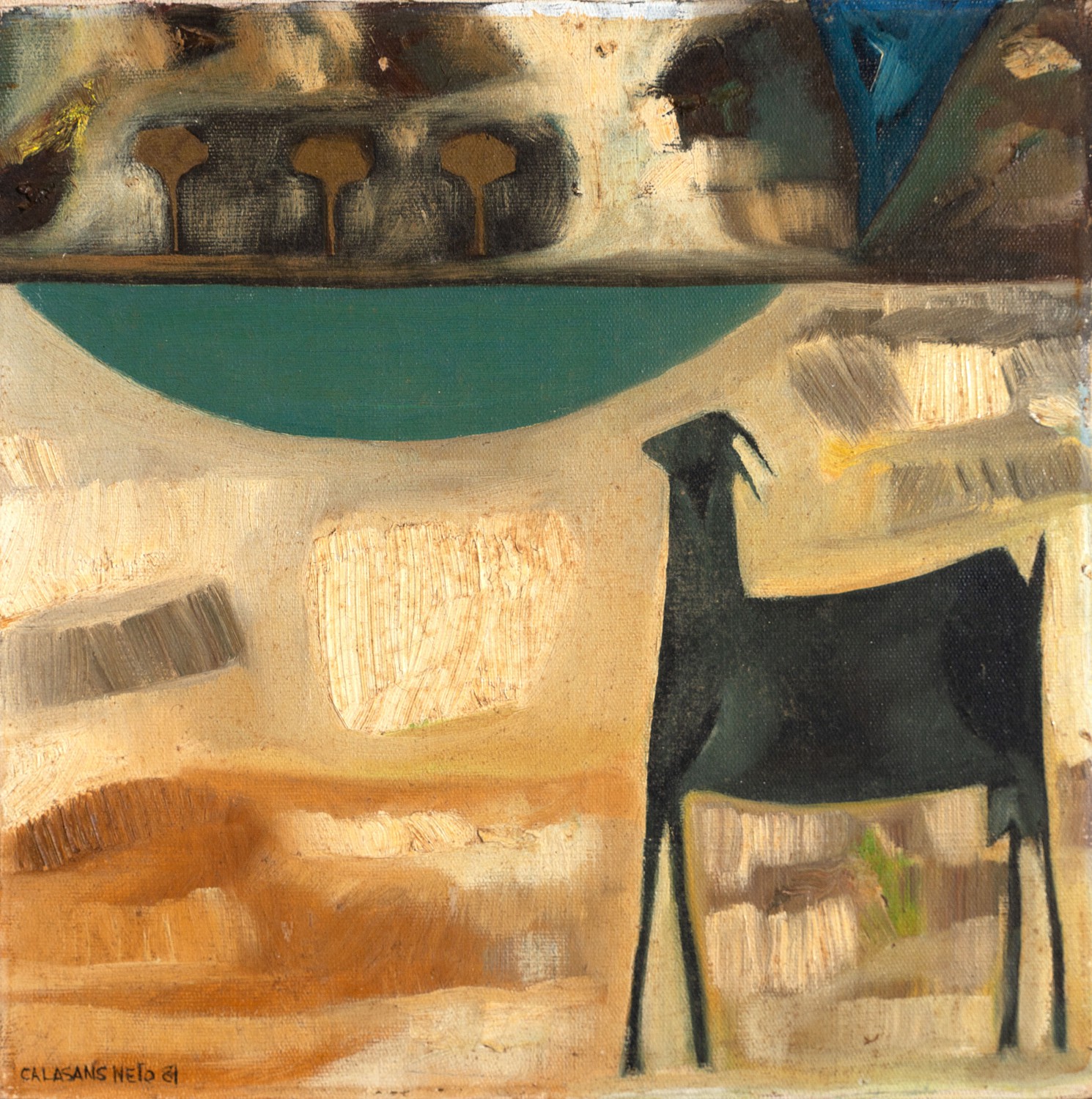
Artwork image.
Calasans also worked beyond the studio. Between the 1950s and 1960s, he created scenery for theater and cinema, including productions connected to Glauber Rocha and Ruy Guerra. In Salvador, he helped found Jogralesca, the magazine Mapa, and Editora Macunaíma, joining a generation that treated art, poetry, publishing, and film as part of the same cultural field. His exhibition history places that local commitment in a wider circuit: he appeared at the Museu da Universidade do Ceara, the Museu de Arte da Bahia, the Bienal de São Paulo 1985, and the Bienal de Havana in 1986. See also Madalena Santos Reinbolt: Figures Held Between Memory and Form.

Artwork image.
Public collections
What gives Calasans Neto continuing force is the way his images make craft feel active rather than nostalgic. The cut line becomes a way to think: about the body, the sea, animal transformation, Afro-Bahian memory, and the public life of images. "Calasans Neto demonstrates mastery of the new possibilities of woodcut," according to the Escritorio de Arte profile, a concise description of why his prints still feel open and inventive. His career shows how a Salvador artist could work from a very specific place and still build a language with national and international reach. See also Sérvulo Esmeraldo: Geometry in Motion.
Sources:
(1) Escritorio de Arte - https://www.escritoriodearte.com/artista/calasans-neto
(2) Camara dos Deputados - https://www.camara.leg.br/internet/Eventos/Sem_Conf_Realizados/2004/GabinetedeArte/ArteBaiana/calasans_neto.asp
(3) Leilao de Arte - https://www.leilaodearte.com/leilao/2013/novembro/13/calasans-neto-duplicidade-na-lagoa-serie-metamorfose-2037/
This article is part of the CASCA Archive, documenting visual artists from Northeast Brazil. Story about Calasans Neto.