Charles Lessa Rebuilds the Cariri in Paraíso relembrado
In Paraíso relembrado, Charles Lessa turns remembrance into a place that can be entered, crossed, and rearranged. Opening at Cave in Fortaleza on September 26, 2026, the solo exhibition marks ten years of the artist's practice and presents a new investigation of Brazilian fantastic realism. Curated by Lucas Dilacerda, the show begins with memories of the Cariri region—childhood, religion, popular culture, and the dry contours of the sertão—but refuses documentary reconstruction. Instead, Lessa uses those materials to build an oneiric geography in which the familiar returns altered. Born in Crato in 1993 and trained in Visual Arts at the Universidade Regional do Cariri (URCA), he lives and works in the territory that his paintings repeatedly dismantle and remake. See also Aurelino dos Santos and the City as a System of Signs.
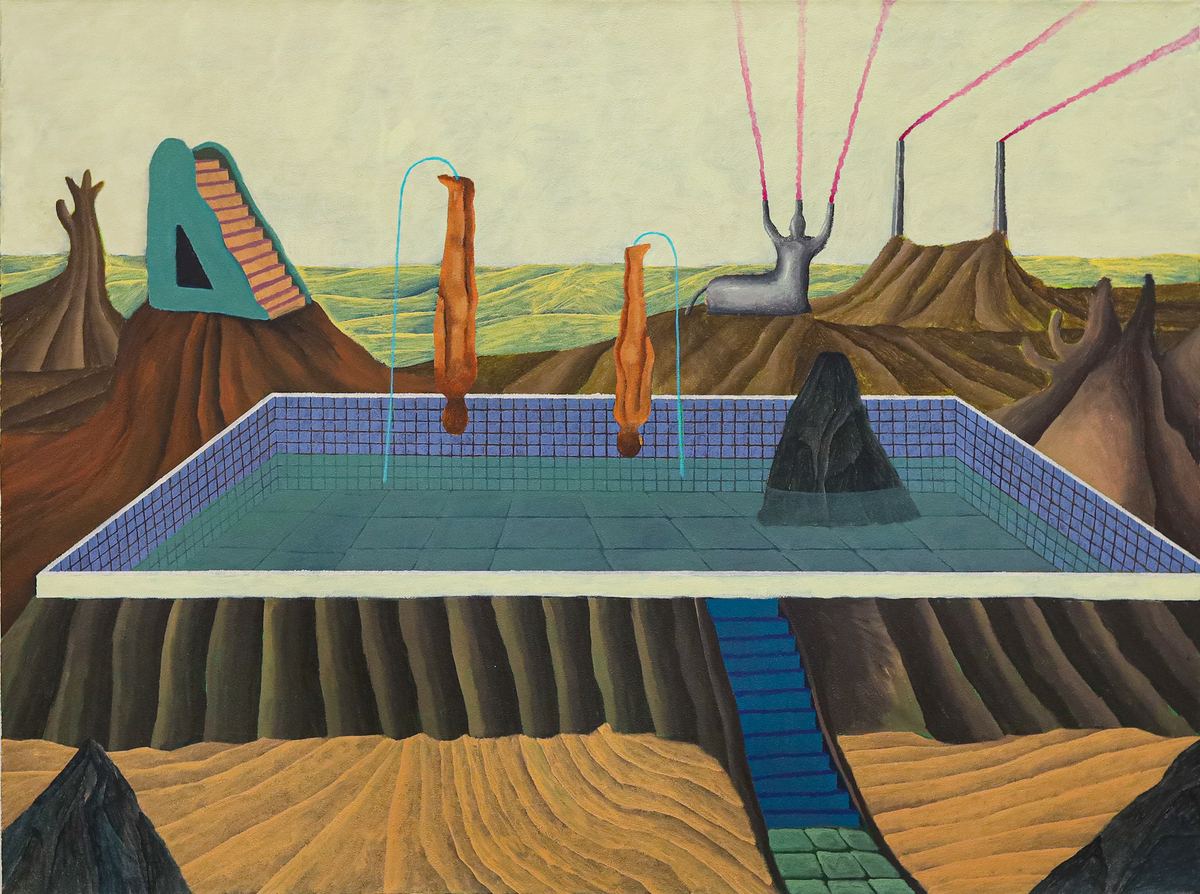
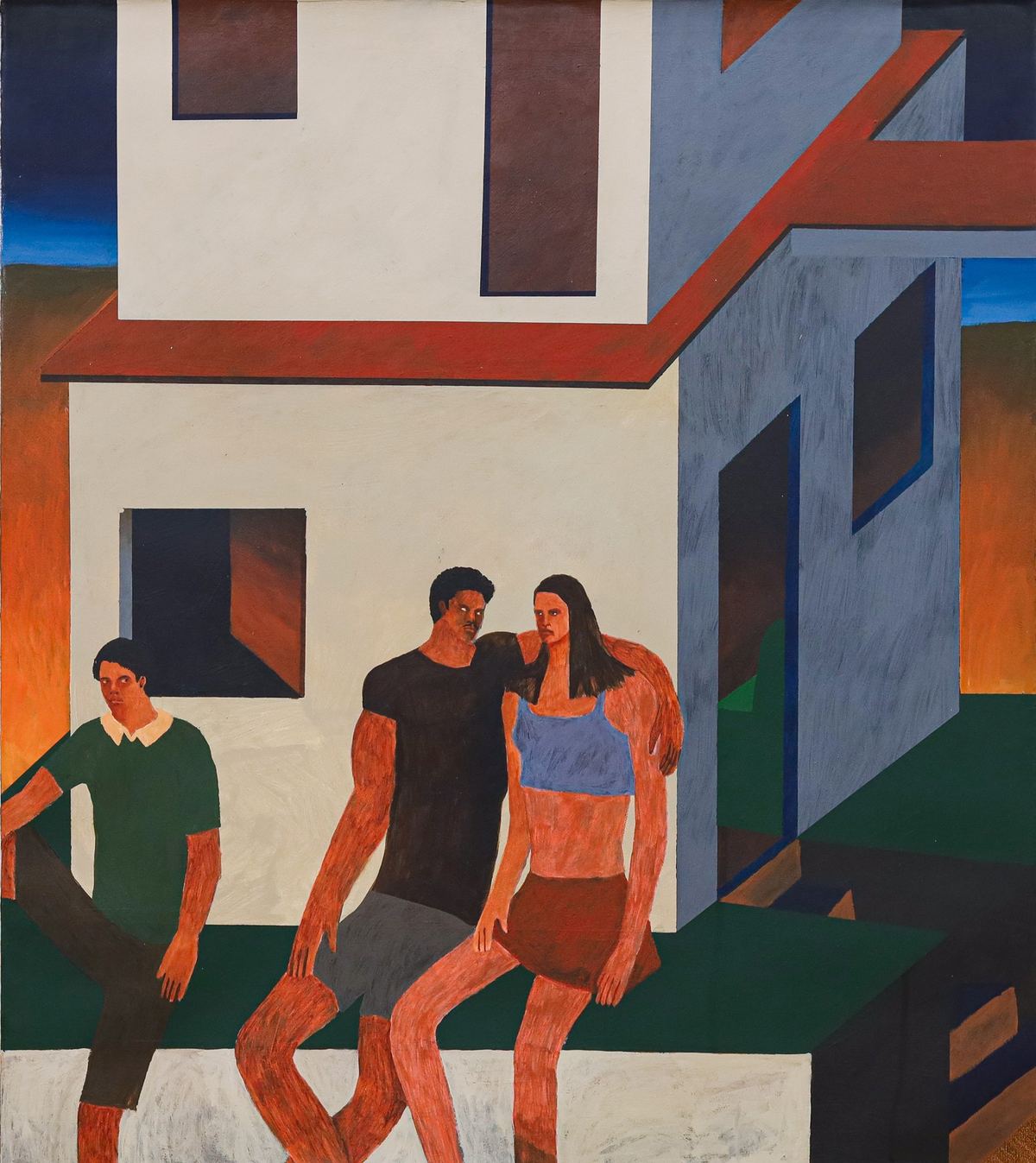
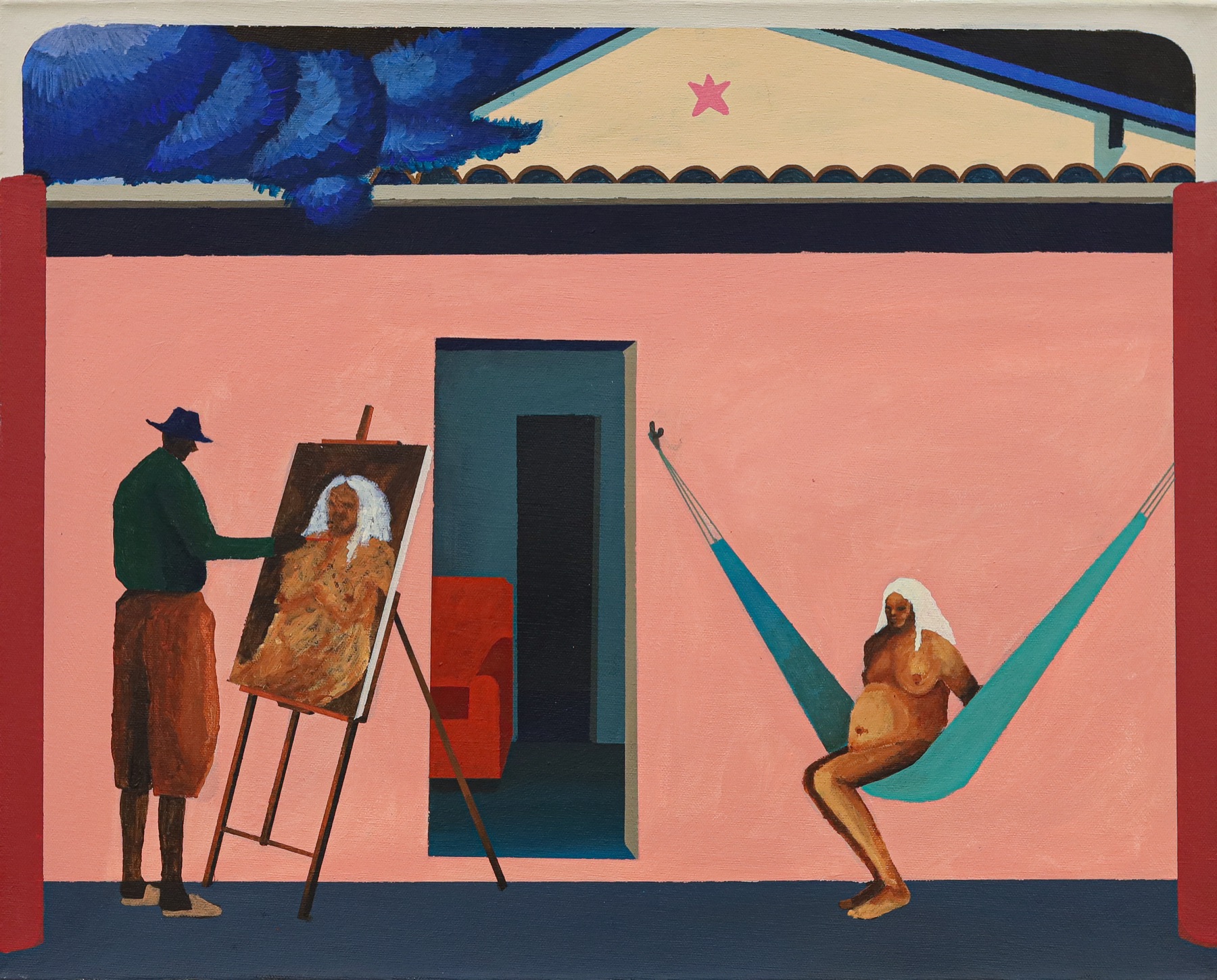
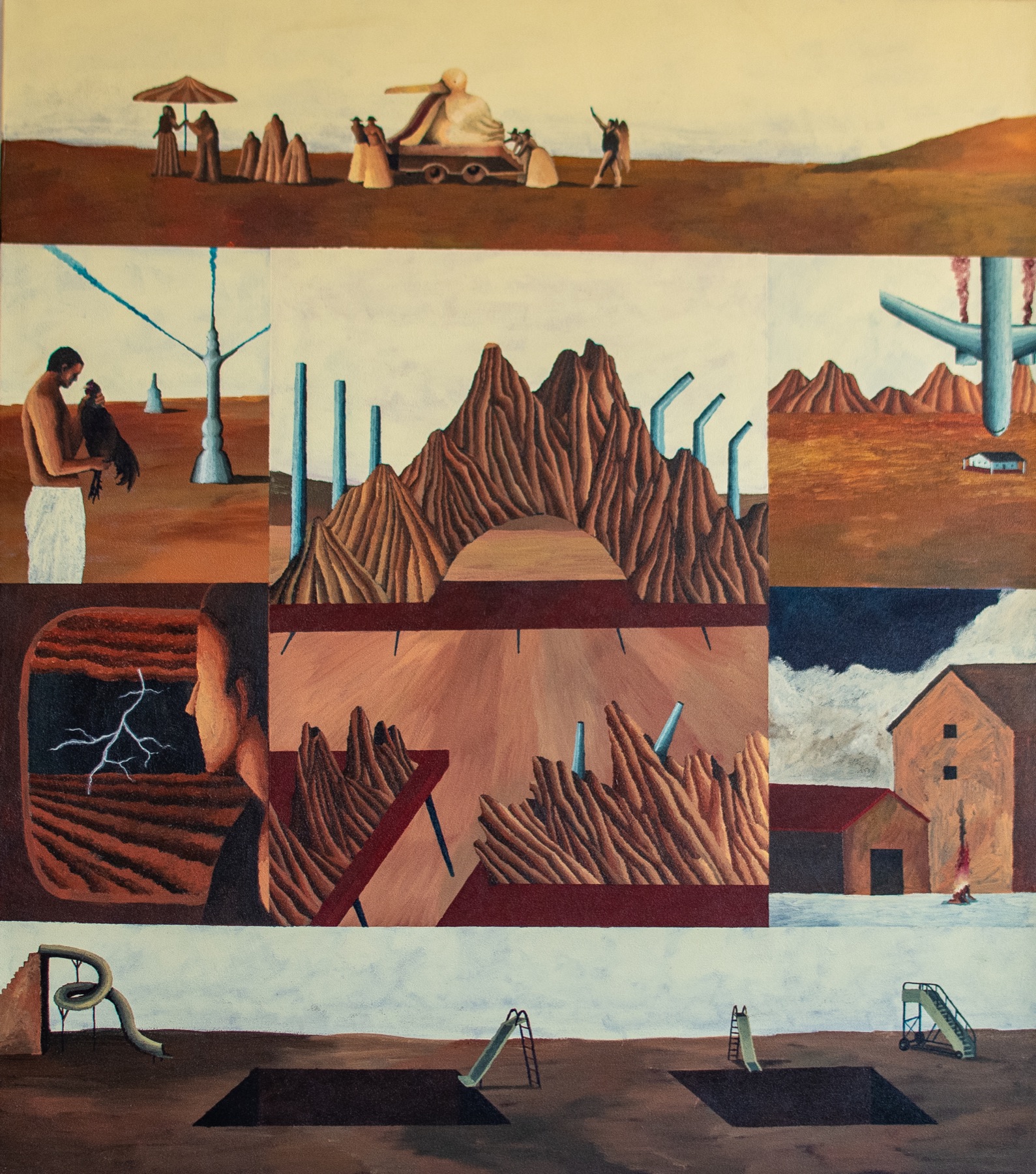
Architecture becomes a protagonist in this new body of work. Houses, corridors, stages, chapadas, and labyrinths do more than contain the figures: they behave like extensions of memory and states of mind. In one painting, a pink house frames an artist at an easel and a reclining body in a hammock, doubling the act of looking while a star hovers above the roof. Uma província: esta (2026) divides the landscape into simultaneous episodes—processions, mountains, industrial forms, animals, lightning, playgrounds, and empty structures—so that chronology gives way to a compact visual atlas. Elsewhere, monumental buildings press against three figures, converting social proximity into a scene of architectural tension. Space in these works is never neutral; it remembers, conceals, and directs the drama. See also Gabriel Archanjo and the Figure as a Field of Resistance.
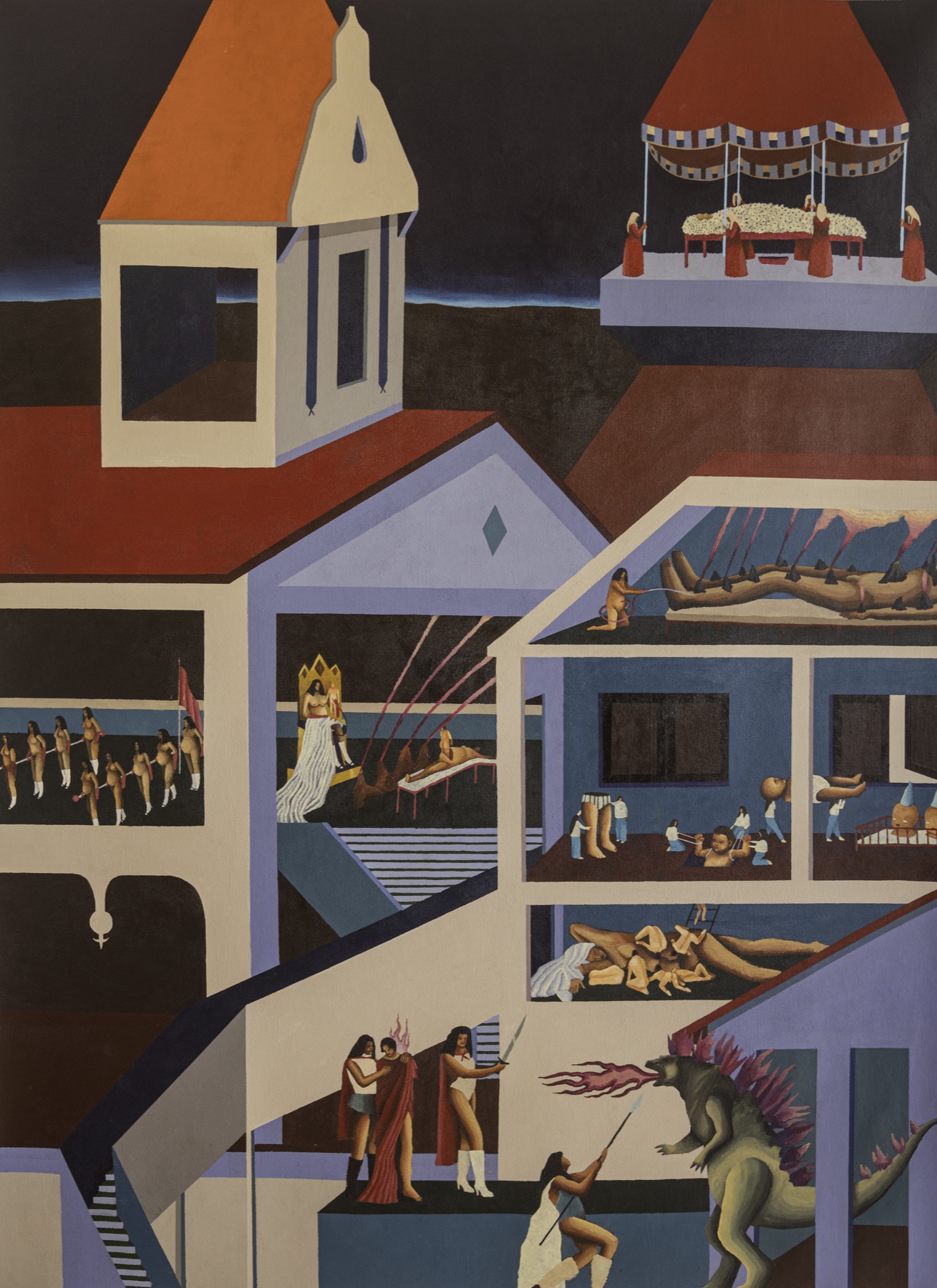
Lessa's paintings are populated by angels, dogs, saints, demons, monsters, and queer bodies that coexist without stable hierarchies between sacred and profane, beauty and strangeness, dream and nightmare. Internet imagery, pop culture, humor, devotional references, and speculative futures enter the same pictorial field. The largest composition selected here resembles a cutaway city or theatrical machine: rituals occur on rooftops, bodies gather in exposed rooms, a crowned figure presides over an interior, and a woman confronts a flame-breathing creature below. Dilacerda describes the artist's strategy through the idea of defamiliarization. Lessa creates distance from what he knows and returns it transformed, much as a dream absorbs ordinary experience and reorganizes it according to another logic. Painting becomes storytelling without linear time, allowing several episodes to occupy a single plane.
Paraíso relembrado extends a practice grounded in painting but also developed through murals and sculpture. Lessa was nominated for the Prêmio PIPA in 2022 and 2026, participated in four consecutive editions of the Salão de Abril, and has appeared in exhibitions at the Pinacoteca do Ceará, Museu de Arte do Rio, and Museu de Arte Contemporânea do Ceará. His recent residencies include Pivô in Salvador, Ilha do Ferro in Alagoas, and CasaAtelier in Miami in 2025. Yet the new work does not treat this circulation as an escape from the Cariri. It makes distance a method for returning differently. At Cave, the region becomes less a fixed origin than a generative fiction: a remembered paradise where landscape, desire, faith, fear, and invention remain open to new arrangements.