Pedro Delgado: The Sea as Memory and Counter-Image
Pedro Delgado’s paintings begin with the coast of Paraíba, but they do not treat it as scenery. Born and raised in João Pessoa, Delgado remembers a childhood shaped by frequent journeys to the beaches of the state, where cliffs, rocks, open water, and family life formed an emotional geography distinct from the images usually imposed upon Brazil’s Northeast. His work turns that geography into a field of memory. The sea appears immense and unstable, while figures occupy the edge between land and water as if caught inside a half-remembered scene. By returning to these coastal experiences, Delgado challenges the idea that Northeastern identity can be reduced to drought, rural hardship, cangaço, or other familiar stereotypes. His paintings insist that the region also contains metropolitan childhoods, leisure, intimacy, desire, and expansive oceanic landscapes. See also Antonio Maia and the Quiet Gravity of the Sacred.
This effort to reconsider the Northeast emerged partly through displacement. Delgado moved to Rio de Janeiro in 2020, when he was dividing his time between acting and painting. Access to museums, exhibitions, established artists, and a younger contemporary scene widened his understanding of what painting could do. Yet theater proved equally decisive. A performance of A Invenção do Nordeste, developed by Grupo Carmin from the historical research of Durval Muniz de Albuquerque Júnior, transformed how Delgado understood the production of regional identity. Returning to João Pessoa, he began to use painting as a means of questioning inherited narratives. Distance allowed him to see his own territory differently: not as a fixed origin to illustrate, but as something continuously reconstructed through images, institutions, prejudice, affection, and personal experience. See also Terror Celestial Turns Fear into a Queer Grammar of Survival.
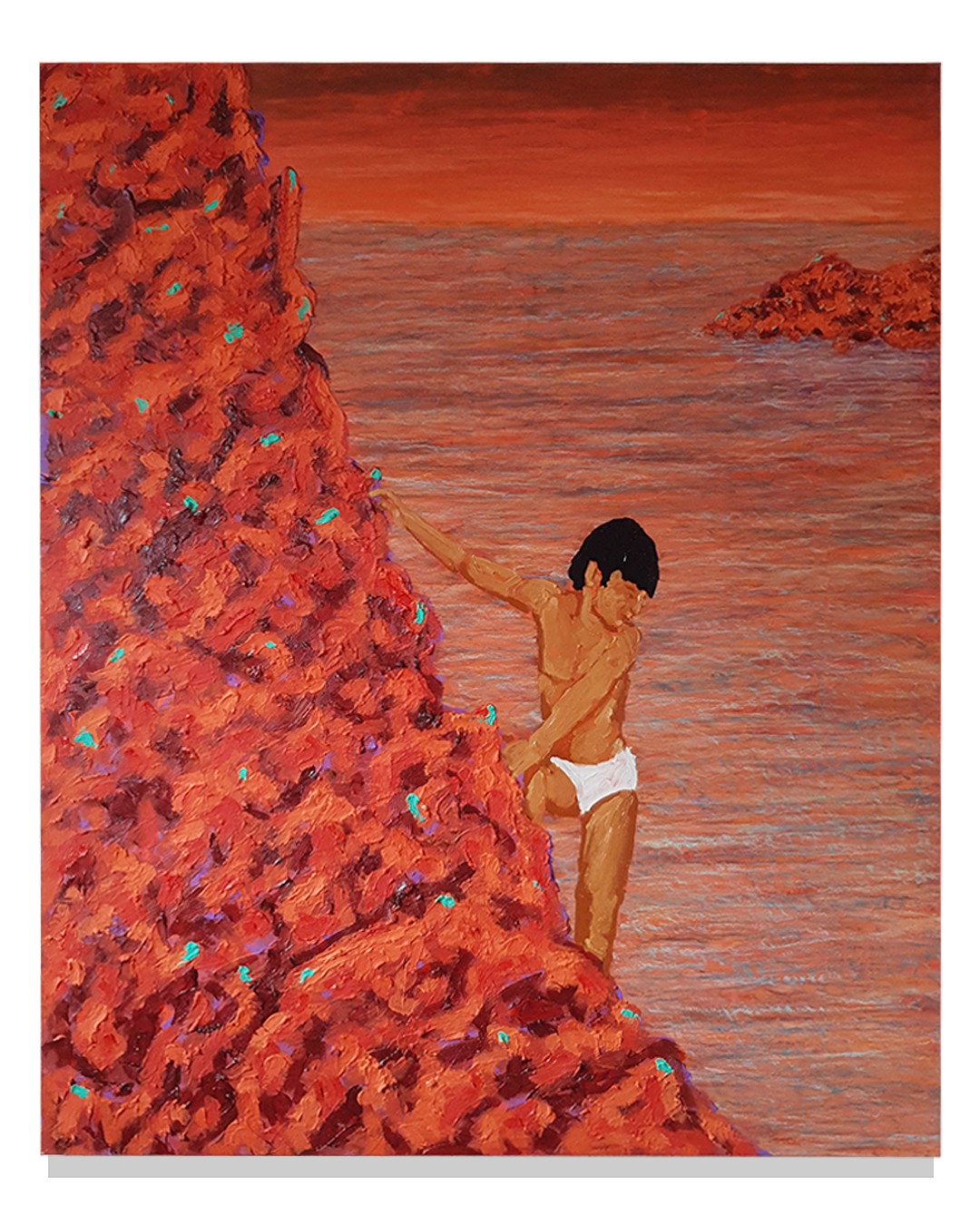
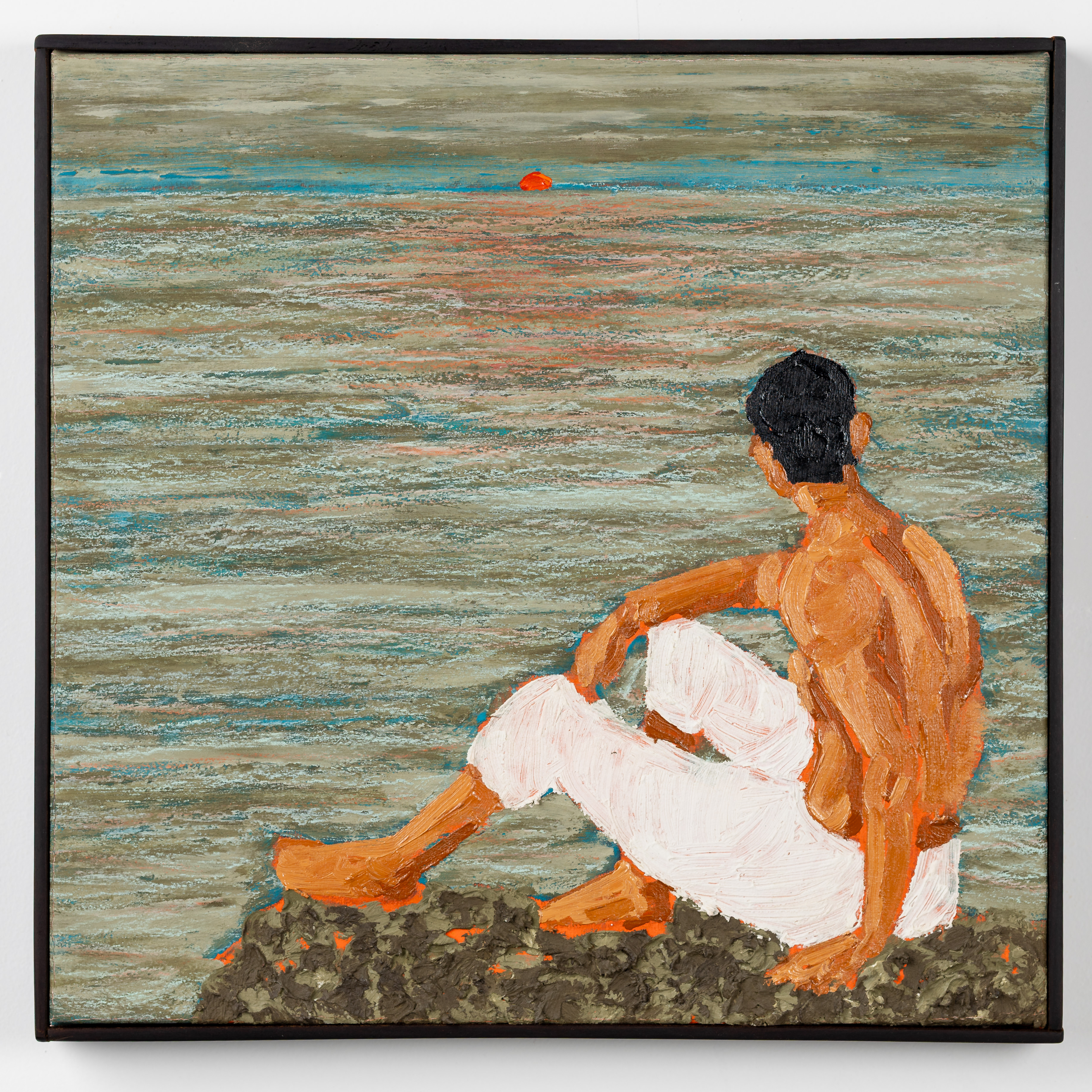
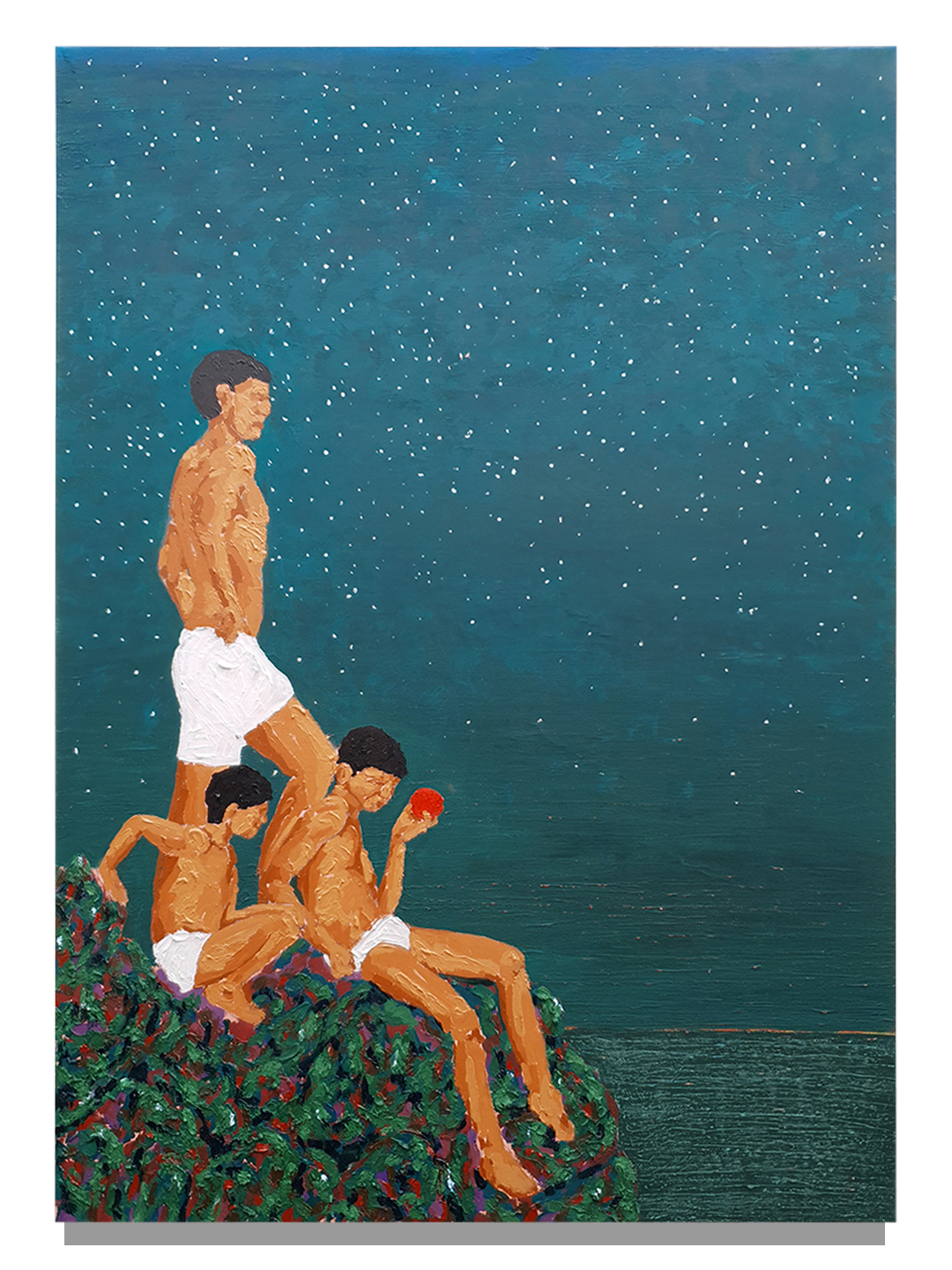
The four selected works reveal how this inquiry operates through composition and material. Boys climb or rest on cliffs rendered with thick, accumulated strokes, while their bodies remain comparatively spare and exposed. White shorts punctuate fields of blue, red, and brown; a small red object held by one figure becomes an intense point of concentration. The sea sometimes resembles a night sky, scattered with white marks, and elsewhere turns red or dissolves into horizontal layers of grey, turquoise, and pale pink. Delgado’s figures rarely dominate these environments. They wait, observe, balance, and look beyond the frame, giving each scene the suspended quality of theater. Even when several bodies gather, they seem absorbed in separate interior states. The paintings therefore move between collective memory and private solitude, using the beach as both a recognizable place and an emotional stage.
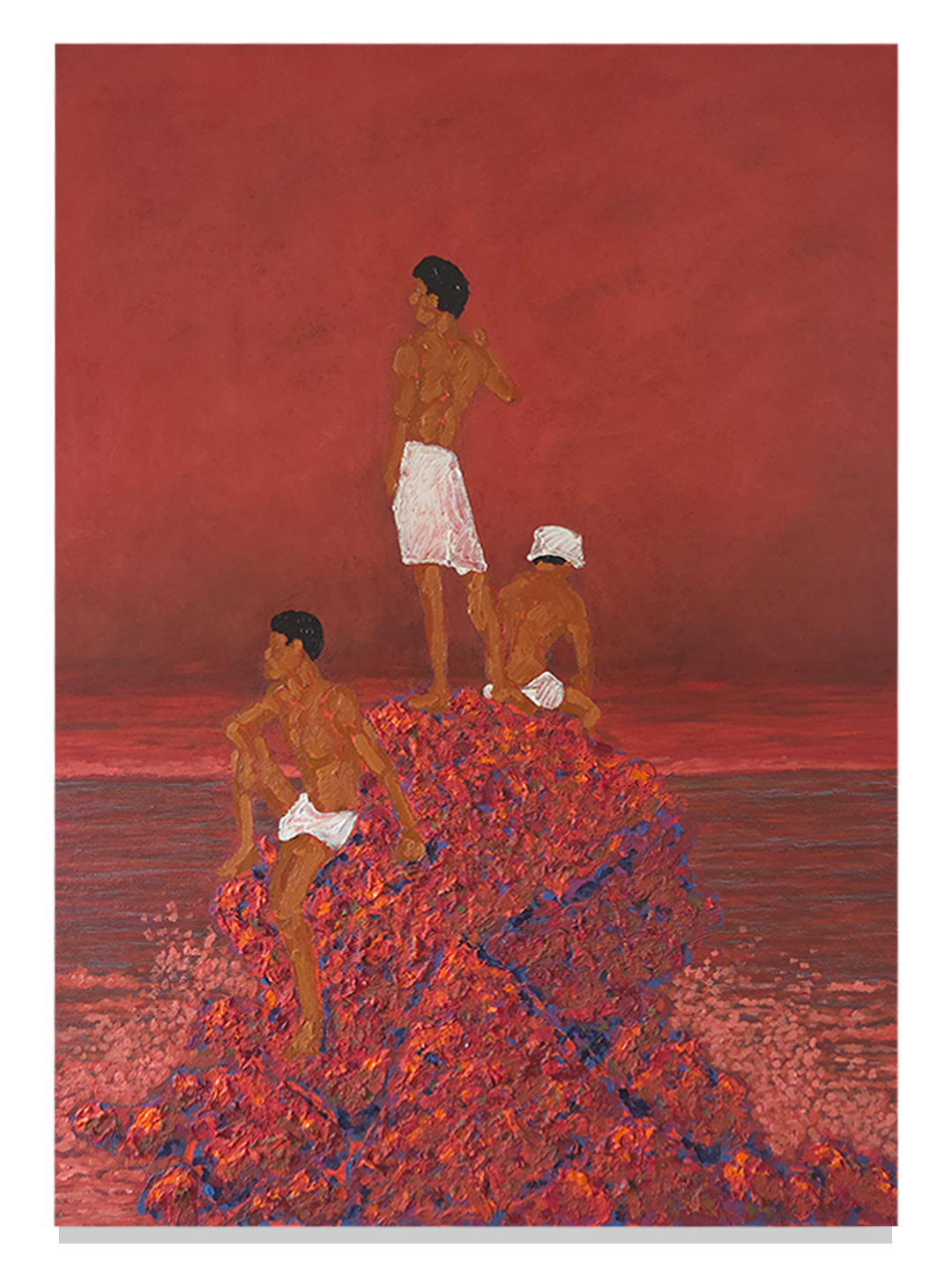
Delgado describes himself as a painter, but his formation in theater remains present in the physical act of painting and in the construction of scenes. Gesture is carried by the brushwork, while characters, pauses, and spatial relationships create an understated dramaturgy. In the widest image, a seated figure occupies the lower corner as the sea stretches almost empty before him; a tiny orange form in the distance intensifies the sense of waiting and separation. Such paintings do not present the coast as an exotic paradise. They recover it as lived territory, where childhood, race, masculinity, play, vulnerability, and belonging can coexist. Delgado’s political position emerges through this intimacy. By painting the Northeast from within his own memories, he produces a counter-image—one that resists simplification while allowing a personal history to open onto a broader cultural field.