Antonio Maia and the Quiet Gravity of the Sacred
Antonio Maia's paintings often meet the viewer with a face: oval, frontal, nearly still, its dark eyes open but withholding. The economy of that anatomy can look immediate, yet it was reached through a long and deliberate route. Born in Carmópolis, Sergipe, in 1928, Maia spent his childhood in the state's interior, where Catholic devotion and the material culture of popular faith became part of his visual memory. After moving to Rio de Janeiro in 1955, he worked as a painter, draftsman, printmaker, and illustrator. His first years in the city were devoted to informal abstraction and, between 1955 and 1963, to sustained experiments with texture. That early modernist training matters: the apparent simplicity of his later figures is not a retreat from formal inquiry, but its concentration. See also Pedro Delgado: The Sea as Memory and Counter-Image.
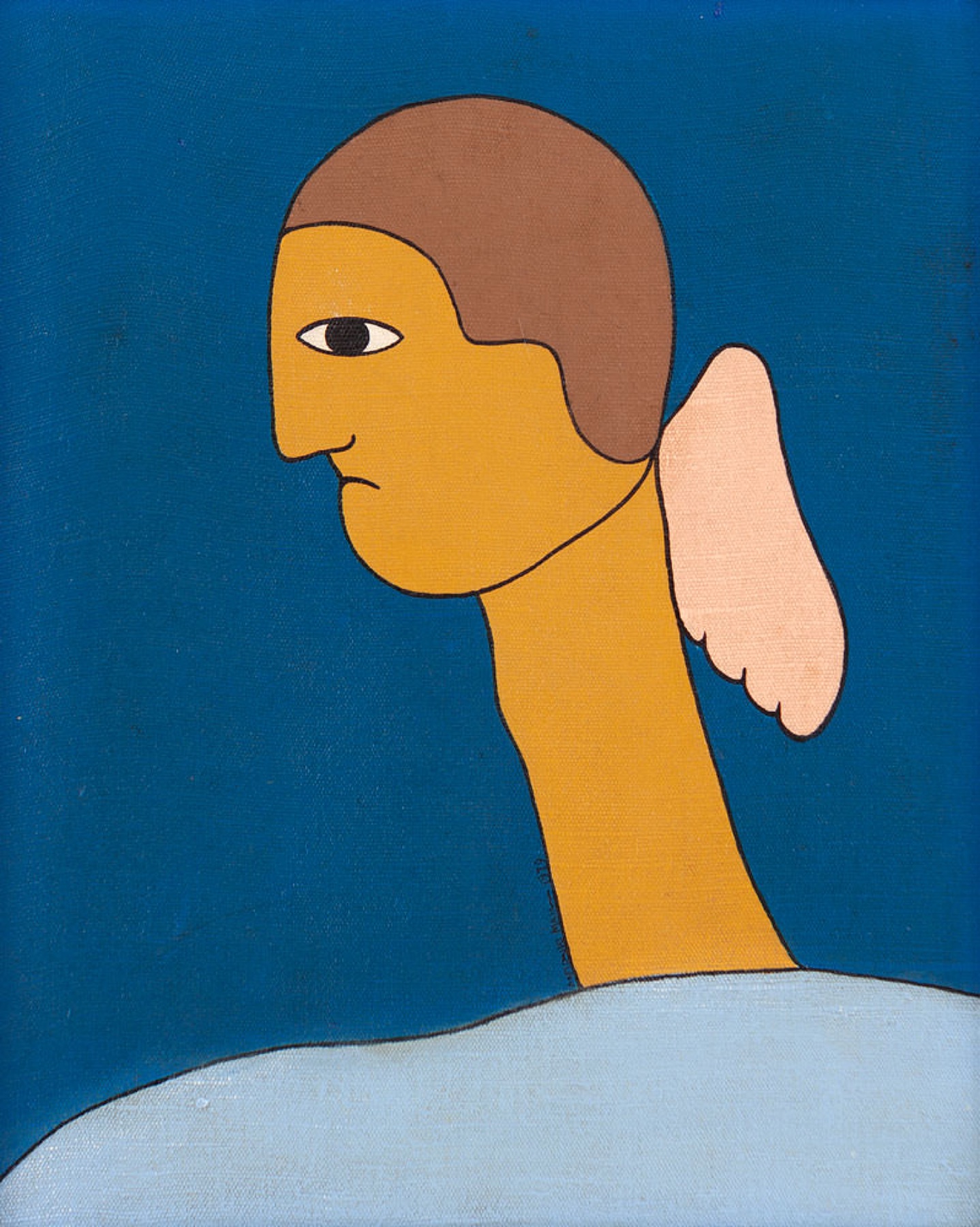
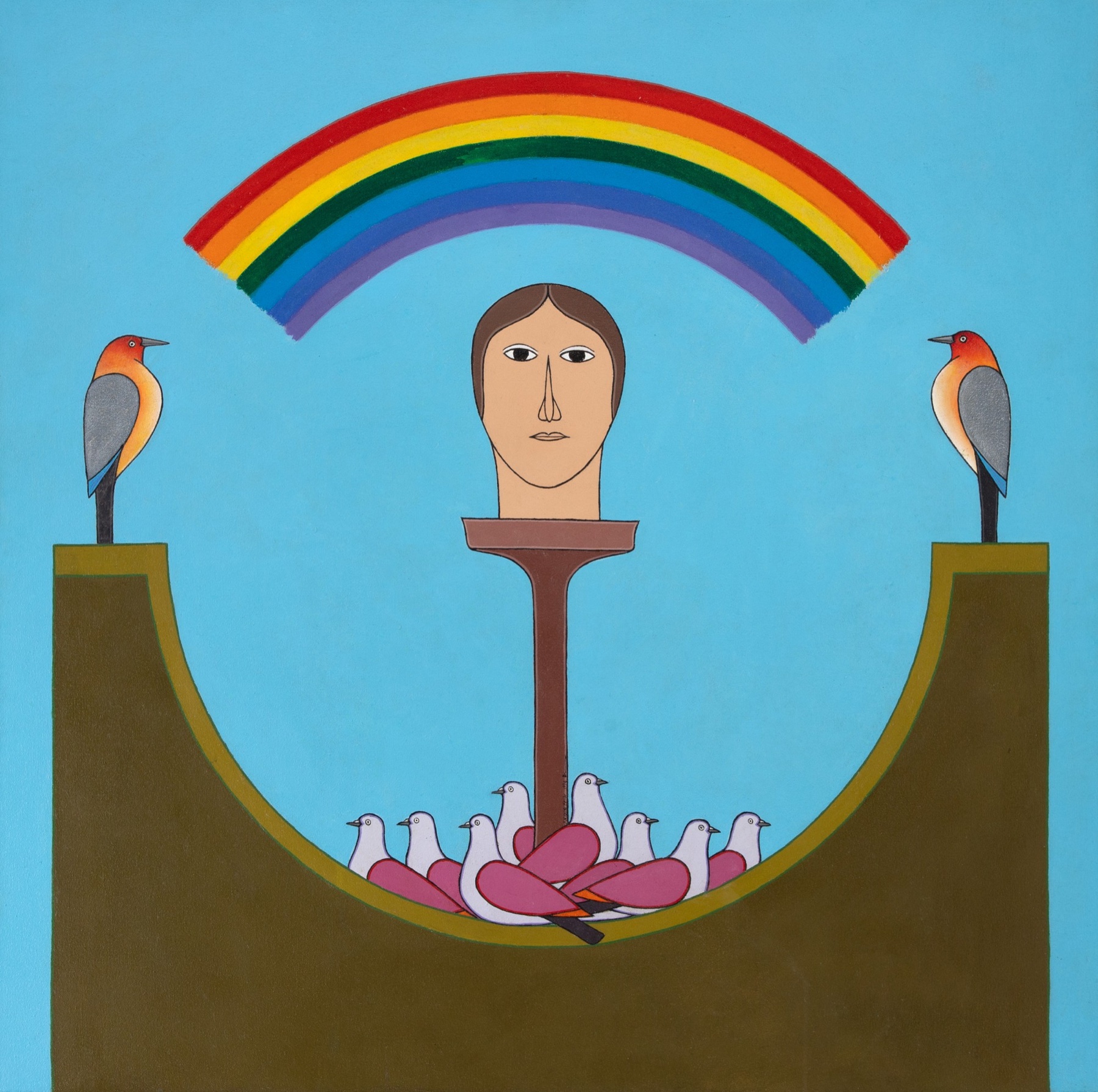
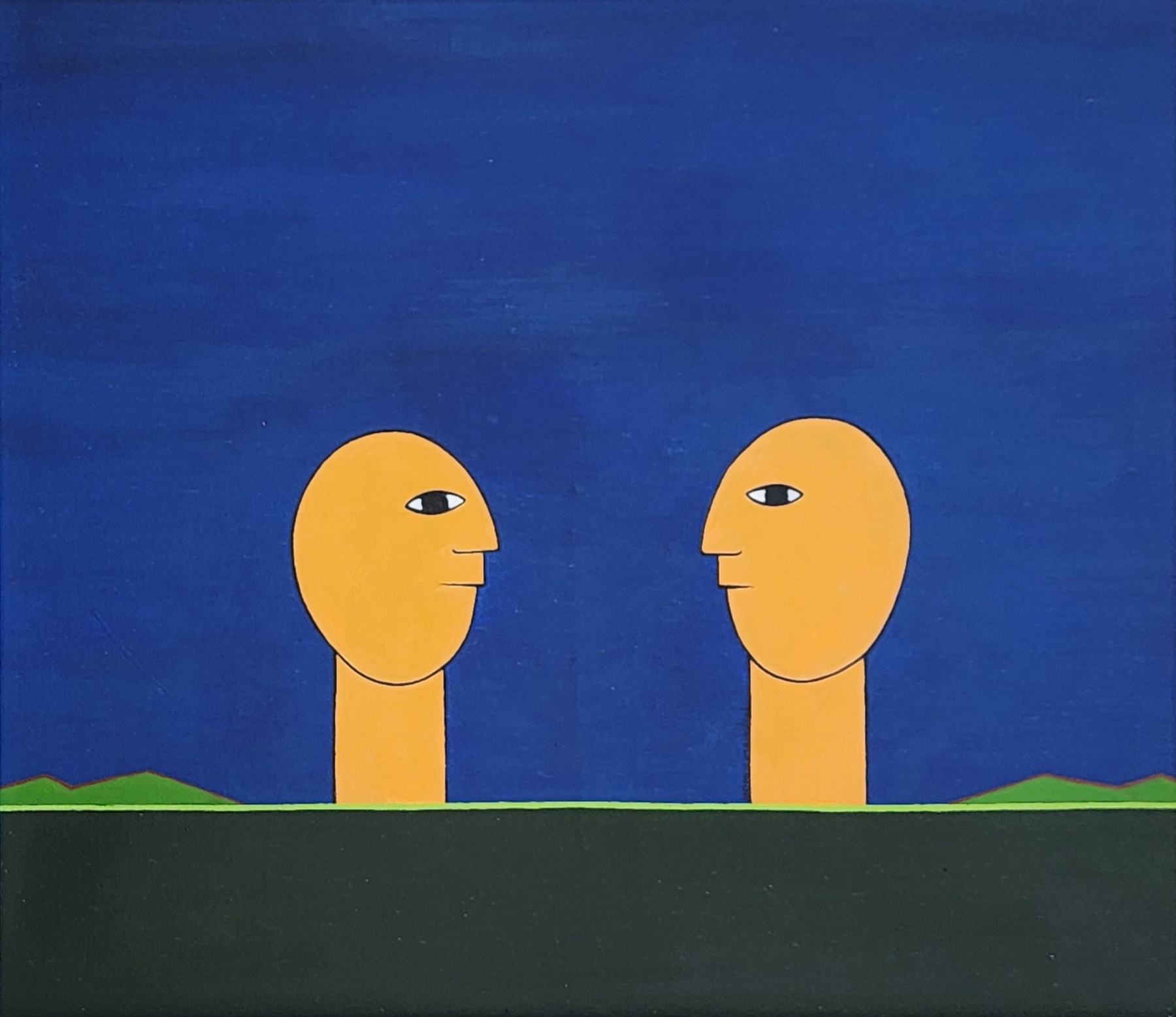
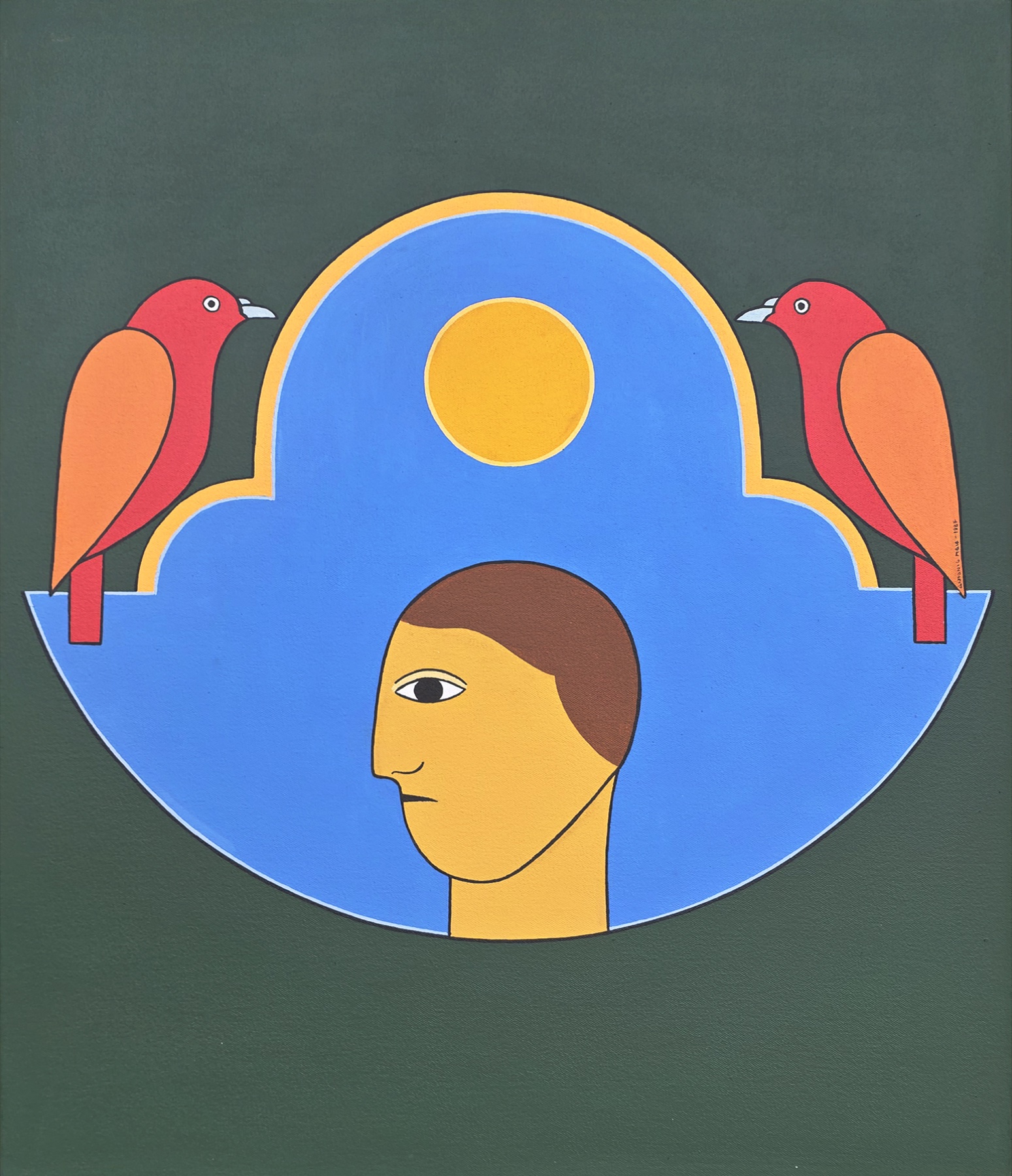
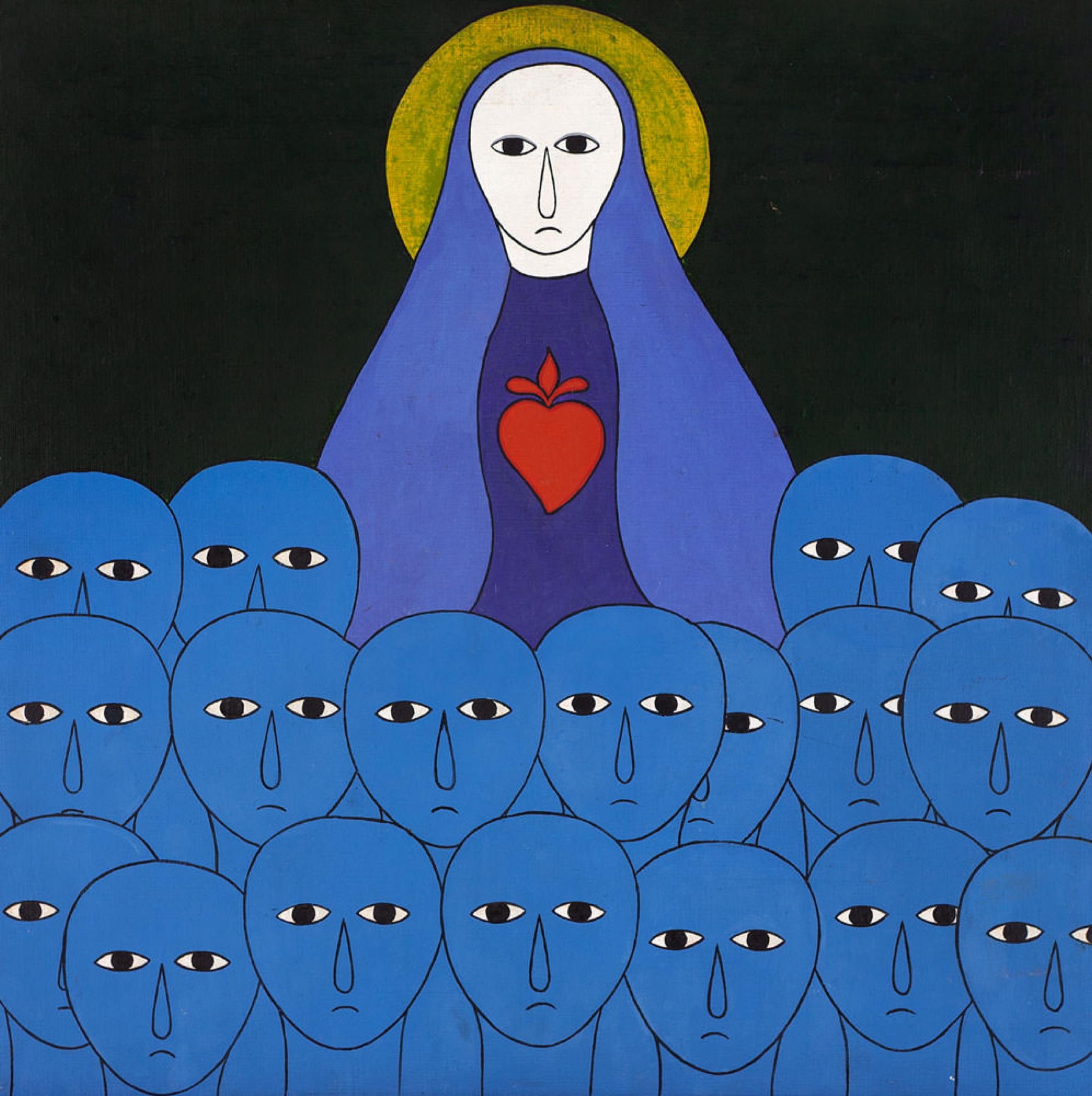
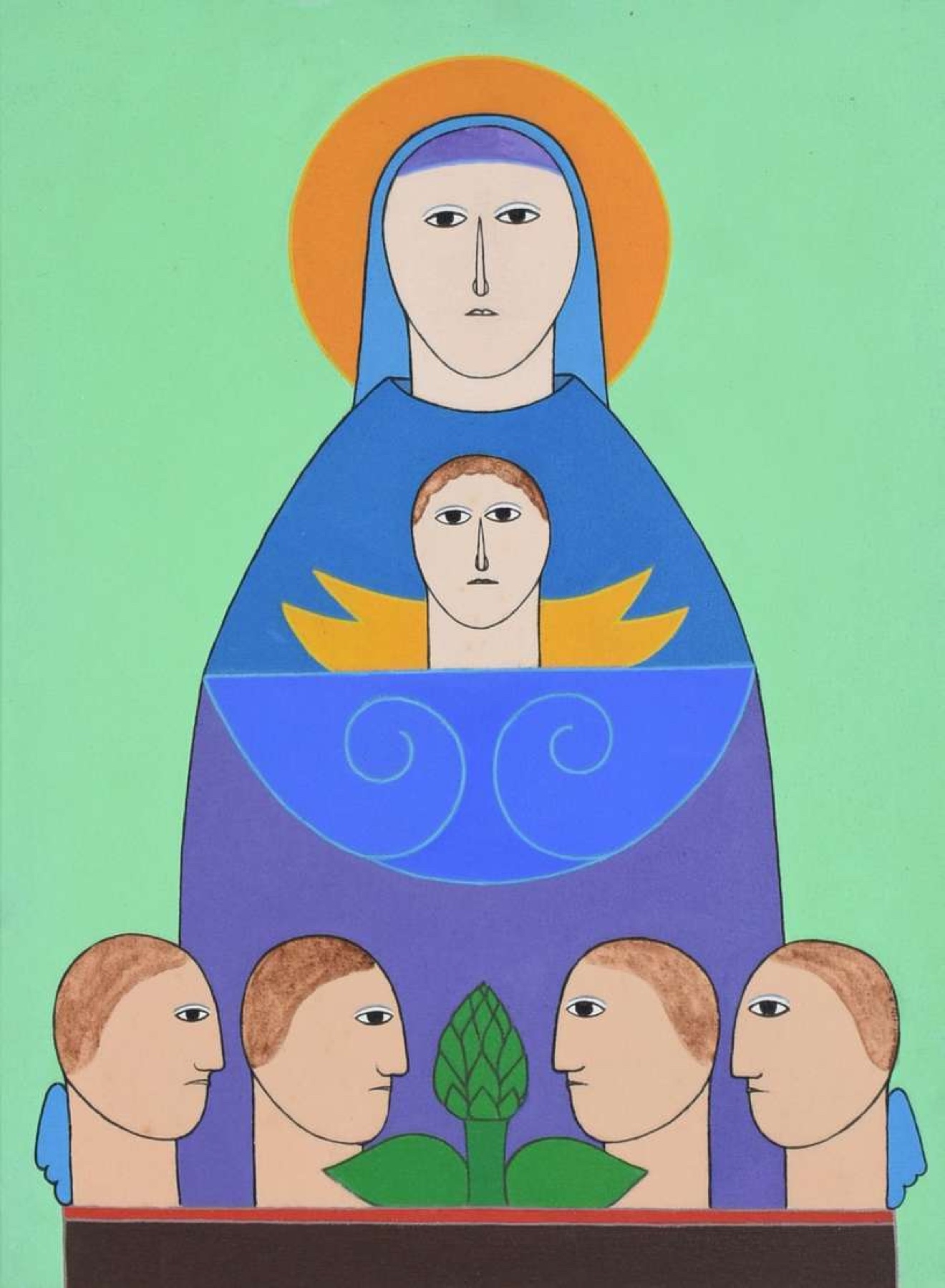
When Maia turned toward votive figures, saints, angels, birds, crowds, and solitary heads, he developed a grammar that could hold private memory and collective ritual at once. Flat fields of turquoise, cobalt, ochre, violet, and green give his images the clarity of signs, while black contours slow each shape into something emblematic. The faces share a family resemblance, but they are never merely repeated. A slight change in profile, scale, color, or placement alters the emotional pressure of the scene. In Ex-Voto, dated 1979, a single elongated head occupies almost the entire picture, suspended between portrait and devotional object. Elsewhere, a Virgin rises over a compressed blue congregation, or an angel appears in profile against a field of deep blue. The sacred arrives without spectacle; its power comes from stillness. See also 'As nossas imagens' Turns the Family Album Into a Disputed Archive.
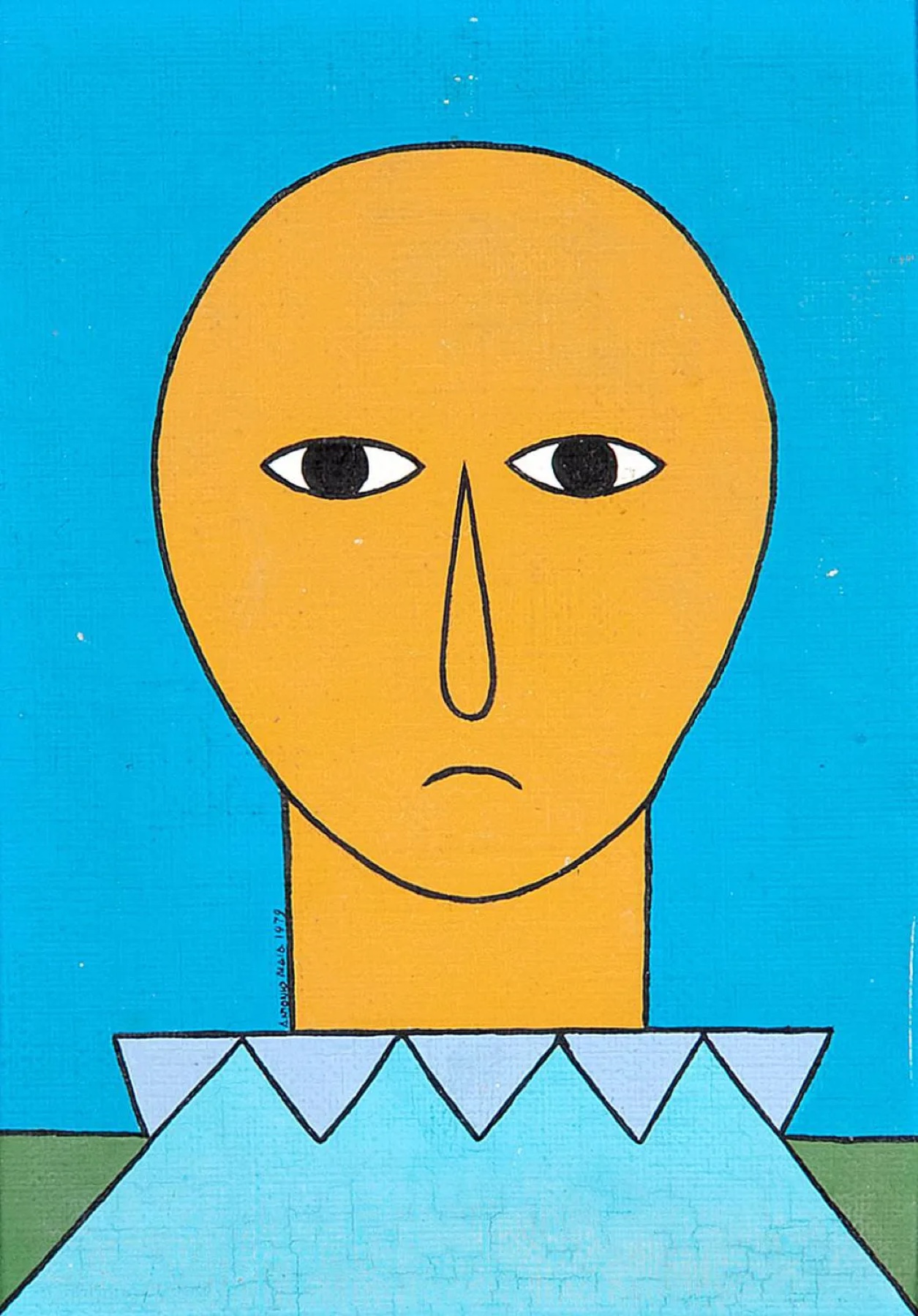
This restraint separates Maia's work from the easy category of folkloric illustration. He did not simply reproduce the religious imagery of Northeastern Brazil. He reorganized its visual codes through symmetry, seriality, unusual scale, and an exact sense of pictorial balance. One leg of his practice remains attached to the handmade ex-voto and the intimacy of a promise offered in exchange for grace; the other belongs to debates about modern painting, where a surface can be built through reduction as forcefully as through gesture. Pairs of figures face one another across open space. Birds stand like witnesses. Rainbows, halos, hearts, and wings operate as both symbols and structural devices. Even his crowds preserve a peculiar solitude: many bodies occupy the canvas, yet every gaze seems to remain inward.
Maia's career moved well beyond the regional frame sometimes imposed on artists who work with popular religion. He participated in the 8th and 9th São Paulo Biennials, received a travel award connected to the Instituto Cultural Brasil-Estados Unidos in 1968, and held solo exhibitions in Munich in 1971 and Bangkok in 1977. In 1973, works by him entered the collection of the Museum of Ontario in Canada. He continued to appear in major surveys of Brazilian art, including Tradição e Ruptura in 1984 and Tomie Ohtake na Trama Espiritual da Arte Brasileira in 2003 and 2004. Maia died in Rio de Janeiro in 2008, leaving a body of work in which faith is neither confession nor decoration. It is a way of organizing color, memory, and human presence until the most familiar symbols become quietly strange again.