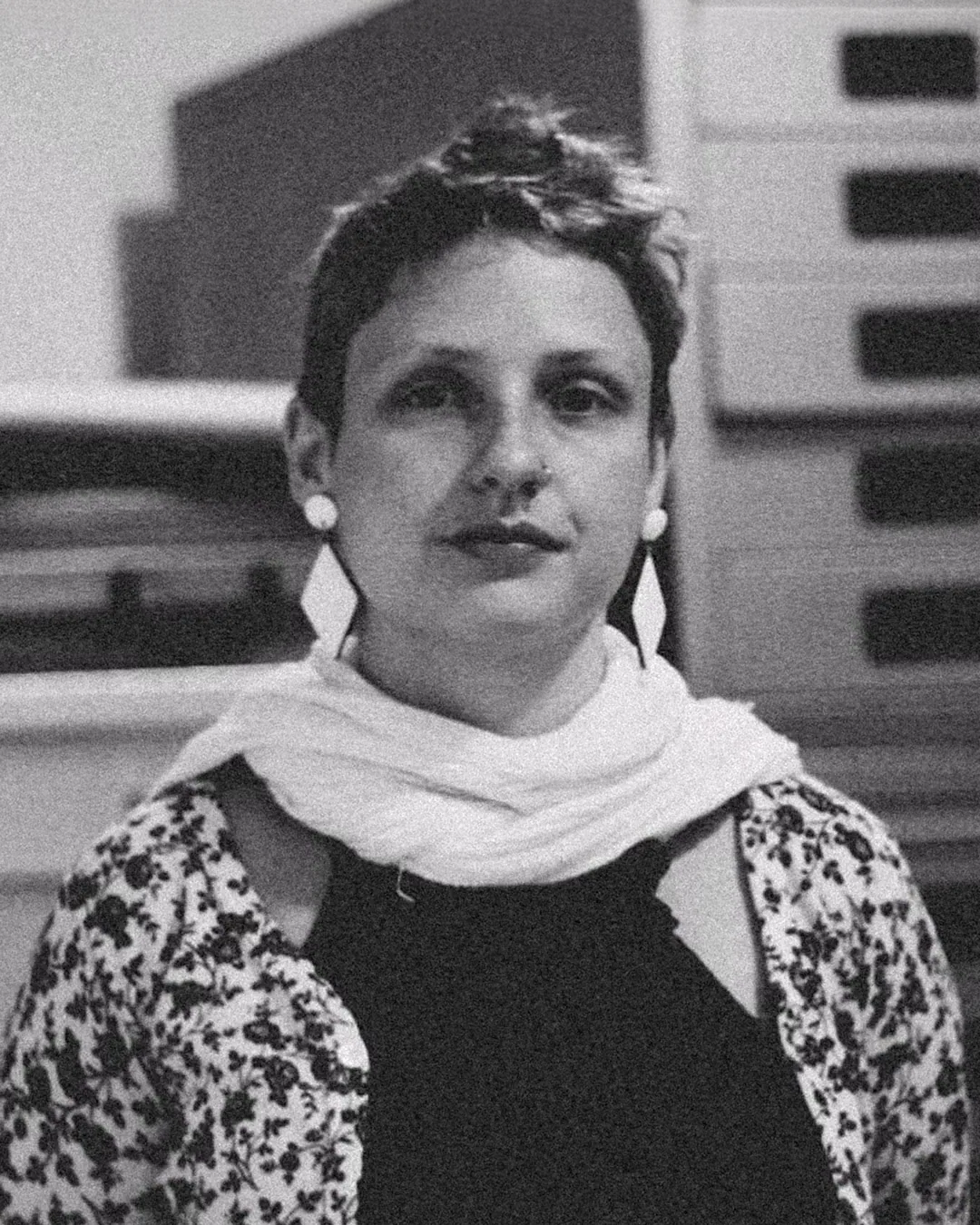
Gabriel Petribu and the Unplanned Geography of Matter
Origins
Gabriel Petribu's work starts from a restless passage between places, materials, and disciplines. Born in Recife in 1980, he began his artistic practice and his academic path in Economics at the Federal University of Pernambuco before moving into a broader visual formation between Brazil and Italy. Arte Plural Galeria notes that, since 2005, he has worked between the two countries and studied drawing and painting at the Accademia di Belle Arti di Firenze. That itinerary matters because his work does not treat landscape, object, or surface as fixed categories. It approaches them as situations: unstable fields where matter, memory, chance, and observation can be folded into one another. The paintings keep that movement visible in their tension between mapped place and handmade object. See also Cordel Does Not Fit in Drawers: Marina Nabuco on the Living Archive of Instituto Brincante.
The selected works make that logic visible through three distinct but connected images. Andorinha and Pico Santissima Trindade, both from 2025, are acrylic on wood and belong to the visual atmosphere of Vale do Catimbau. Their wooden support gives the paintings a direct, object-like presence, while their titles open the image toward flight, peak, place, and pilgrimage. In Andorinha, the swallow is not only a figure of movement; it becomes a way to think about orientation across a terrain. In Pico Santissima Trindade, the mountain reference suggests a landmark, but the image also behaves like a constructed sign, as if geography had been compressed into color, contour, and symbolic density. See also Guto Oca and the Street Logic of Color.

Public collections
Testemunho, from 2022, shifts scale and material. Made in mixed media on canvas at 150 x 150 cm, it carries the weight of a statement rather than a view. The title means witness, and that word is useful for Petribu's broader practice: his images seem to register encounters with places and materials without reducing them to documentation. Arte Plural describes his adoption of the unforeseen, whether produced by the behavior of materials or by found objects and articles incorporated into artistic operations, as a central path in his creative need. In that sense, Testemunho can be read as a surface that receives evidence, residue, and transformation at once.

For CASCA, Gabriel Petribu is important because he brings a Northeastern point of departure into a practice that is geographically mobile without losing its material ground. Recife, Florence, Catimbau, wood, canvas, acrylic, mixed media, and found matter are not separate chapters. They become parts of the same method of looking. His works ask how a place can be carried by a support, how a memory can appear through texture, and how an image can remain open to accident without becoming formless. The three works gathered here show an artist thinking through landscape as material event, not scenery: a geography made by pressure, contact, and the intelligence of things encountered along the way. That makes his work especially relevant to an archive concerned with how Northeast Brazil continues to generate contemporary visual languages.