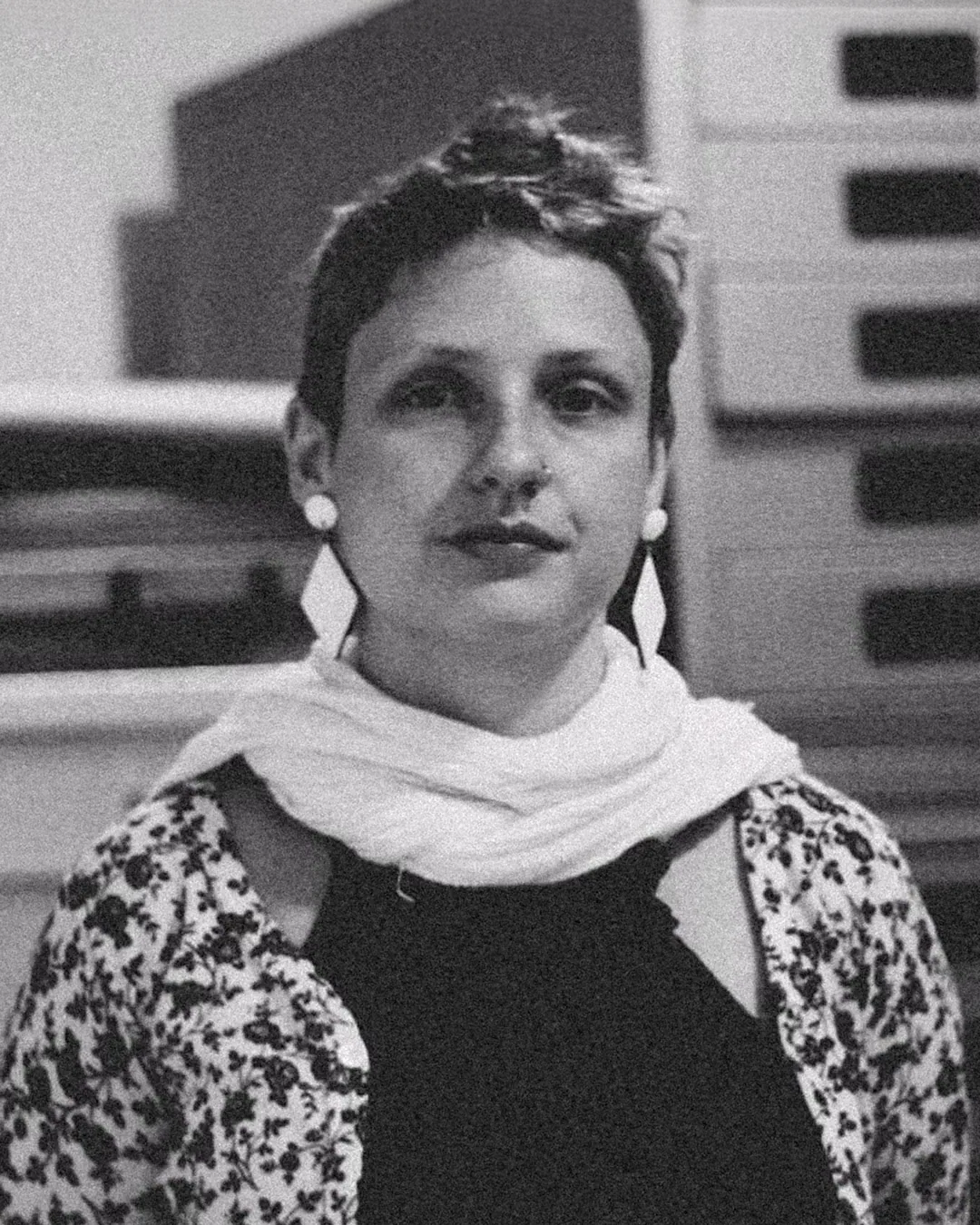
Guto Oca and the Street Logic of Color
Origins
Guto Oca's work begins from a displacement that became a visual method. Born in Sao Paulo, he has worked for more than a decade in Joao Pessoa, Paraiba, where the everyday life of the place he walks through becomes both source and material. Arte Plural Galeria describes an artist who draws inspiration from the ground he steps on and, just as importantly, from what he sees through the lens of a colorblind eye. That detail matters because color, in his work, is never a simple surface pleasure. It becomes an instrument of translation: a way to organize sensation, memory, street debris, and the strange precision of looking from a body that does not receive color according to ordinary expectations. See also Cordel Does Not Fit in Drawers: Marina Nabuco on the Living Archive of Instituto Brincante.
The selected works show how Oca turns painting into an object language. Xodo, Dengo, Usina, Trampo, and Jangadeiro are all made on wood, using PVA, varnish, pastel, or combinations of those materials. They are compact, frontal, and direct, but they do not behave like conventional paintings. Their forms suggest signs, tools, amulets, small architectures, and bodies reduced to emblem. The wooden support is not neutral; it keeps the work close to the street and to the hand. Oca's use of collected objects and rough surfaces gives the pieces a physical intelligence, as if the image had been built from things already carrying marks of use, weather, labor, and circulation. See also Gabriel Petribu and the Unplanned Geography of Matter.

Public collections
Falange, from the Feira Cura series, opens that vocabulary onto a larger canvas. Its title suggests grouping, procession, or force, while the series name points toward market, healing, and popular exchange. In this context, Oca's work feels less like illustration than like an assembly of energies. Color blocks, simplified faces, repeated profiles, and ornamental rhythms operate as a kind of visual inventory of urban experience. The same is true of Incorporacao, an acrylic and pastel painting from 2019, where the body seems to enter and leave the surface at once. The title carries the idea of embodiment, but also of possession, absorption, and transformation. Oca's figures are rarely settled; they look like presences passing through matter.

What makes Guto Oca important for CASCA is this refusal to separate visual culture from lived material. His practice belongs to contemporary painting, but also to object-making, street observation, and a Northeastern sense of image as something that can be carried, handled, repaired, and charged with daily force. Working from Joao Pessoa, he builds a language in which color is both personal condition and public event. The works gathered here do not ask the viewer to decode a fixed story. They ask for a slower attention to how a line becomes a body, how a found surface becomes a field, and how affection, work, heat, and ritual can be compressed into painted wood.