Carchíris: Building Memory in the Mangrove
Carchíris builds images from the meeting point of home, landscape, and construction. Born in 2003 on the island of São Luís, Maranhão, where she lives and works, the artist moves between painting, drawing, sculpture, and installation while studying visual arts and architecture. That double formation is more than biography: it gives her a material vocabulary. Knowledge associated with building—surfaces, structures, remnants, and the transformation of space—enters her work alongside family memory and the ecology of the island. Carchíris has described making paper dollhouses as a child and later returning to art during the pandemic, painting on construction tarps kept in her grandfather’s yard. In her practice, architecture becomes intimate: a way to ask how bodies, histories, and environments shelter one another, and how each can also be made vulnerable. See also Gabriel Archanjo and the Figure as a Field of Resistance.
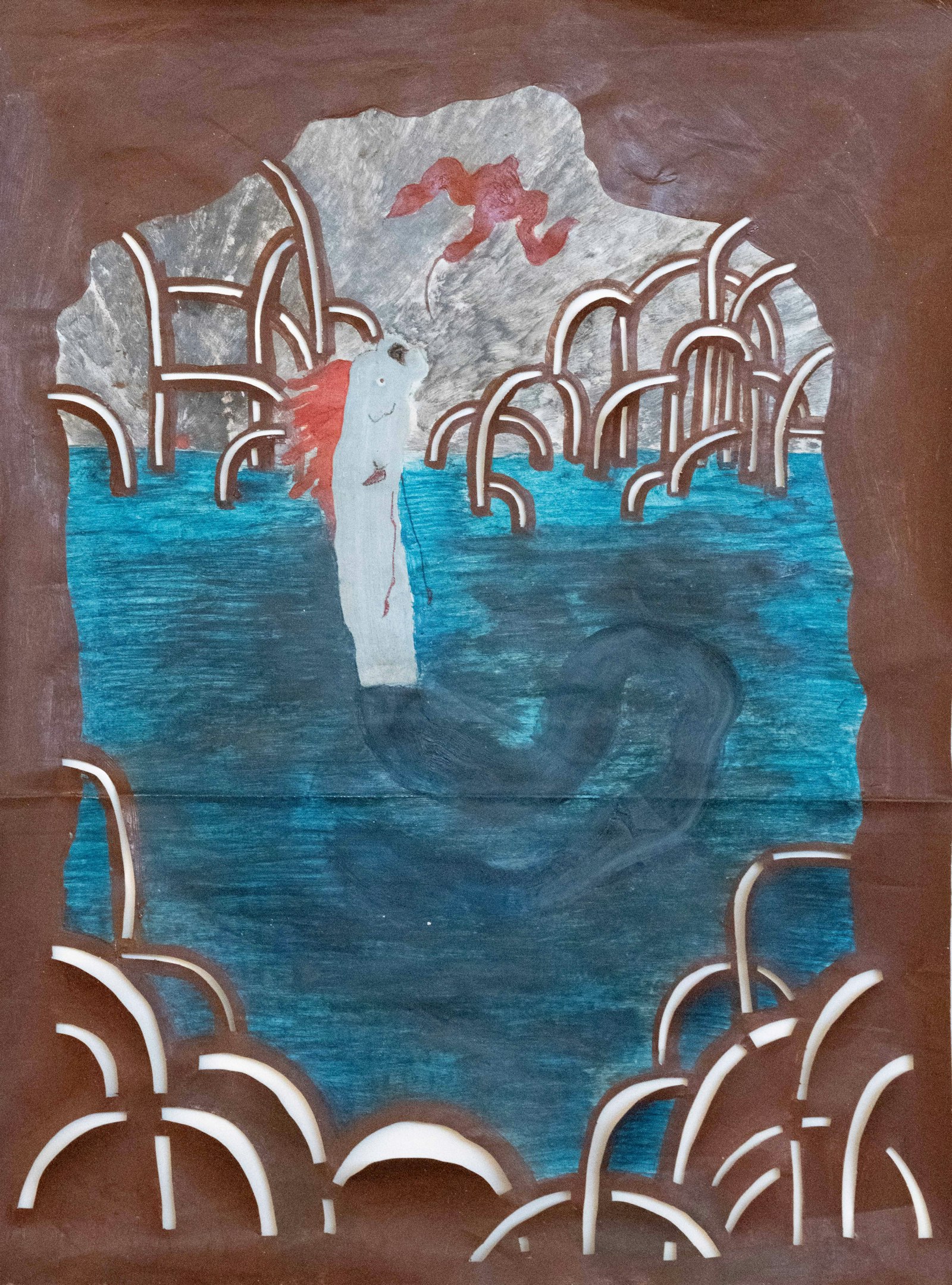
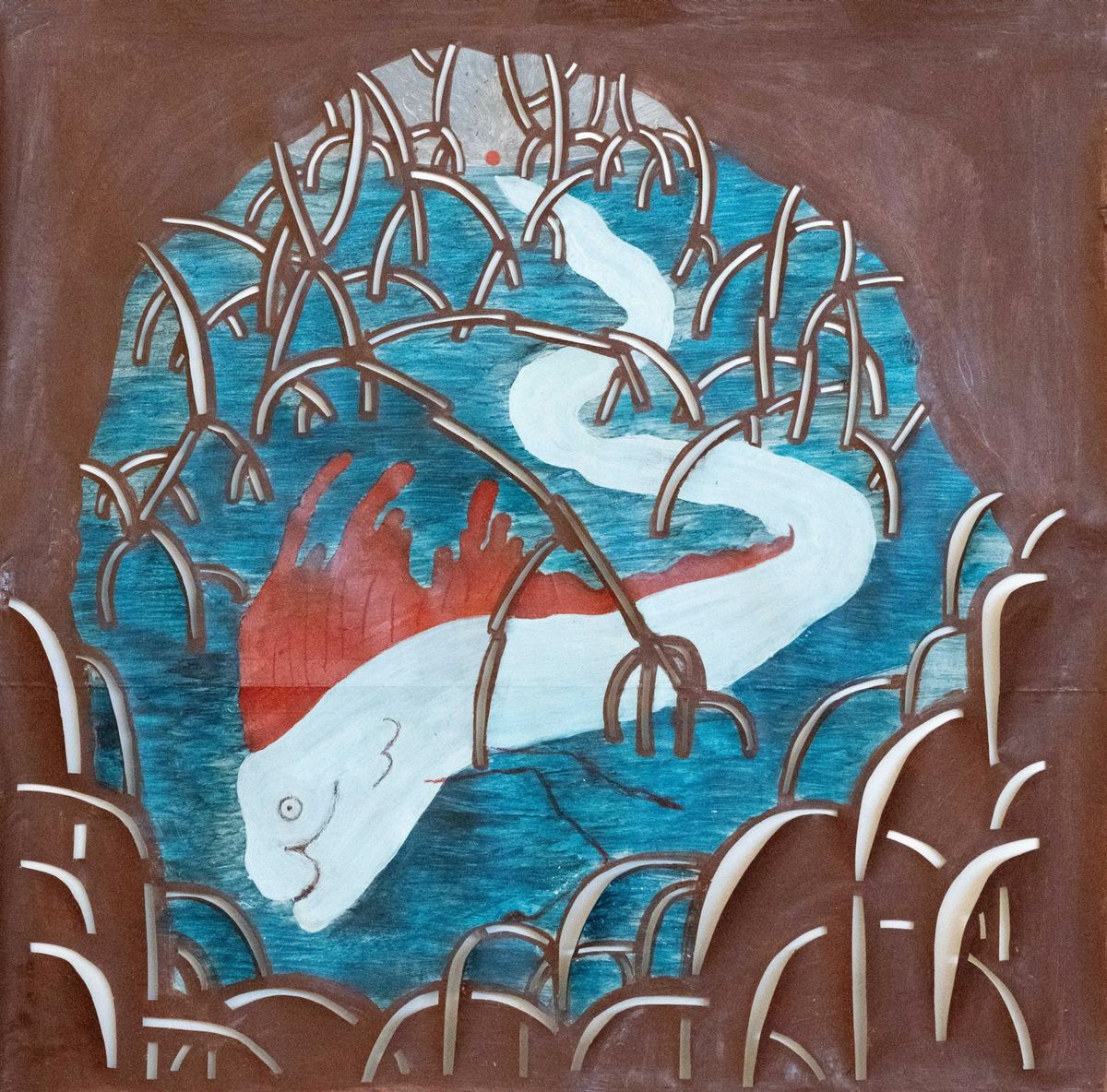
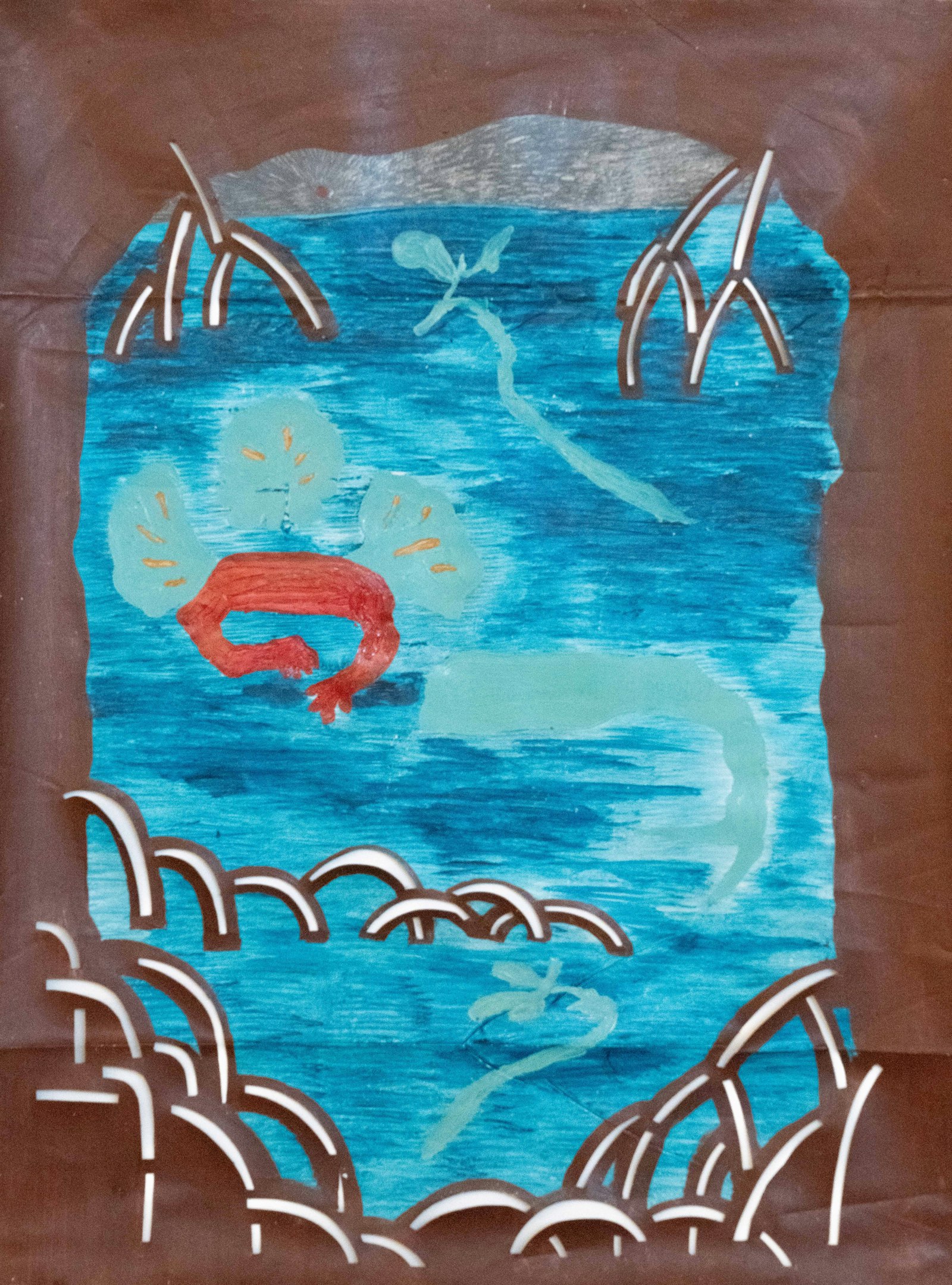
The mangrove surrounding São Luís is one of her central points of orientation. Rather than serving as a picturesque backdrop, it appears as a complex living system whose tangled roots, tidal waters, and muddy thresholds resist clear divisions between land and sea. Carchíris approaches this ecosystem as both a vital communal territory and a metaphor for memory. Repeated arches in the selected works resemble roots, reeds, ribs, or unfinished frameworks; blue fields suggest water without settling into conventional landscape. Human and animal forms emerge, merge, and recede within these spaces. The artist’s environmental attention is therefore inseparable from autobiography. To look closely at the mangrove is also to recognize the forces that shape a family and a self: interdependence, inheritance, erosion, repair, and the persistence of life under pressure. See also Aurelino dos Santos and the City as a System of Signs.
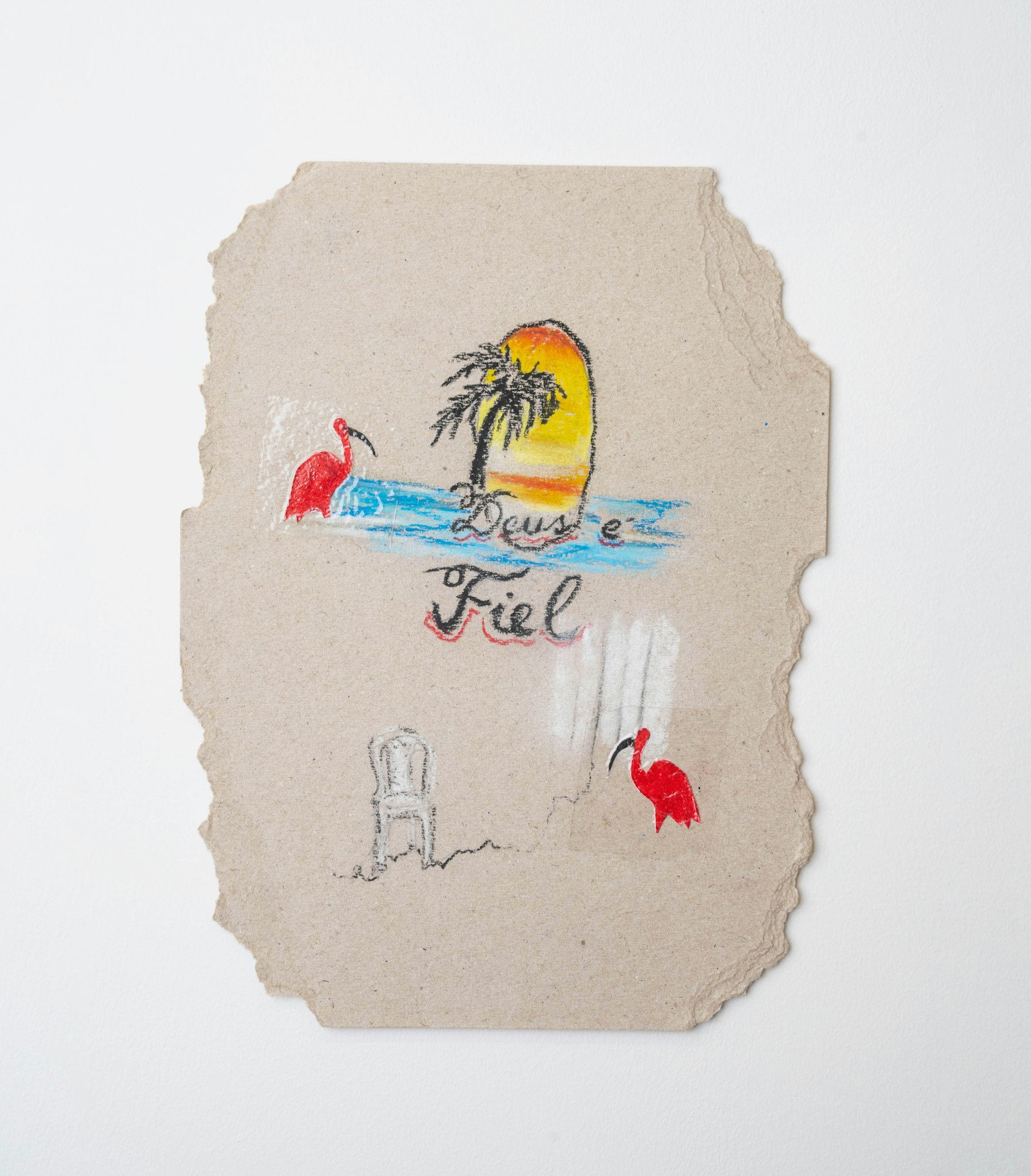
Her images often hold tenderness and unease in the same surface. A small work on rough, irregular paper brings together red ibises, a palm, an empty chair, and the handwritten phrase “Deus é Fiel,” compressing devotion, absence, and tropical iconography into the scale of a private note. In the larger blue-and-brown compositions, pale bodies and hybrid creatures drift through dense rhythmic vegetation. A serpent coils in dark water; elsewhere, a long white animal curves through the scene like a river, spirit, or exposed root. These figures are not illustrations of a stable mythology. Their ambiguity keeps the landscape active and psychological, while the visible grain, folds, and layered marks prevent the support from disappearing behind the image. Surface is part of the story: worn, provisional, and capable of carrying what might otherwise be lost.
Carchíris’s first solo exhibition, Deus abençoe o nosso amor — God Bless Our Love, opened at Lima Galeria in São Luís in 2024, connecting its title to a reggae song remembered from a photograph of her parents. In 2025 she presented Paisagem Saudade: Vossos Campos e Pomares at Chão SLZ and participated in the 2nd Bienal das Amazônias, following programs and residencies at Solar dos Abacaxis, Chão SLZ, Sertão Negro, and Terra Afefé. Recognition through the 2024 Prêmio FOCO, Rumos Itaú Cultural 2023–2024, and her nomination for the 2026 PIPA Prize situates this emerging practice within a wider Brazilian conversation. Yet the work remains grounded in São Luís. Carchíris does not separate ecological negligence from personal history or formal invention from lived place. She treats the mangrove as archive, kin, and architecture—a terrain through which memory can be rebuilt without becoming fixed.