Geoneide Brandão Paints Desire as a Place to Belong
Born in Ouro Branco, in the sertão of Alagoas, in 1999, Geoneide Brandão came to painting through a path marked by both artistic discovery and geographic movement. Brandão first encountered image-making through photography as a teenager, then moved through Maceió, Natal, and Rio de Janeiro before settling in Recife. Painting became the center of a practice that has also included drawing and collage: a place where lived experience could be transformed without being explained away. Across this trajectory, gender, sexuality, desire, and the movement between physical and subjective territories have remained inseparable. The canvas is not simply a surface for representation. It is where intimacy becomes visible as knowledge, and where a body can insist on its presence beyond the limits assigned to it. See also Gabriel Archanjo and the Figure as a Field of Resistance.
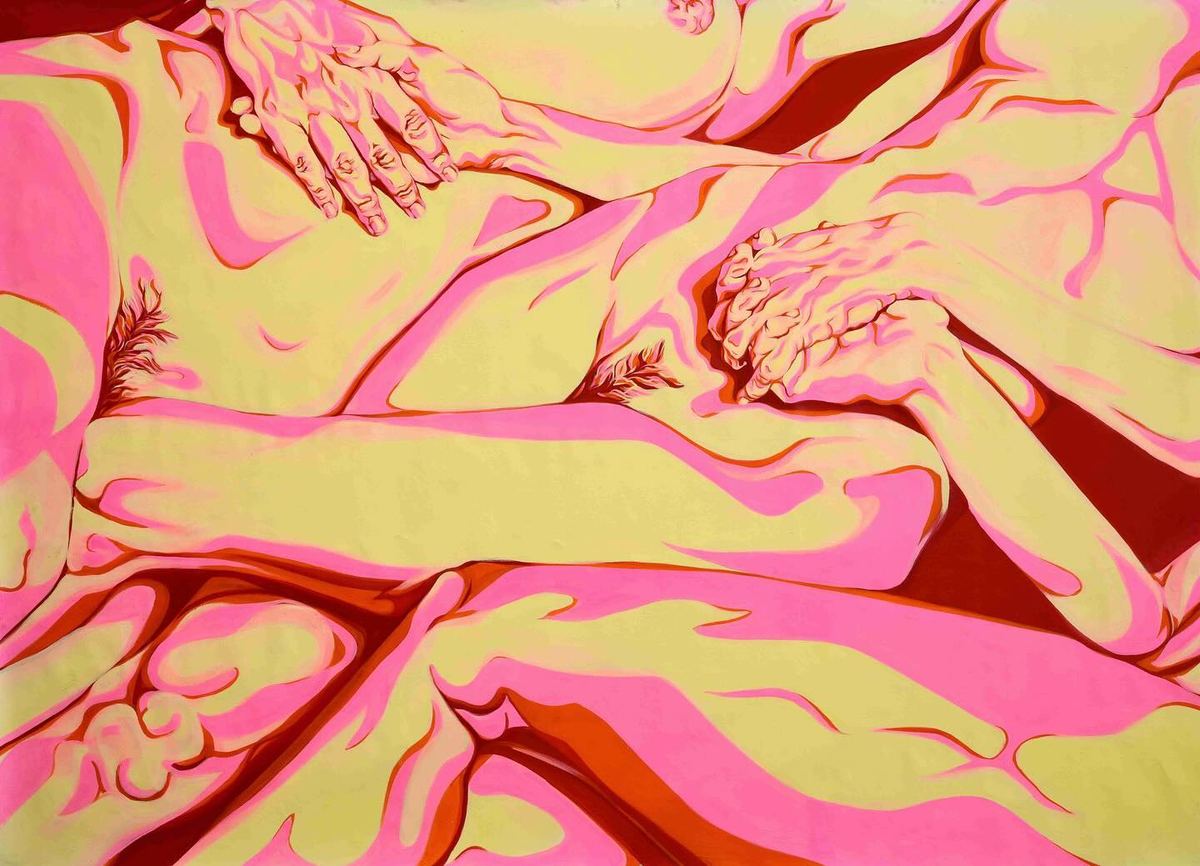
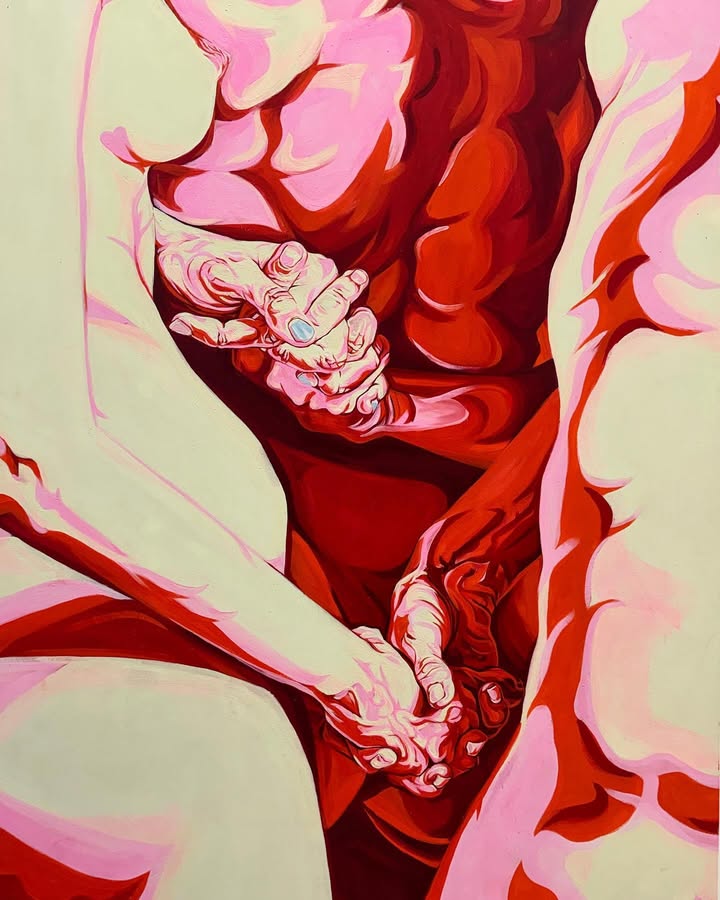
Brandão often begins with photographs made on a mobile phone, bringing the immediacy of private encounters into the slower duration of oil paint. The resulting images are cropped closely around torsos, hands, mouths, scars, folds, and points of contact. Faces frequently disappear, while gesture carries the emotional charge: fingers press into skin, hands clasp or overlap, and bodies gather until individual contours become difficult to separate. The compression is important. Rather than offering a detached view of a scene, Brandão places the viewer inside its heat and proximity. Figuration approaches abstraction without abandoning the specificity of flesh, allowing touch to function at once as formal structure, memory, desire, and mutual recognition. See also Aurelino dos Santos and the City as a System of Signs.
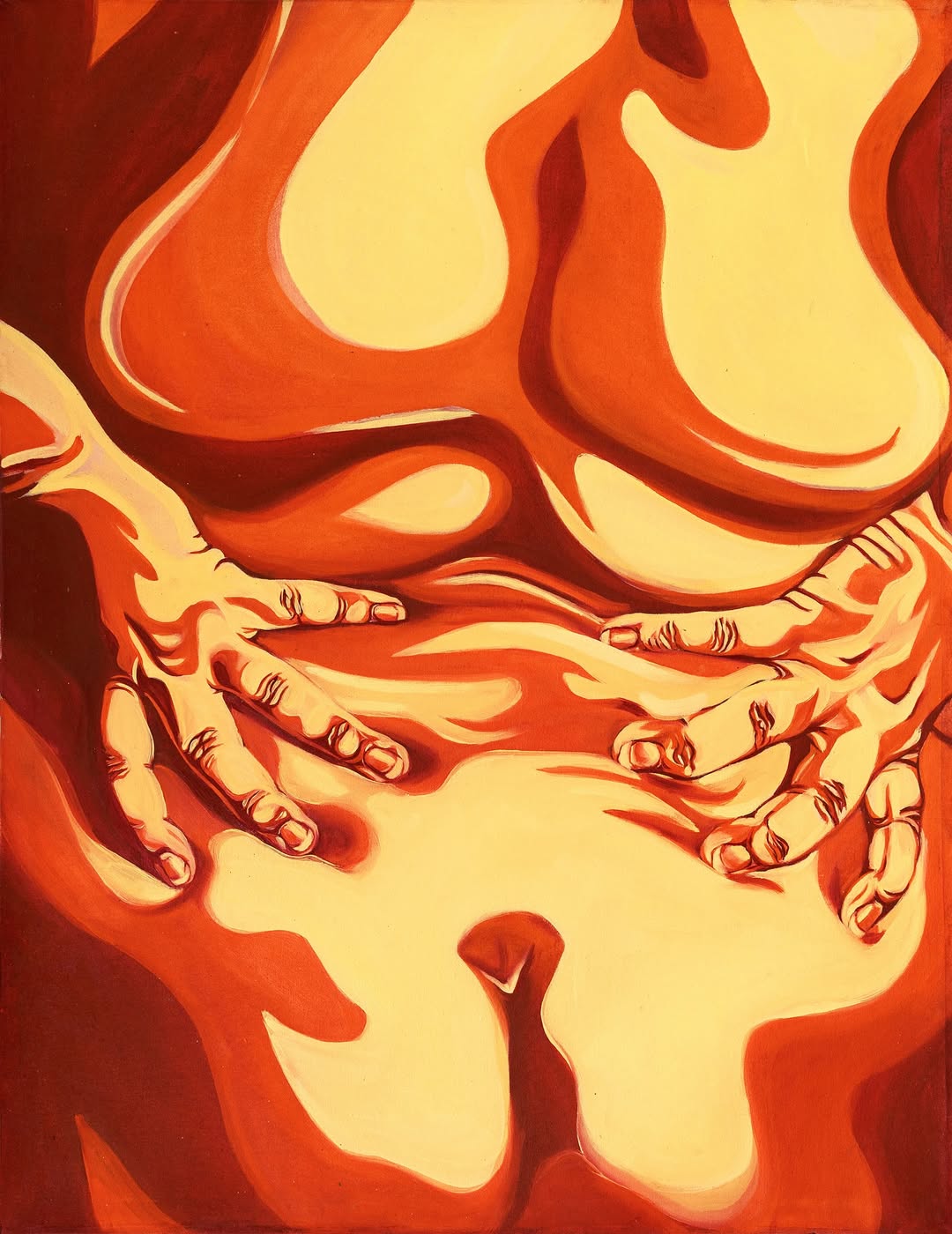
Color makes that proximity feel almost incandescent. Reds, pinks, yellows, and pale greens move across the selected paintings in abrupt fields, turning modeled bodies into vivid topographies. Strong outlines and sharply divided shadows give the work a graphic force, yet the anatomical detail of a hand or a surgical scar keeps the images grounded in vulnerable experience. These are not idealized bodies presented for passive consumption. They appear as active sites of transformation and self-definition. Brandão has described painting as a space of desire and power, capable of carrying questions that challenge conservative ideas of gender. In these works, eroticism therefore exceeds spectacle: it becomes a way to protect subjectivity from objectification and to affirm relationships that dominant visual culture has often ignored, disciplined, or misread.
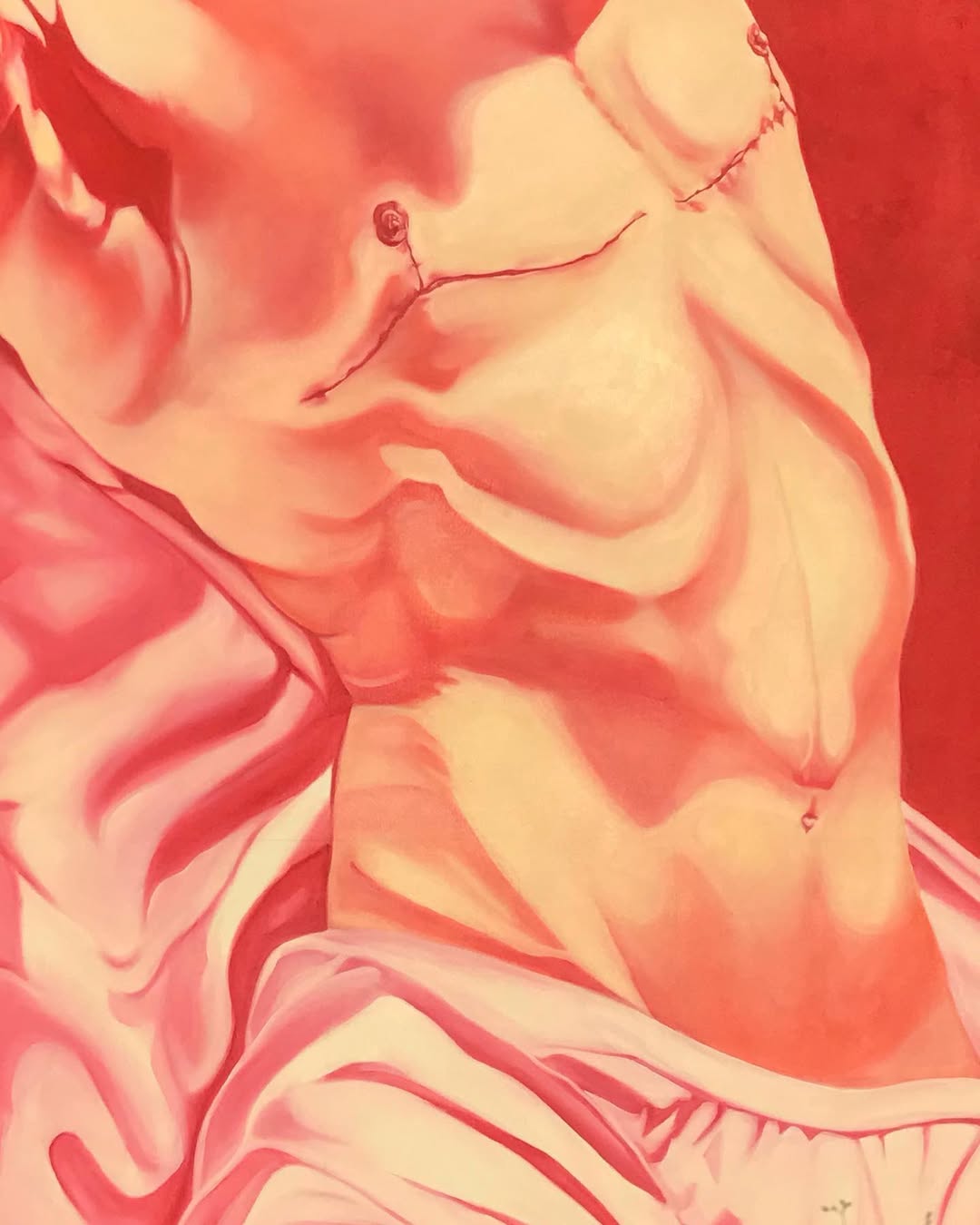
That conviction also shapes Brandão’s first solo exhibition, Entre nós todo o indizível se faz presente, curated by Aslan Cabral. The exhibition gathers investigations into love and relationships as forms through which a safe space can be built—one that holds belonging together with political claim. The title offers a useful key to the paintings: what cannot be easily said is not absent, but concentrated in the interval between bodies. A clasped hand, an exposed chest, or a group pressed into a single red field becomes evidence of care as much as desire. Brandão’s work matters because it refuses the separation of tenderness from resistance. Emerging from Alagoas and shaped by successive displacements, this painting practice creates a visual home in which queer experience is neither peripheral nor symbolic. It is the material center of the image, luminous, complicated, and fully present.
Sources and further reading