Jairo Arcoverde and the Freedom of a Pictorial Alphabet
Jairo Arcoverde has spent more than six decades constructing a visual language in which figuration and abstraction never settle into separate territories. Born in Pernambuco in 1940, he attended the Escola de Belas Artes do Recife, but identifies the studio—not academic training—as the place where his pictorial alphabet truly emerged. Painting remains central to his practice, alongside experiments connecting color, collage, ceramics, and sculptural form. Arte Plural Galeria describes his iconography through the convergence of New Figuration, spontaneous art, and imagery associated with children and unconventional states of perception. These references do not become styles for Arcoverde to imitate. They offer permission to invent outside the discipline of naturalistic representation. See also Pedro Lucena and the Ground of Origin.
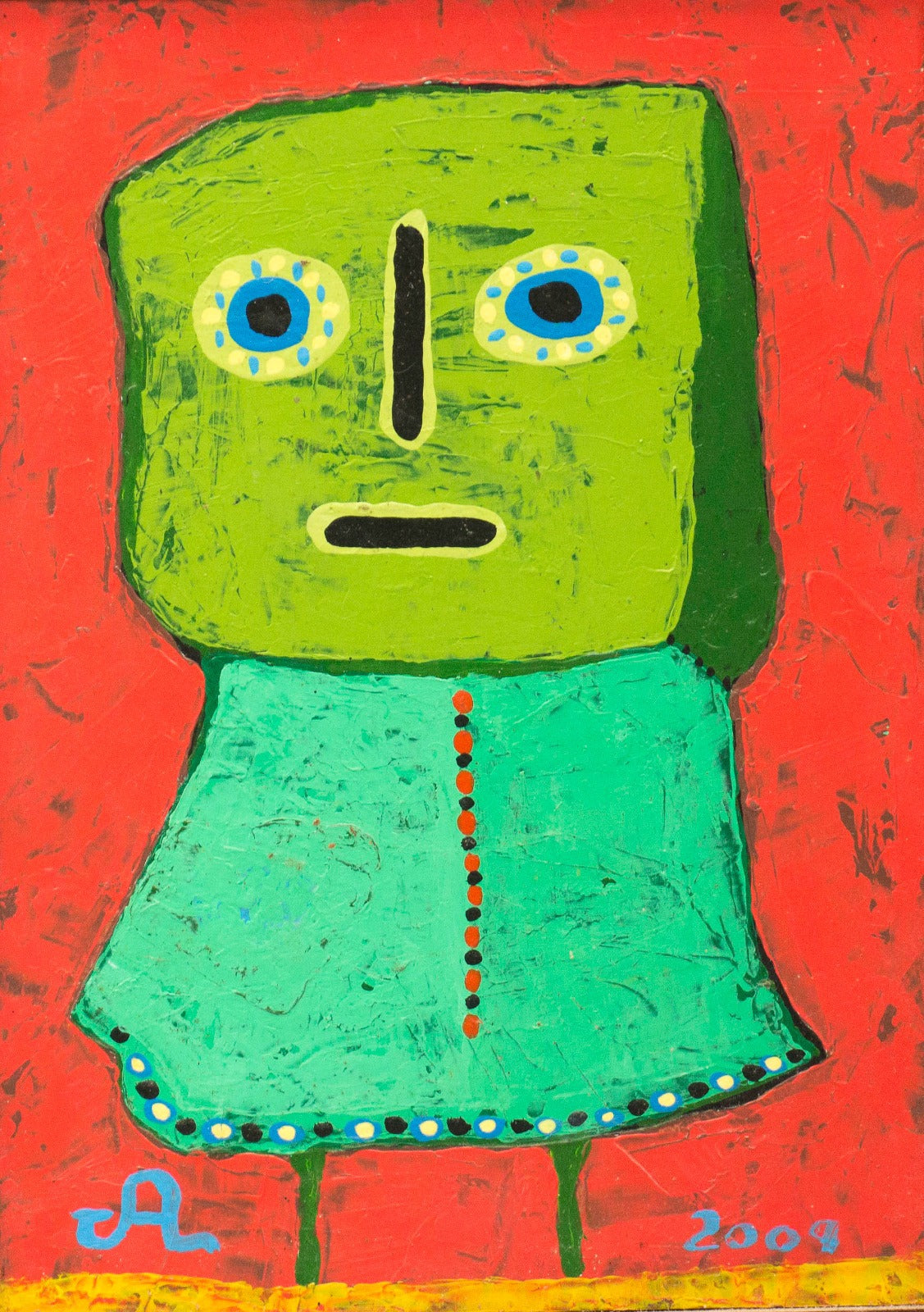
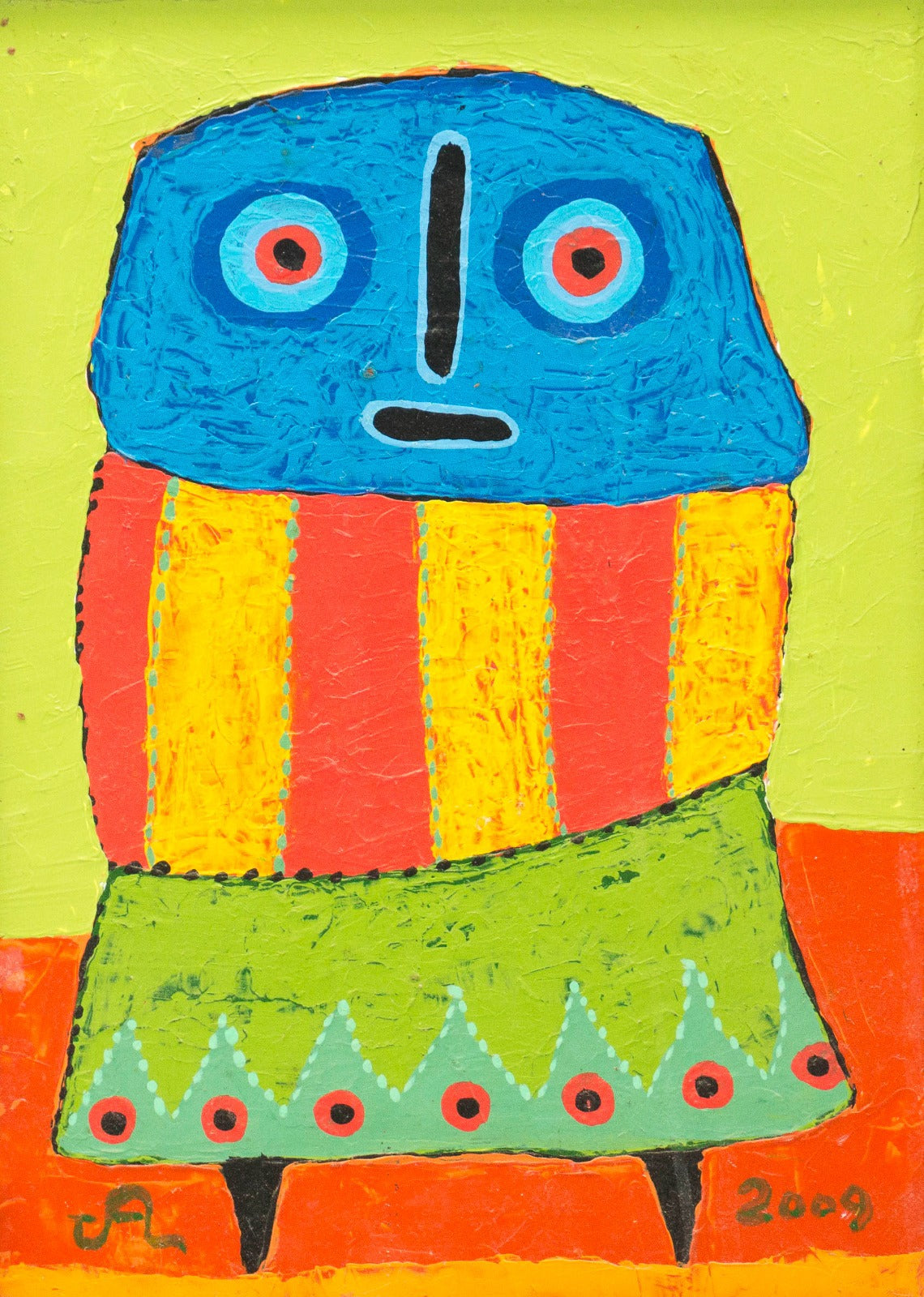
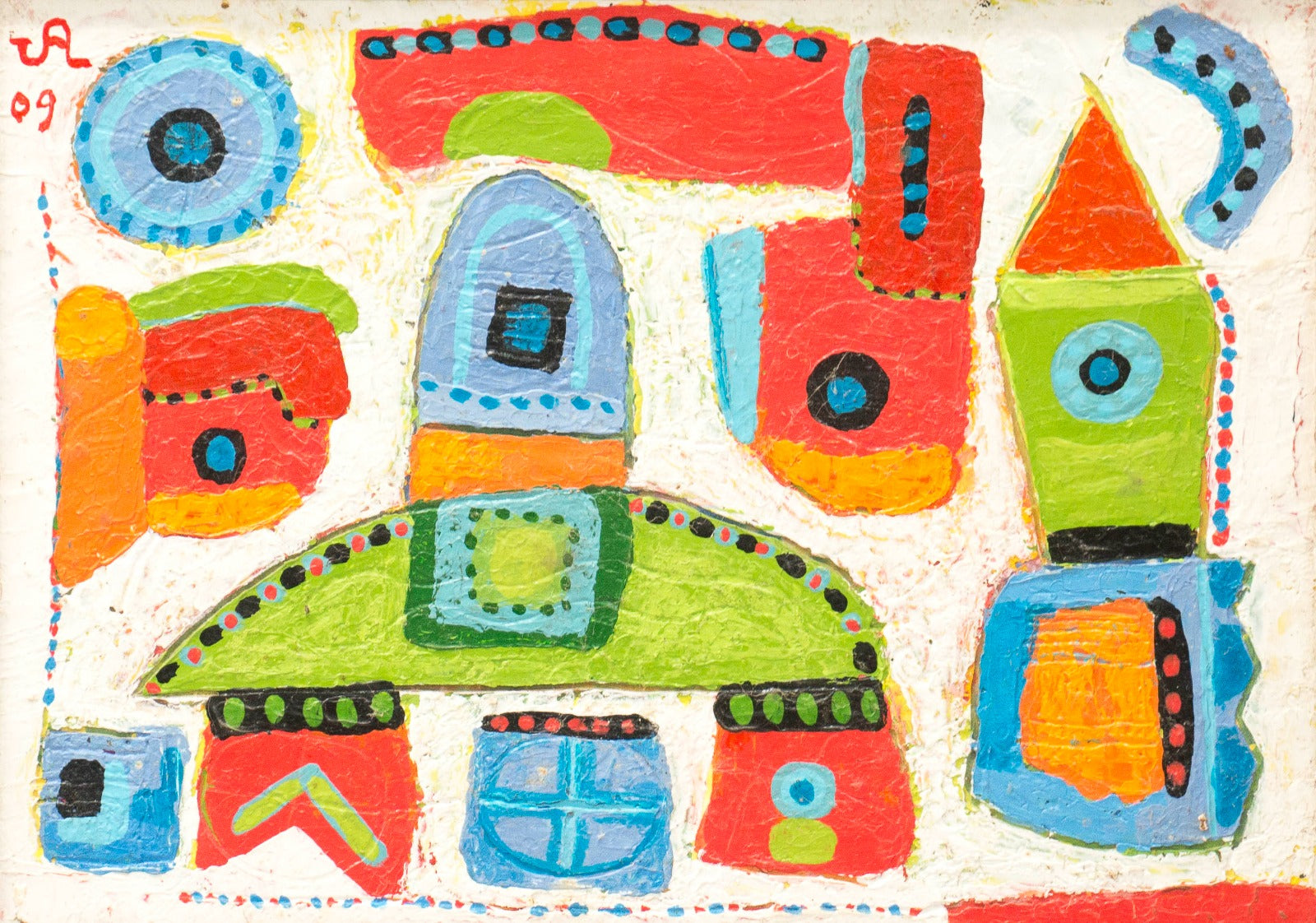
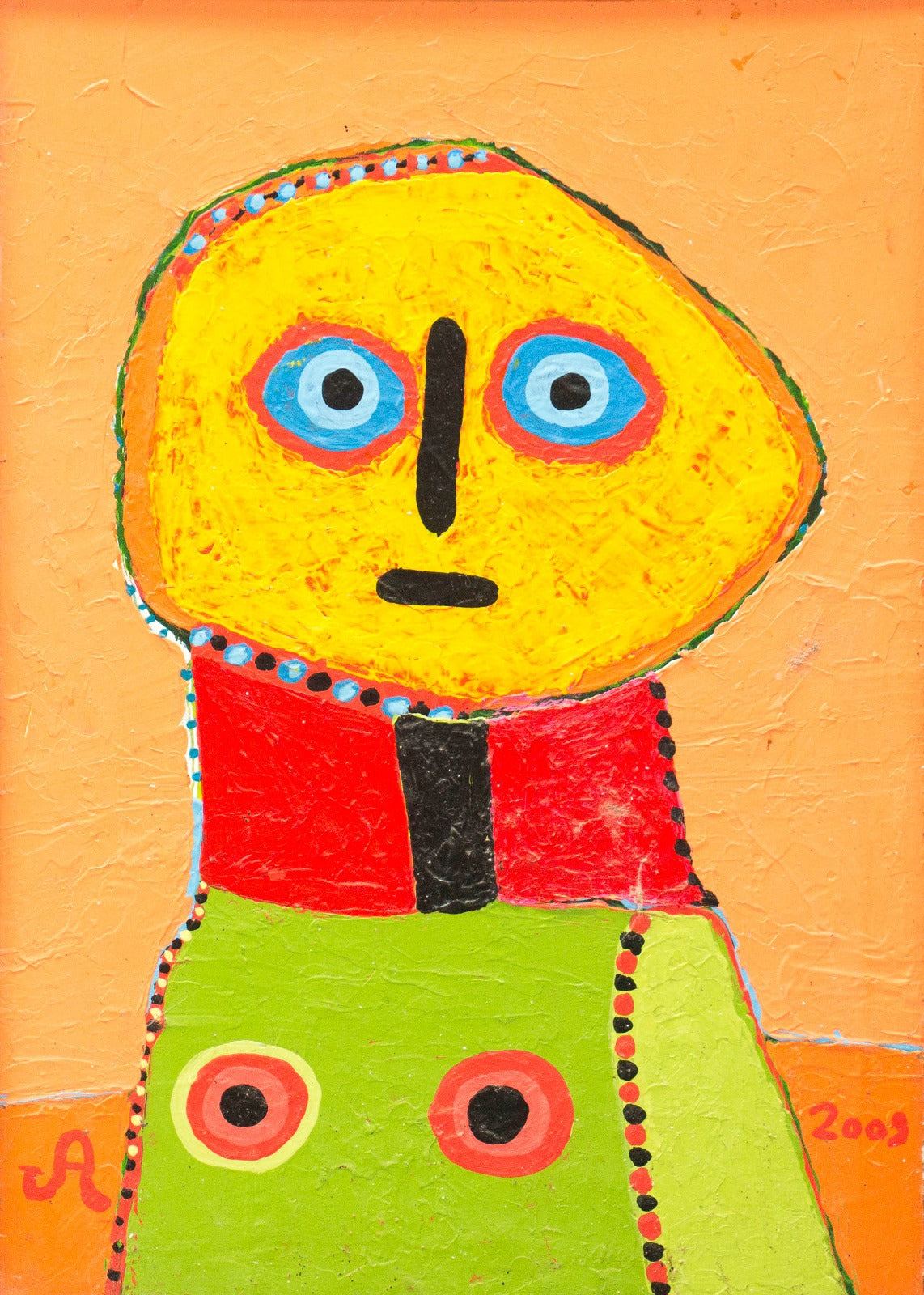
The six works selected here, dated between 2005 and 2009, reveal how complete that alphabet had become. Faces, animals, wheels, eyes, spirals, circles, stitched borders, and geometric costumes are compressed into fields of intensely saturated color. One canvas transforms an animal into an exuberant red machine: part bird, part vehicle, part map of internal organs and decorative symbols. In the other paintings, solitary figures confront the viewer with enormous eyes and restrained horizontal mouths. Their bodies appear assembled from blocks, compartments, stripes, and targets, as though identity were an architecture that could be dismantled and rebuilt. The figures are immediately recognizable, yet their proportions and surfaces resist any ordinary description of the human body. See also Gabriel Archanjo and the Figure as a Field of Resistance.
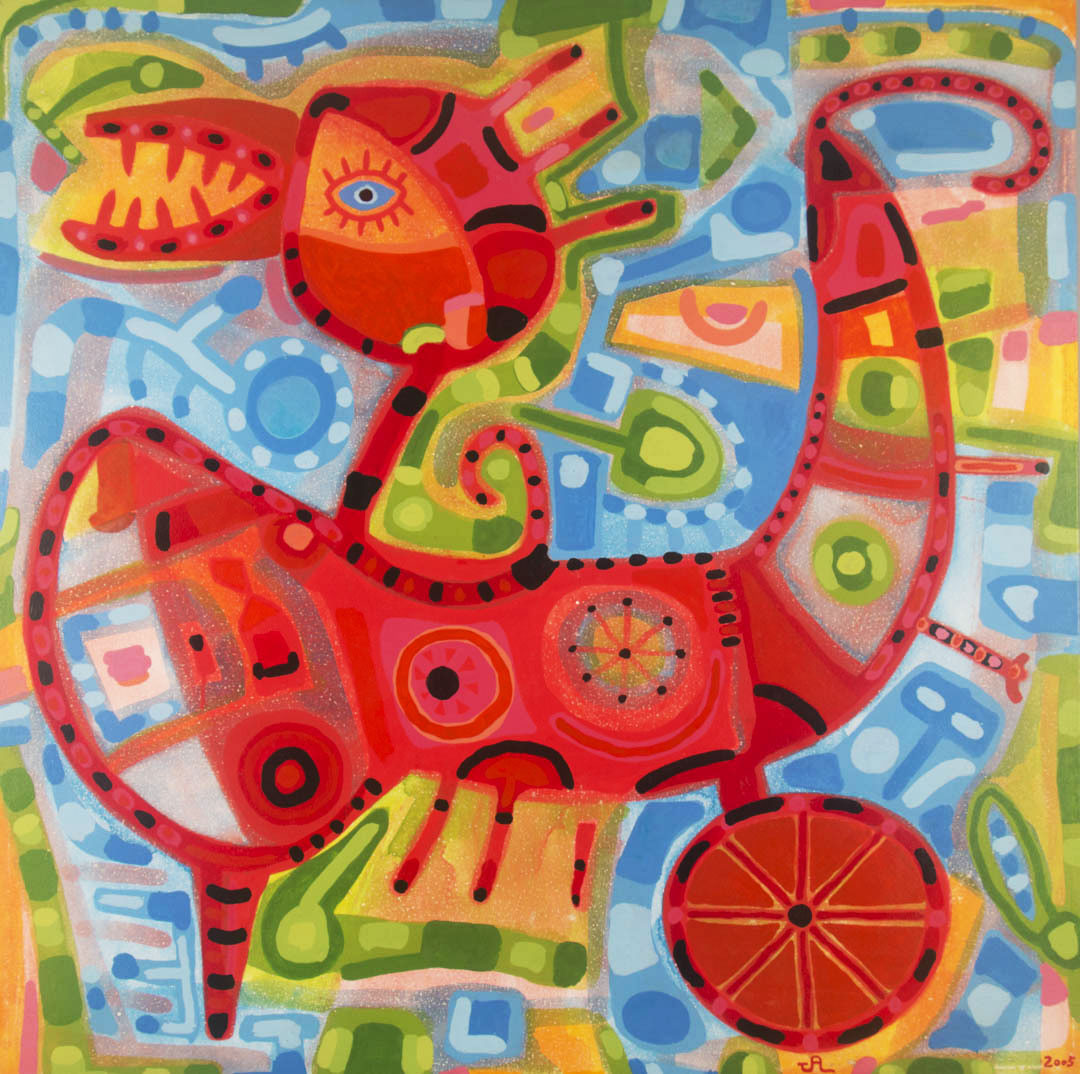
Color does more than animate these images. Acid green, turquoise, orange, yellow, red, and blue establish a structure as forceful as drawing. Thick, worked surfaces preserve the physical history of the artist’s gestures, while black contours give each form the clarity of a sign. Arcoverde’s figures can recall toys, votive objects, masks, robots, ancestors, or visitors from an invented mythology, but they never resolve into a single category. Their frontal poses create an encounter that is both humorous and strangely solemn. References to Paul Klee, Wassily Kandinsky, Joan Miró, Art Brut, and the libertarian culture of the 1960s help situate this freedom, yet Arcoverde’s vocabulary remains unmistakably his own: direct without being simple, playful without becoming innocent.
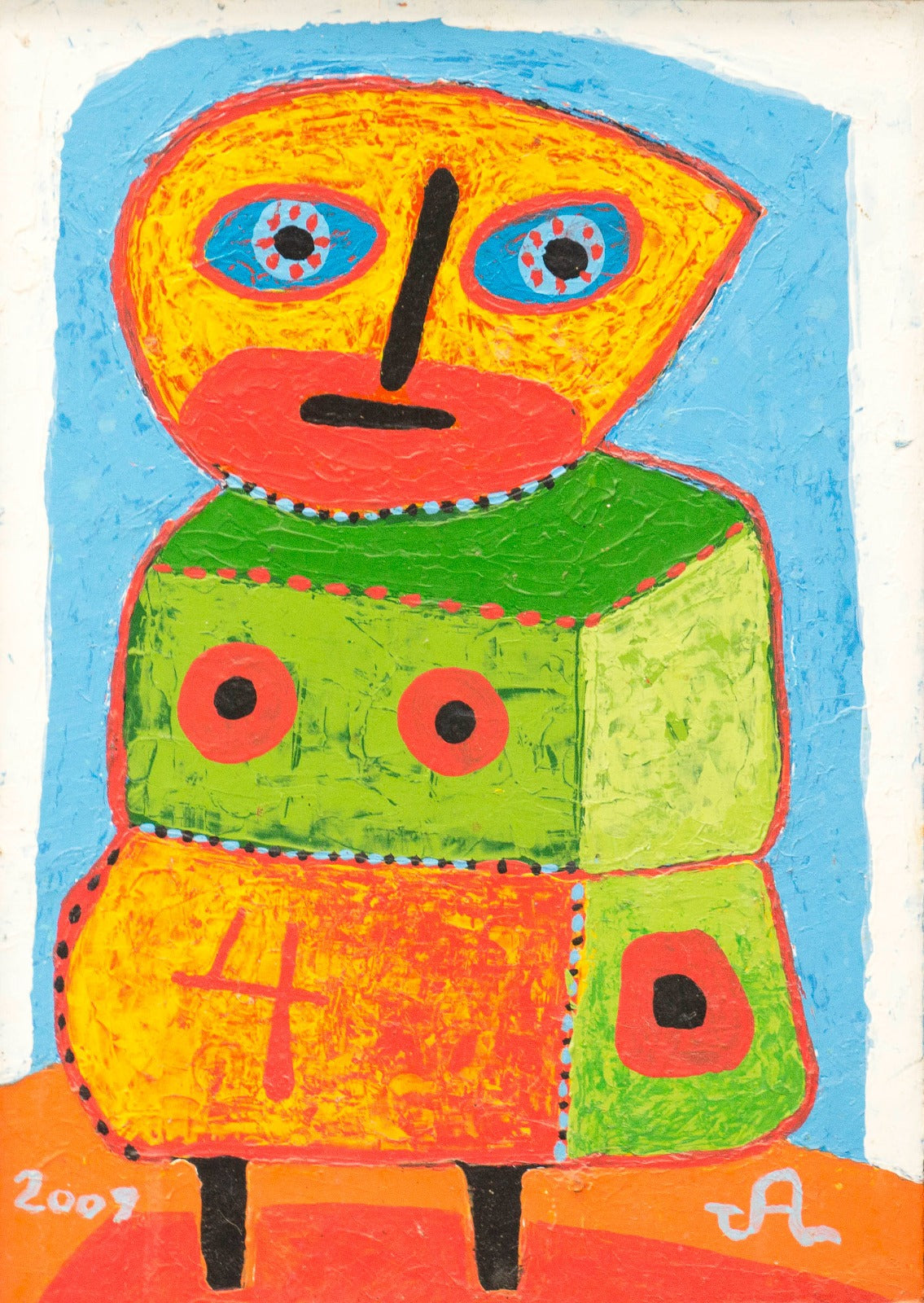
The artist has said that he paints in pursuit of a personal alphabet. That idea is essential because these works do not merely depict characters; they build a system of communication from repetition and variation. An eye may function as anatomy in one painting, as ornament in another, and as a cosmic symbol in the next. Dots become seams, necklaces, boundaries, or rhythmic measures. Bodies become containers for color and memory. Across this shifting grammar, Arcoverde joins the spontaneous energy of drawing to the deliberate construction of painting. His singular achievement lies in sustaining the paradox at the center of his practice: the image remains figurative enough to address us, abstract enough to escape explanation, and open enough to make imagination an active part of seeing.