Pedro Lucena and the Ground of Origin
Pedro Lucena has built a visual practice from the conviction that remaining close to one’s place of origin can be a form of artistic expansion. An illustrator, visual artist, muralist, and educator based in Maceió, he began working professionally with drawing after a decisive journey to the Amazon in 2006. While assisting with a project there, his sketches of the region’s natural abundance led to a commission for an environmental booklet. That encounter clarified drawing as more than a private habit: it could become a language capable of circulating through books, magazines, classrooms, theaters, walls, and exhibitions without losing its distinctive voice. See also Jairo Arcoverde and the Freedom of a Pictorial Alphabet.
Lucena’s relationship with Alagoas became especially visible in Ciscos, a body of work developed through research into the poetry of Manoel de Barros and the sculptural traditions of Ilha do Ferro. Returning to the community, he studied its people, animals, furniture, ex-votos, roots, branches, and carved forms. He recognized that the poet and the island’s makers shared an intense attention to nature, translating it through different materials. Lucena responded with images in which bodies, animals, and vegetation merge into one another. Rather than treating regional culture as a fixed collection of motifs, he approached it as a living method: intuitive, transformative, and open to the productive possibilities of error. See also Silvana Mendes and the Radiant Repair of the Colonial Archive.
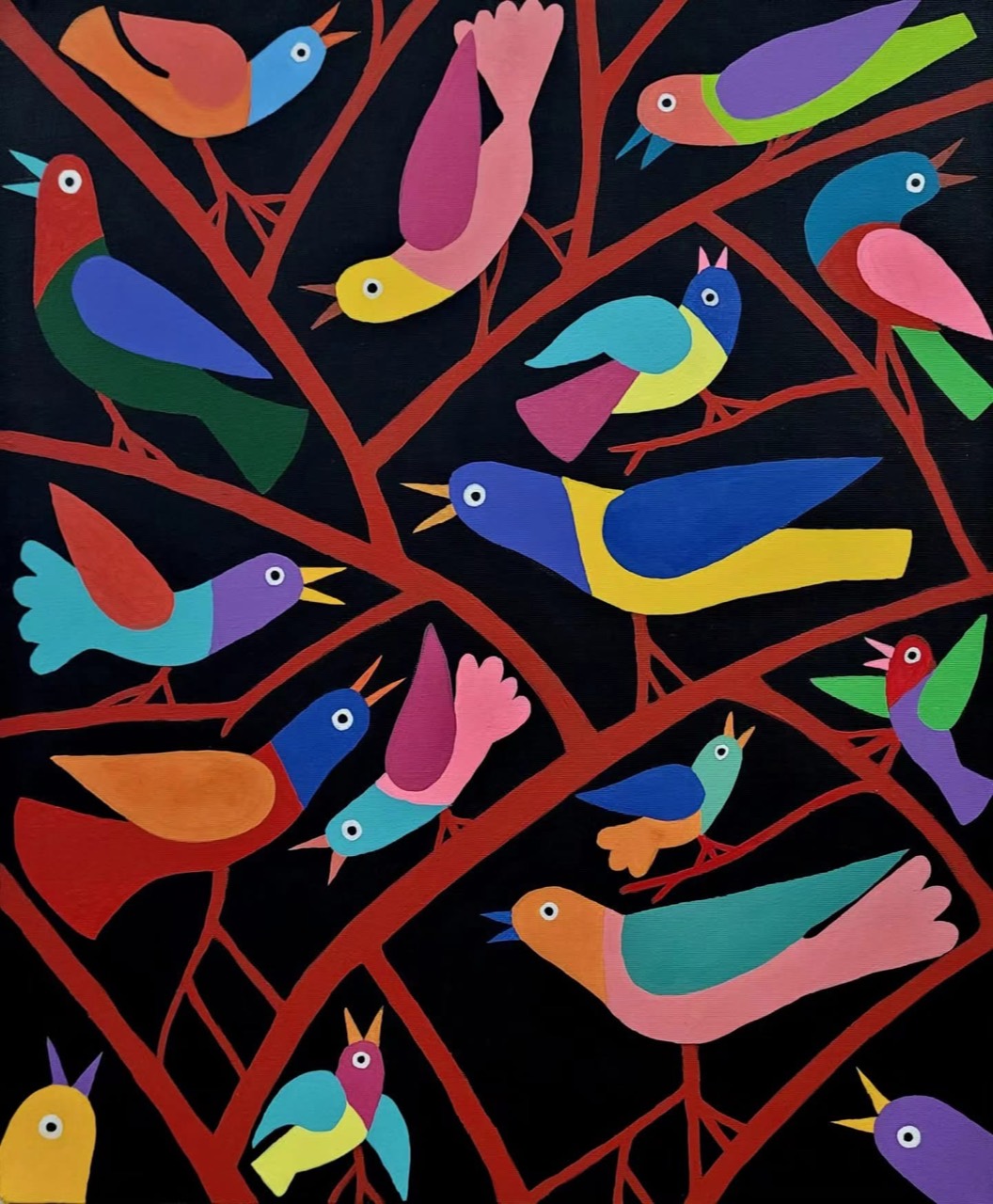
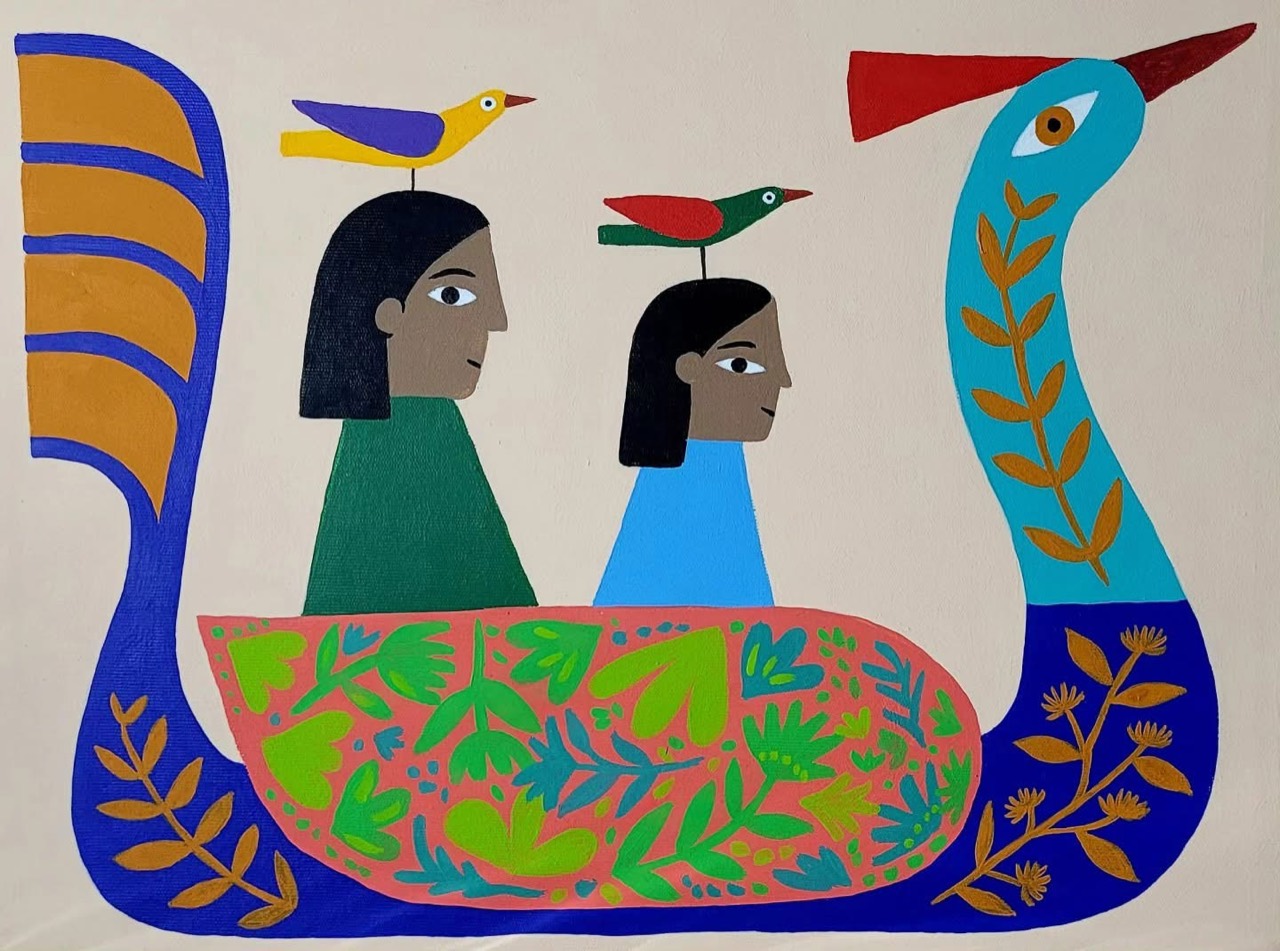
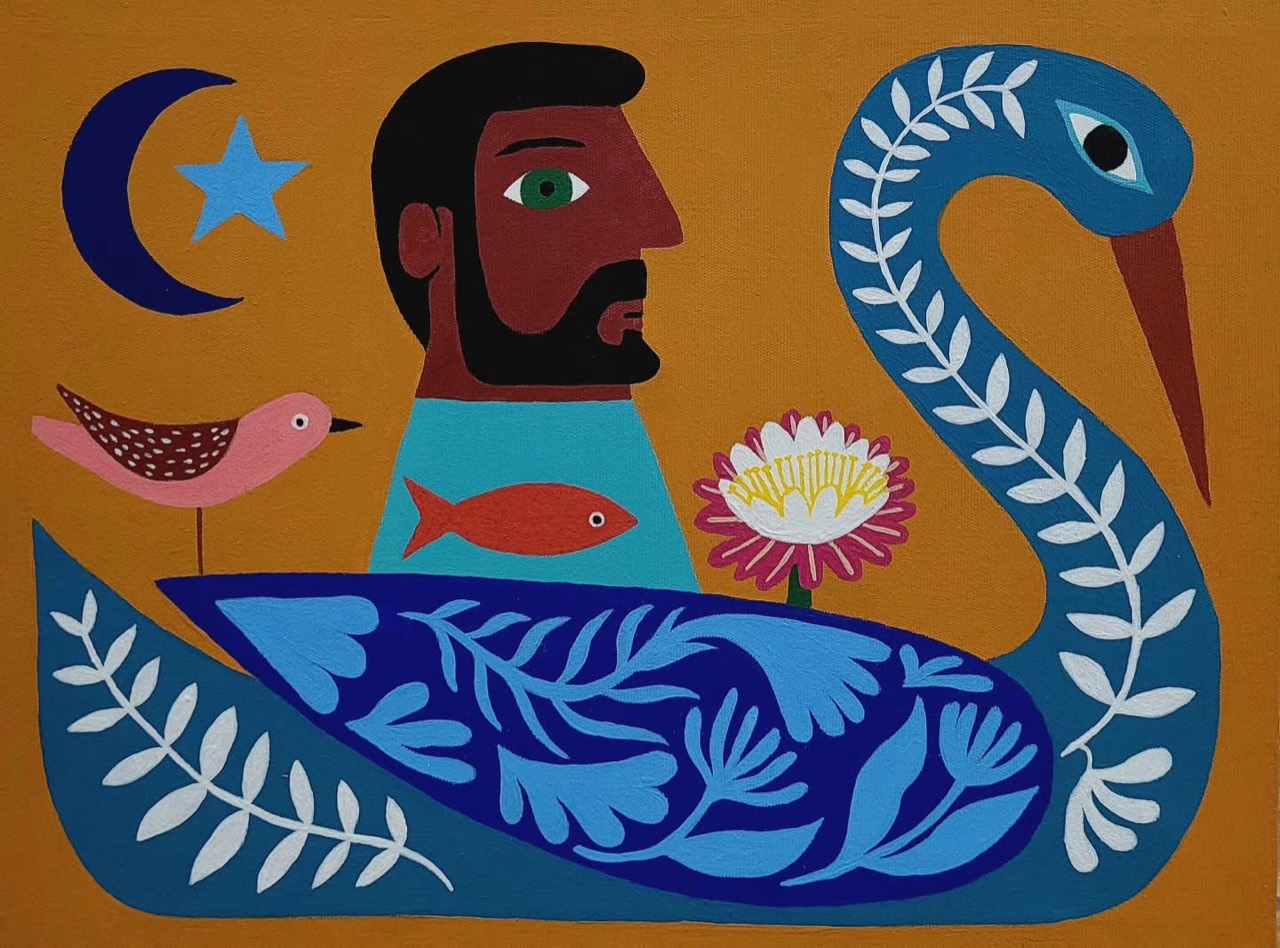
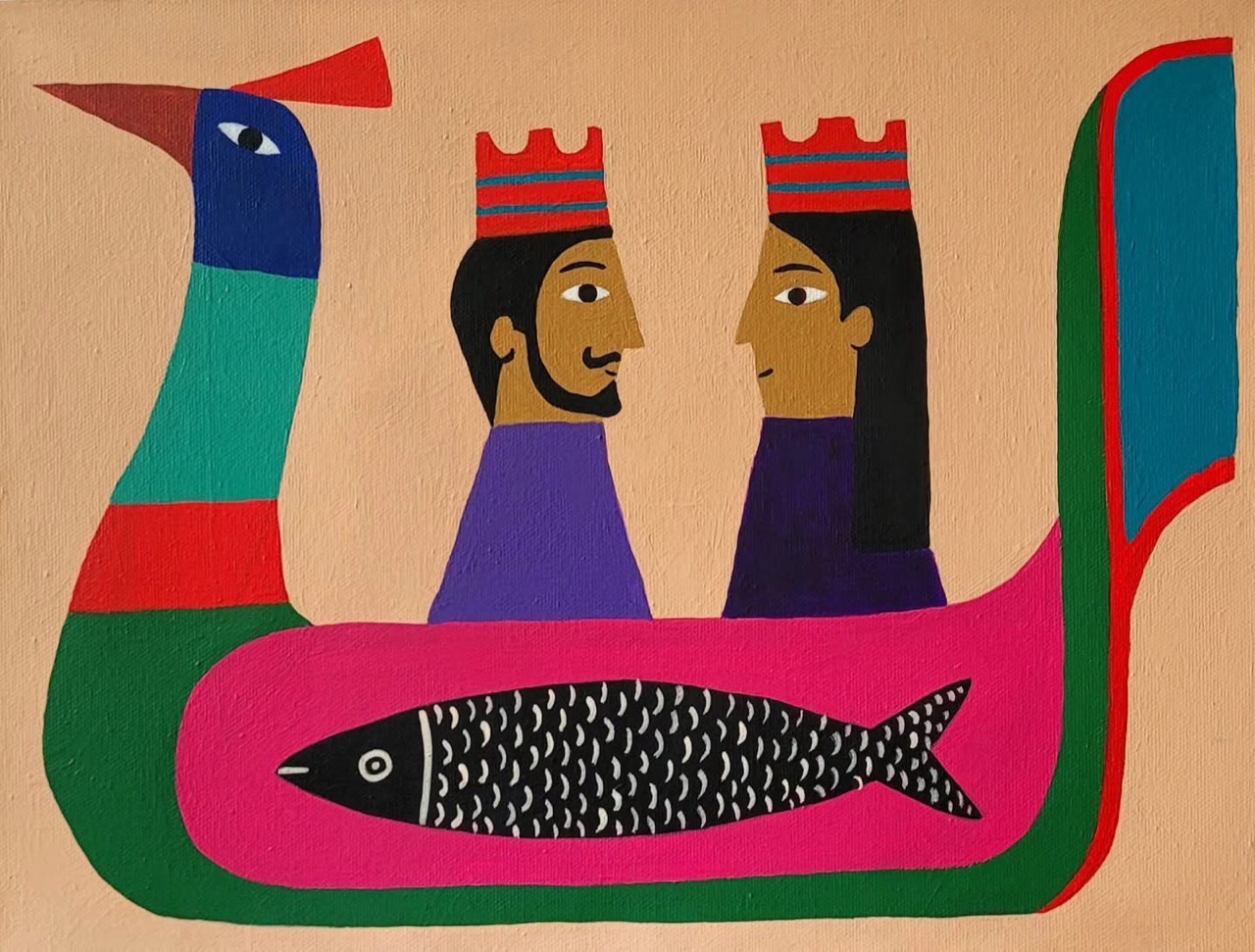
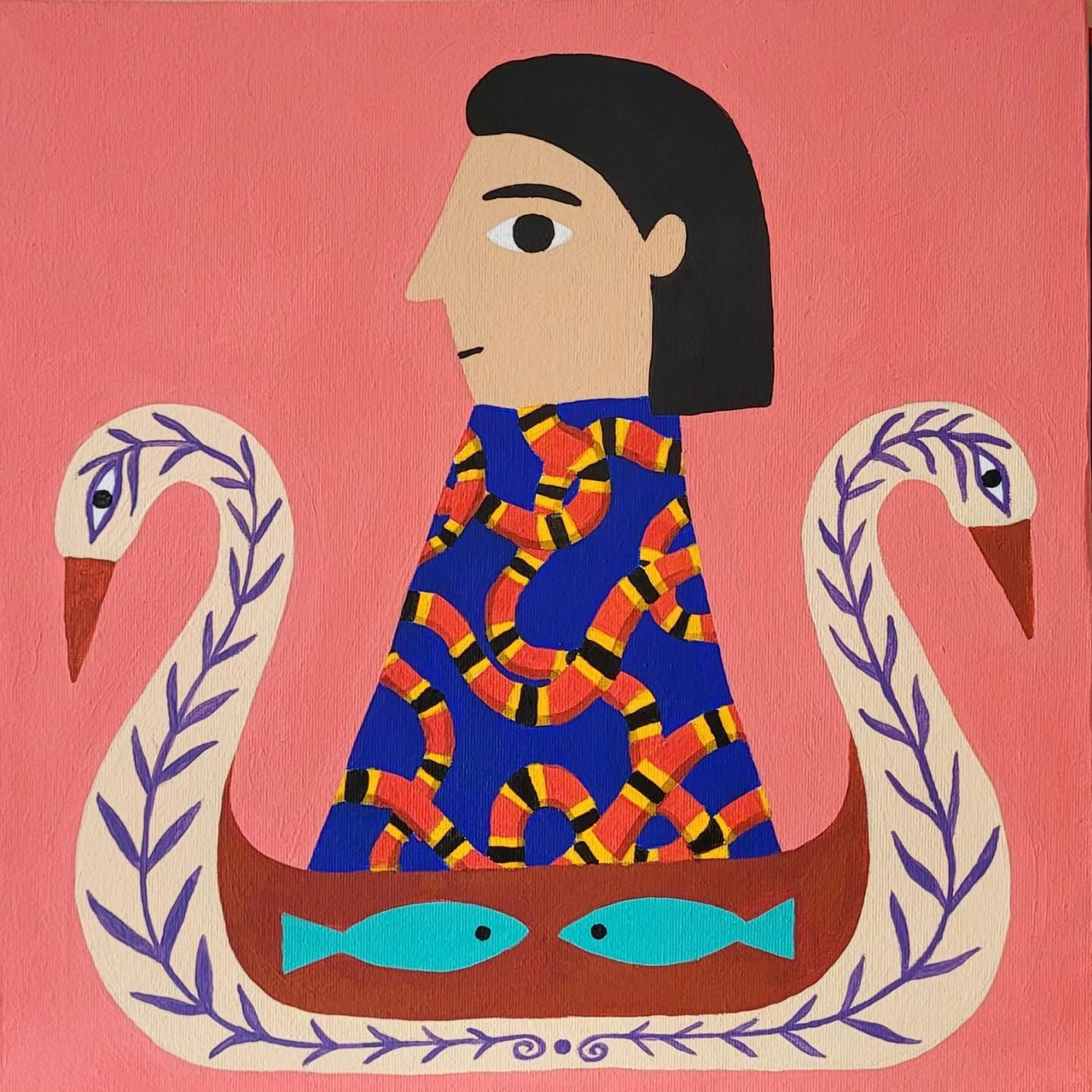
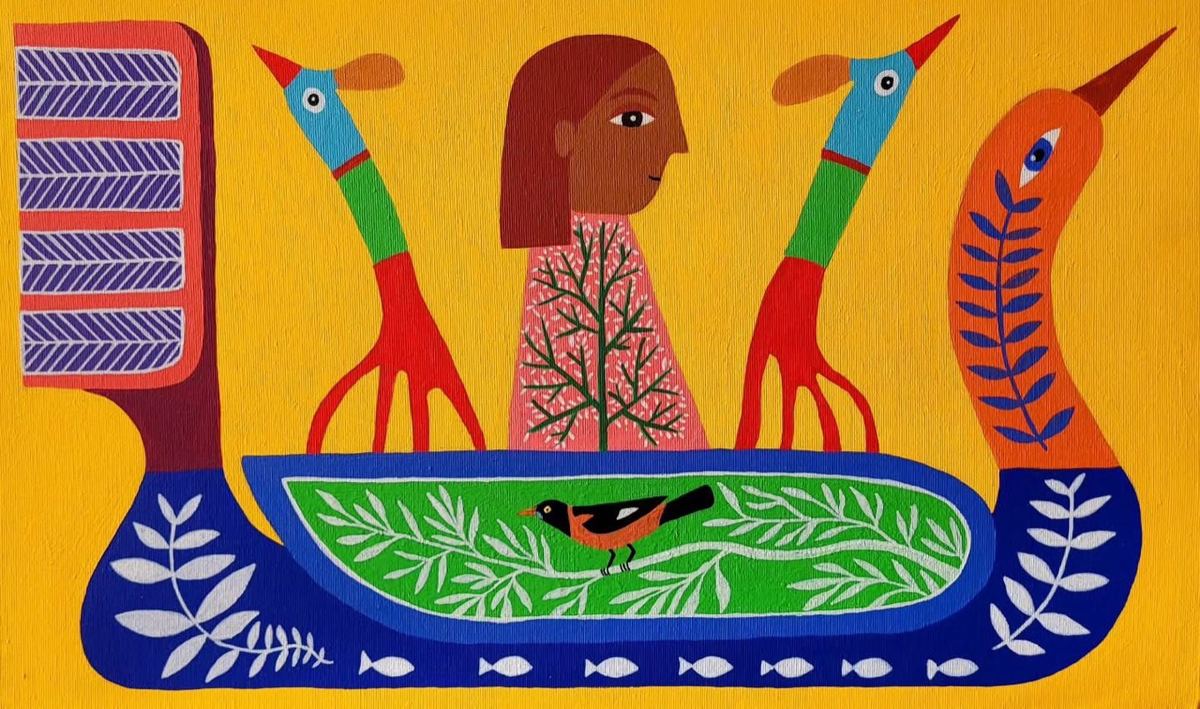
The seven paintings selected here extend that vocabulary through flat, saturated color and emphatic silhouettes. Birds gather in branches, inhabit human clothing, balance on heads, or become architectural vessels carrying people, flowers, fish, and memory. Against fields of black, pink, ochre, yellow, and pale earth, Lucena organizes each scene with the clarity of a sign and the density of a fable. Decorative leaves, scales, feathers, stripes, and patterned garments make every surface active. The repetition of eyes, beaks, branches, and elongated necks produces a visual rhythm that links one canvas to the next, while each color relationship gives an individual scene its emotional temperature. The human figures remain calm and frontal while the animals around them seem to speak, guide, shelter, or watch. Even the boats cease to behave like ordinary objects: enlarged into protective structures, they hold intimate communities together. This exchange dissolves any stable hierarchy between person and landscape: nature is not a background but a protagonist, and the boatlike bodies become small worlds in motion.
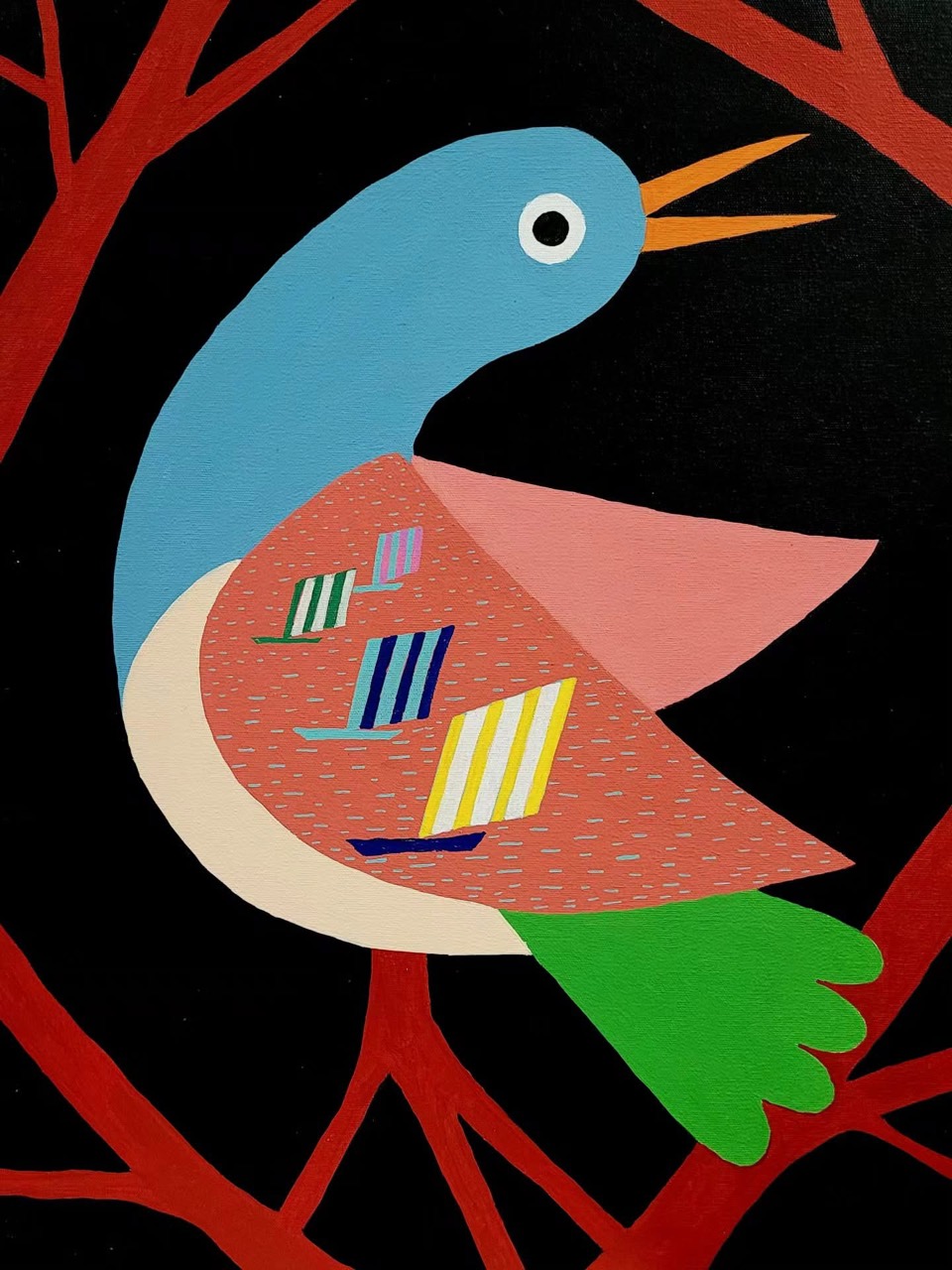
Lucena’s images can appear immediately accessible, yet their apparent simplicity is carefully constructed. His precise contours recall illustration and graphic design, while unexpected proportions and combinations introduce surrealism, humor, tenderness, and unease. That balance has allowed his work to move between children’s publishing, editorial commissions, fashion, public murals, and autonomous painting. It also reflects his experience as an art teacher, where exchange with children reinforces the freedom and intelligence of direct image-making. By maintaining his studio in Maceió, Lucena rejects the idea that an artist must leave the Northeast to achieve relevance. His work looks outward from Alagoas, transforming local memory into a generous visual mythology whose birds, people, plants, and vessels remain rooted even as they travel.