Laura Pascoal and the Theater of Everyday Excess
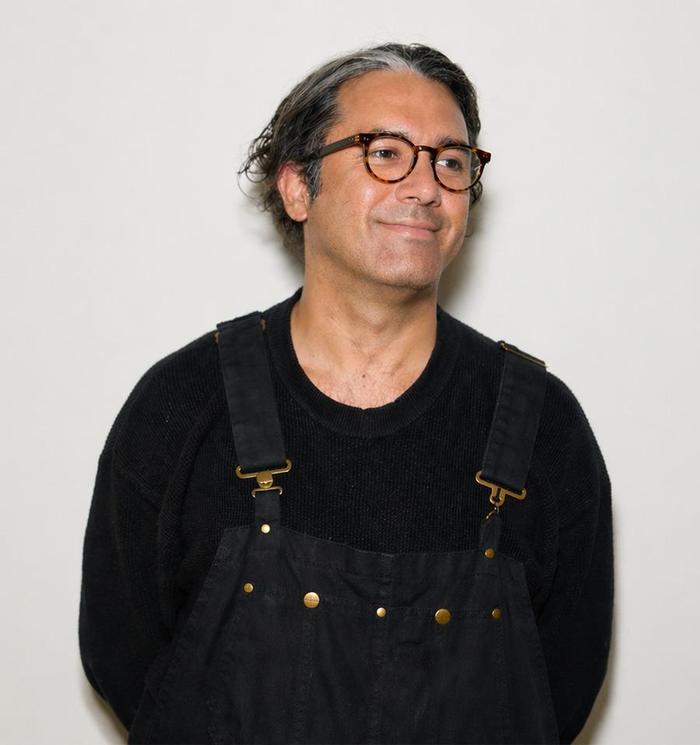
Laura Pascoal transforms the visual noise of everyday life in Northeastern Brazil into paintings charged with color, wit, and emotional friction. Born in Itabuna, Bahia, in 1996, she lived across Pernambuco’s Agreste, Sertão, and Zona da Mata before settling in Recife in 2013. She later studied Visual Arts Education at the Federal University of Pernambuco, developing a practice that moves through painting, collage, printmaking, illustration, textile design, and ceramics. Painting, however, remains the central stage on which her collected images meet: popular lettering, commercial façades, advertisements, patterned fabrics, familiar objects, and fragments of urban spectacle. See also Aurelino dos Santos and the City as a System of Signs.
Pascoal treats the city as a restless image archive. The hand-painted typography of fish markets, banners outside dental offices, plush printed bedsheets, truck mudflaps, shop windows, and fashion graphics all become material for a vocabulary that is simultaneously local and cosmopolitan. Rather than reproducing these references faithfully, she rearranges them through the heightened logic of pop and kitsch. Borders, slogans, animal prints, ornamental hearts, flames, stars, and theatrical frames compete for attention. Excess becomes an organizing principle: images collide, but their tension is carefully controlled through sharp contrasts, deliberate cropping, and an instinctive balance between saturated fields of color and passages of realistic description. See also Silvana Mendes and the Radiant Repair of the Colonial Archive.
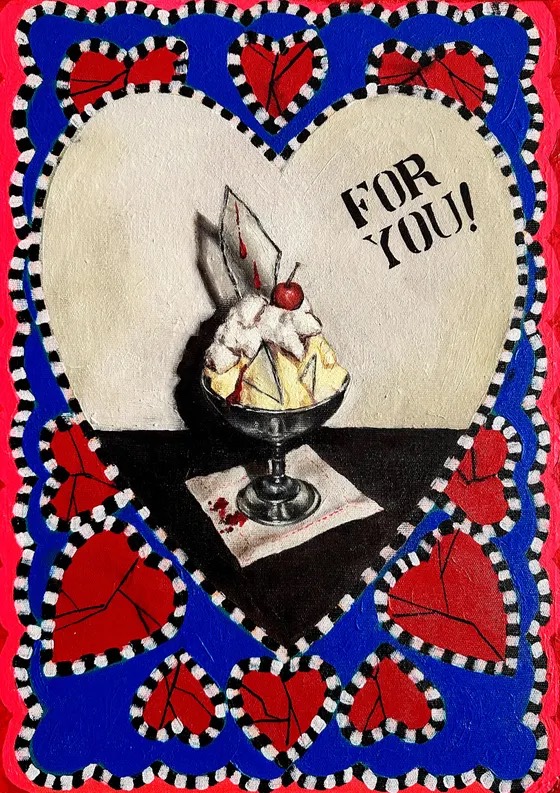
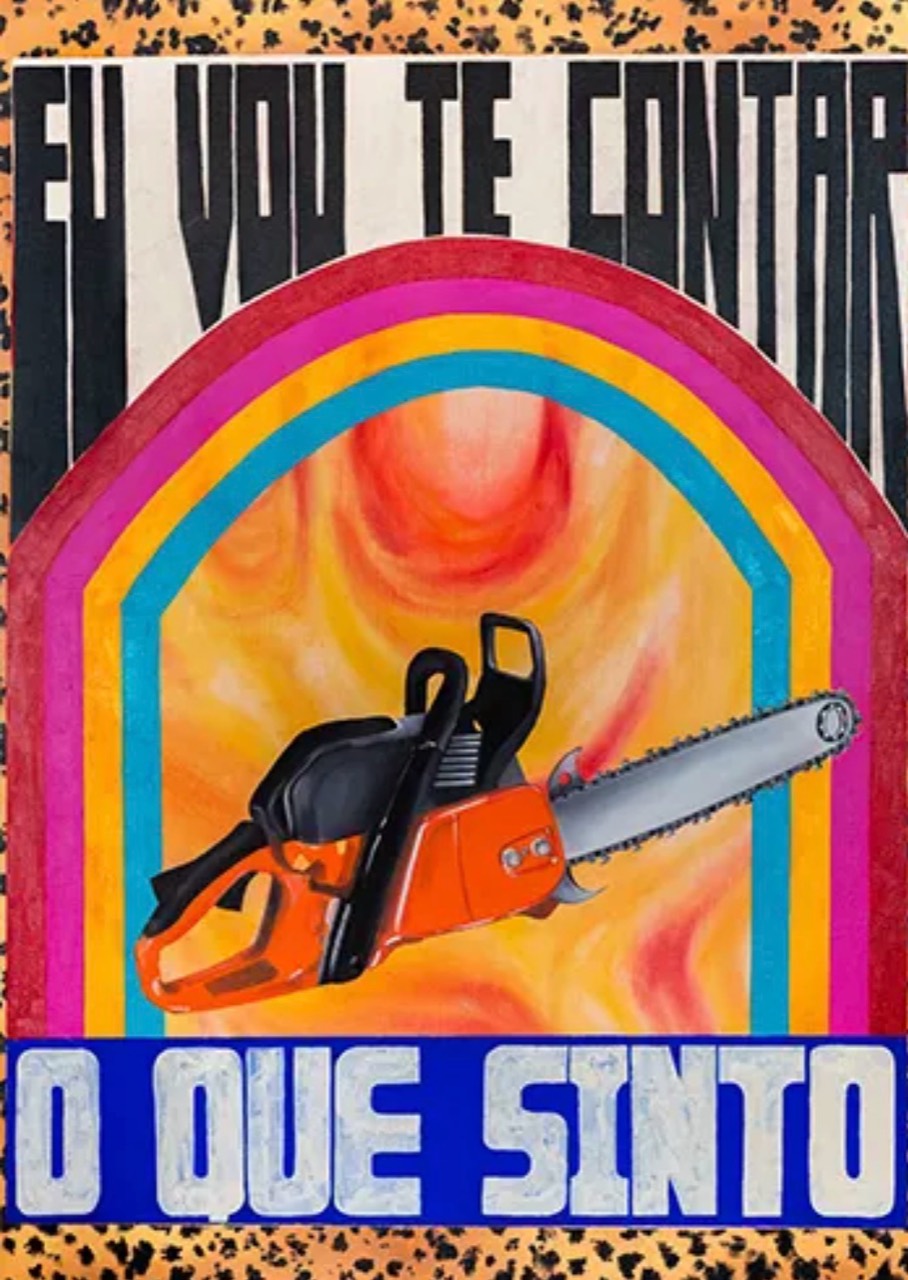
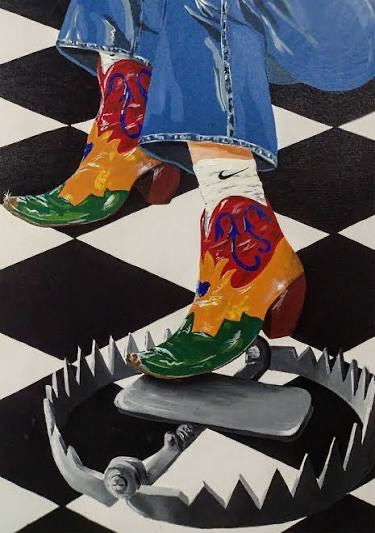
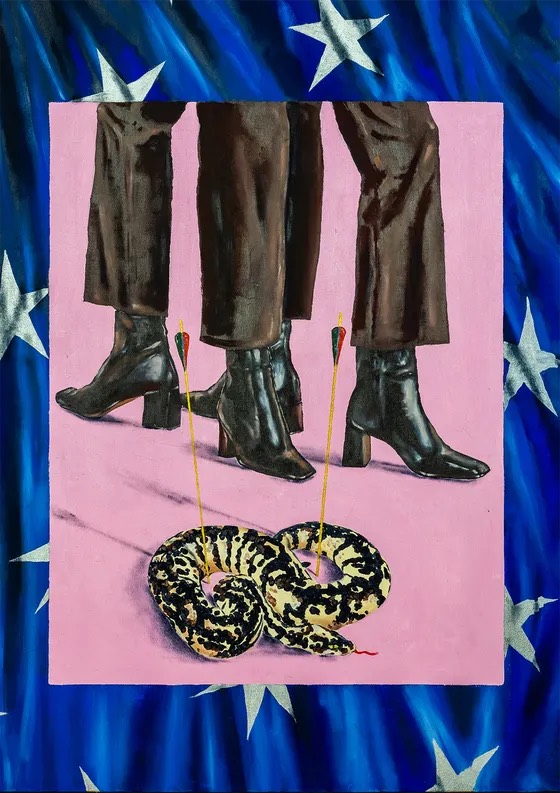
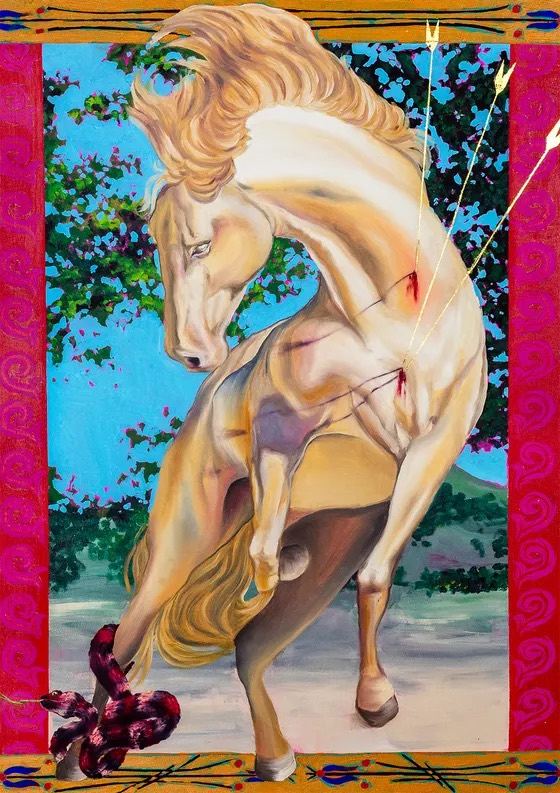
The six works selected here reveal how this strategy allows desire and danger to inhabit the same surface. A sundae becomes an intimate offering enclosed by hearts; a rearing horse enters a decorative proscenium marked by small wounds; cowboy boots interrupt scenes of horses, fire, snakes, traps, and a stark checkerboard floor. Elsewhere, a chainsaw appears beneath the painted phrase “Eu vou te contar o que sinto,” turning confession into both promise and threat. Pascoal repeatedly borrows familiar signs of romance, masculinity, consumption, and spectacle, then loosens their expected meanings. Her collaged structures make seeing discontinuous: an image may resemble an advertisement at first, then shift into dream, warning, joke, or confession. Painted frames exaggerate this instability by presenting each scene as something already mediated, displayed, and performed. Her paintings behave like melodramatic scenes paused at the instant before disclosure, leaving humor, tenderness, melancholy, and menace unresolved.
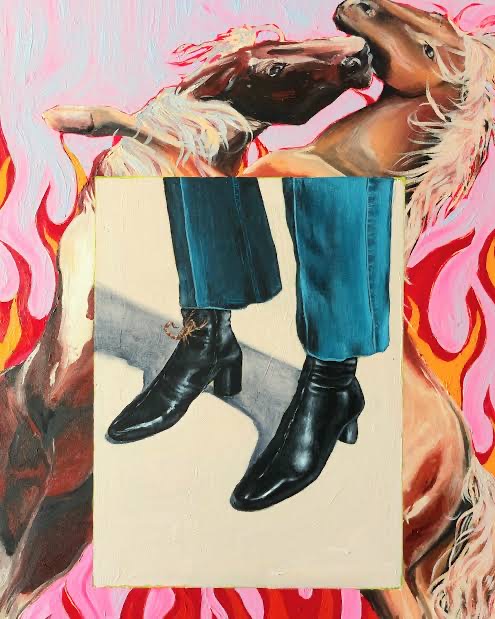
This emotional instability distinguishes Pascoal’s work from simple quotation or nostalgia. Her sources may come from popular commerce and domestic memory, but each composition asks how identities and feelings are performed through objects. Boots become costumes, animals become psychic doubles, lettering becomes a voice, and decoration refuses to remain secondary. The artist’s movement across illustration, fashion, print, and ceramic form reinforces this interest in images that travel between public and private life. In her hands, the apparent chaos of the city becomes a precise language of sensation. Laura Pascoal does not tidy the visual world around her; she amplifies its contradictions until sentiment acquires physical weight and everyday excess becomes a form of self-portraiture.