Tânia de Maya Pedrosa and Painting as Living Memory
Tânia de Maya Pedrosa has built a singular body of work from the stories, rituals, and visual traditions of Northeastern Brazil. Born in Maceió, Alagoas, in 1933, she spent part of her childhood in a rural environment where religious festivities, oral narratives, domestic customs, and popular objects formed an everyday visual education. At home, this contact with popular culture coexisted with a more canonical artistic world encouraged by her mother, the classical pianist Benita Mathilde de Maya Pedrosa. Long before she began exhibiting as a painter, Tânia became an attentive collector of Brazilian popular art, traveling through places such as Caruaru, Olinda, and the interior of Alagoas in search of works and knowledge. Collecting was never separate from making: both grew from her desire to preserve forms of expression often excluded from official histories. See also Jairo Arcoverde and the Freedom of a Pictorial Alphabet.
Her own vocation emerged in the 1980s, after a trip to Switzerland prompted her to begin painting. For years, she kept the works private, treating them almost as intimate records. Recognition came when friends encouraged her to submit paintings to the Sesc Bienal Naïfs do Brasil, where she received an acquisition award in 1998 and further distinctions in 2000, 2006, and 2014. Tânia chose naïf painting as a language of freedom rather than as a category of limitation. Flattened space, simplified figures, vivid primary colors, and abundant ornament allow her to “write with brushes,” transforming remembered episodes and inherited stories into images that remain open, direct, and emotionally complex. See also Laura Pascoal and the Theater of Everyday Excess.
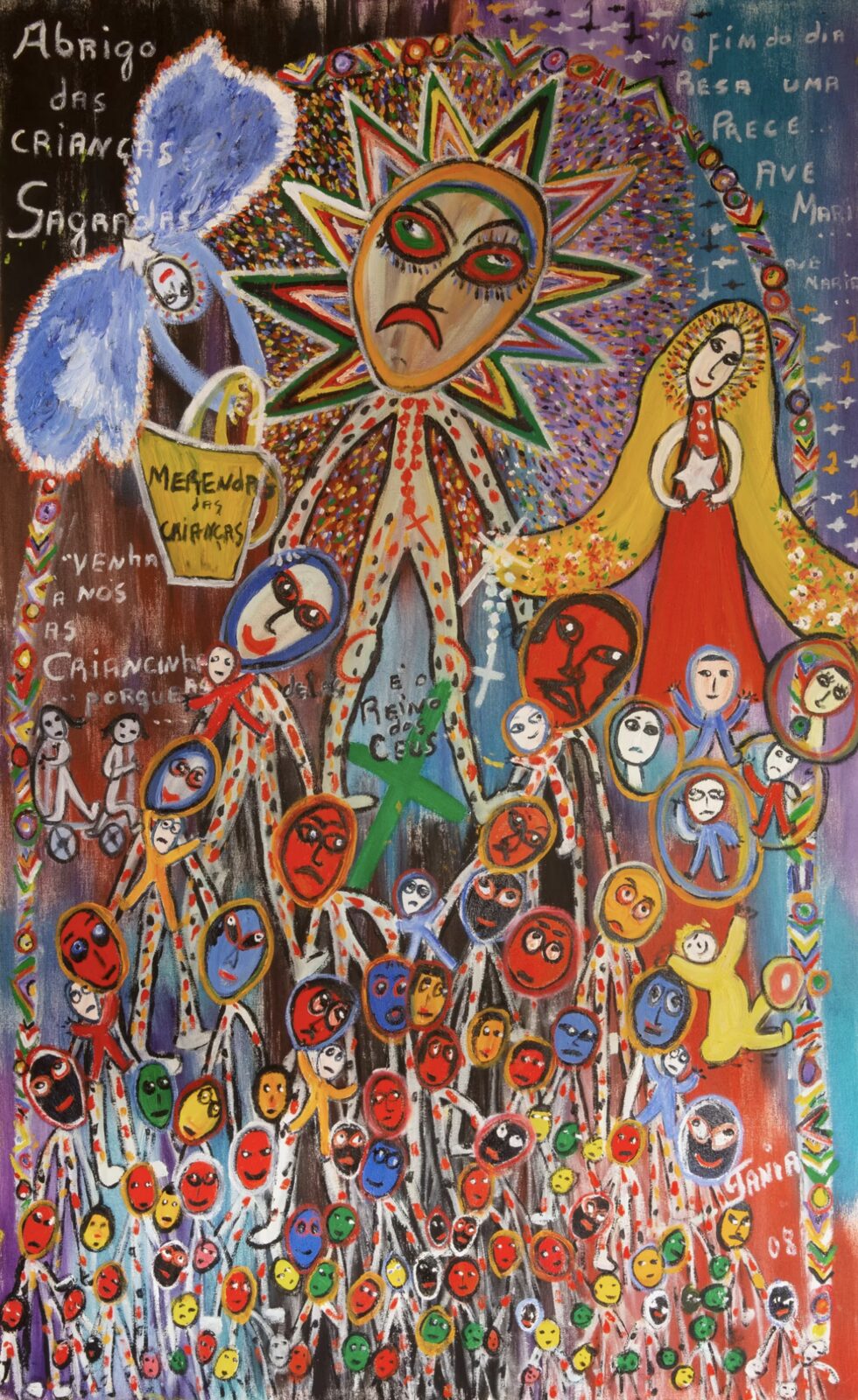
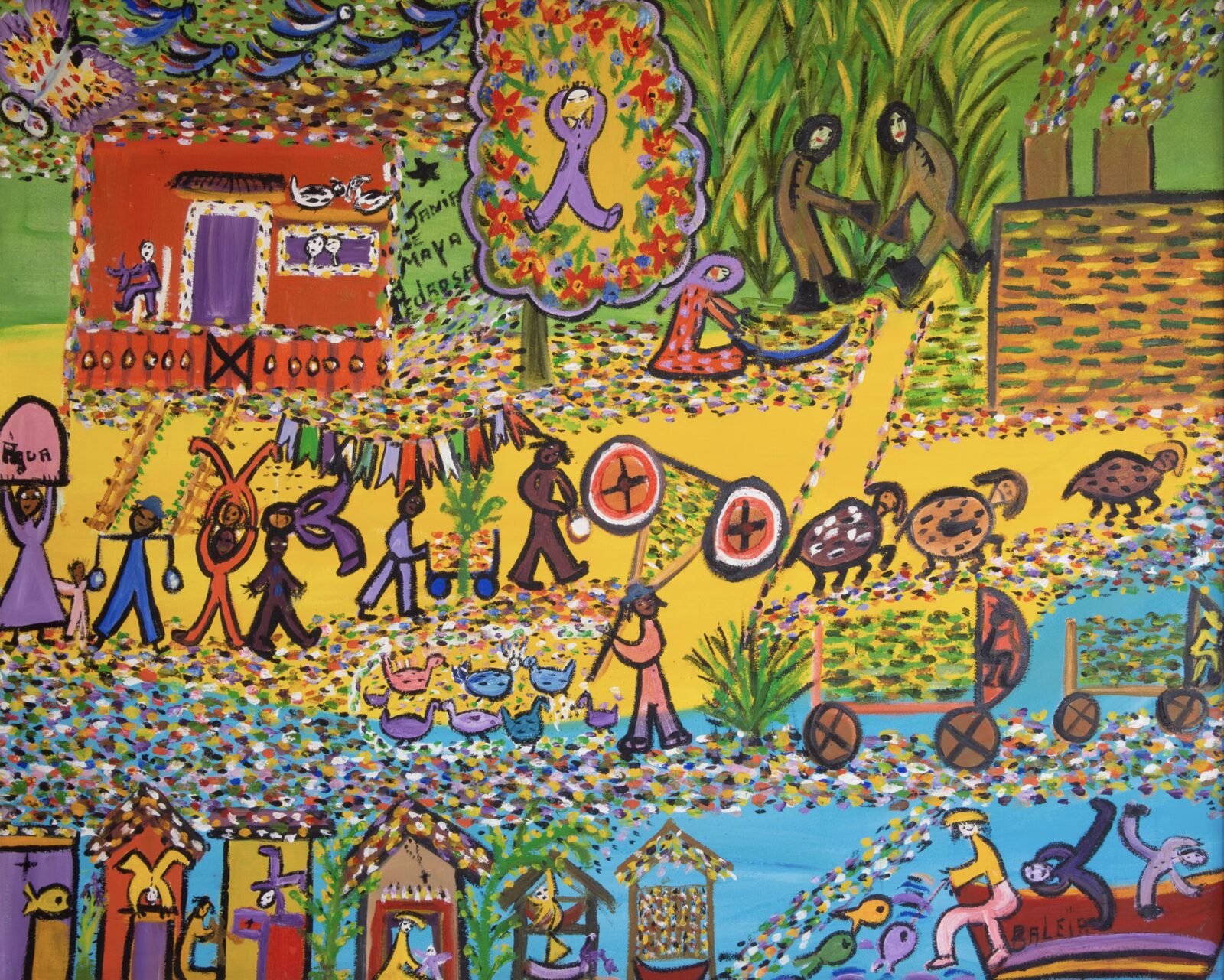
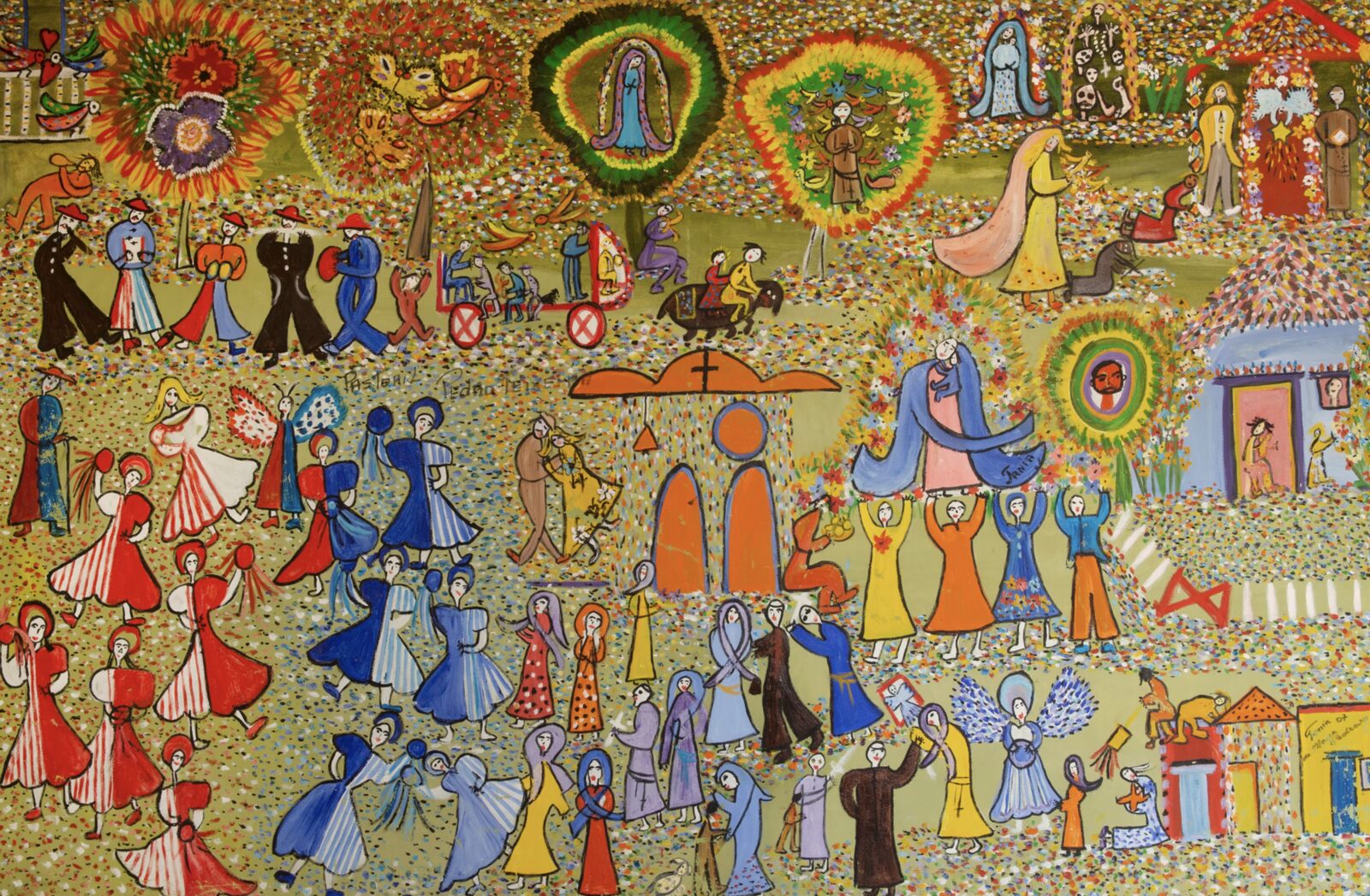
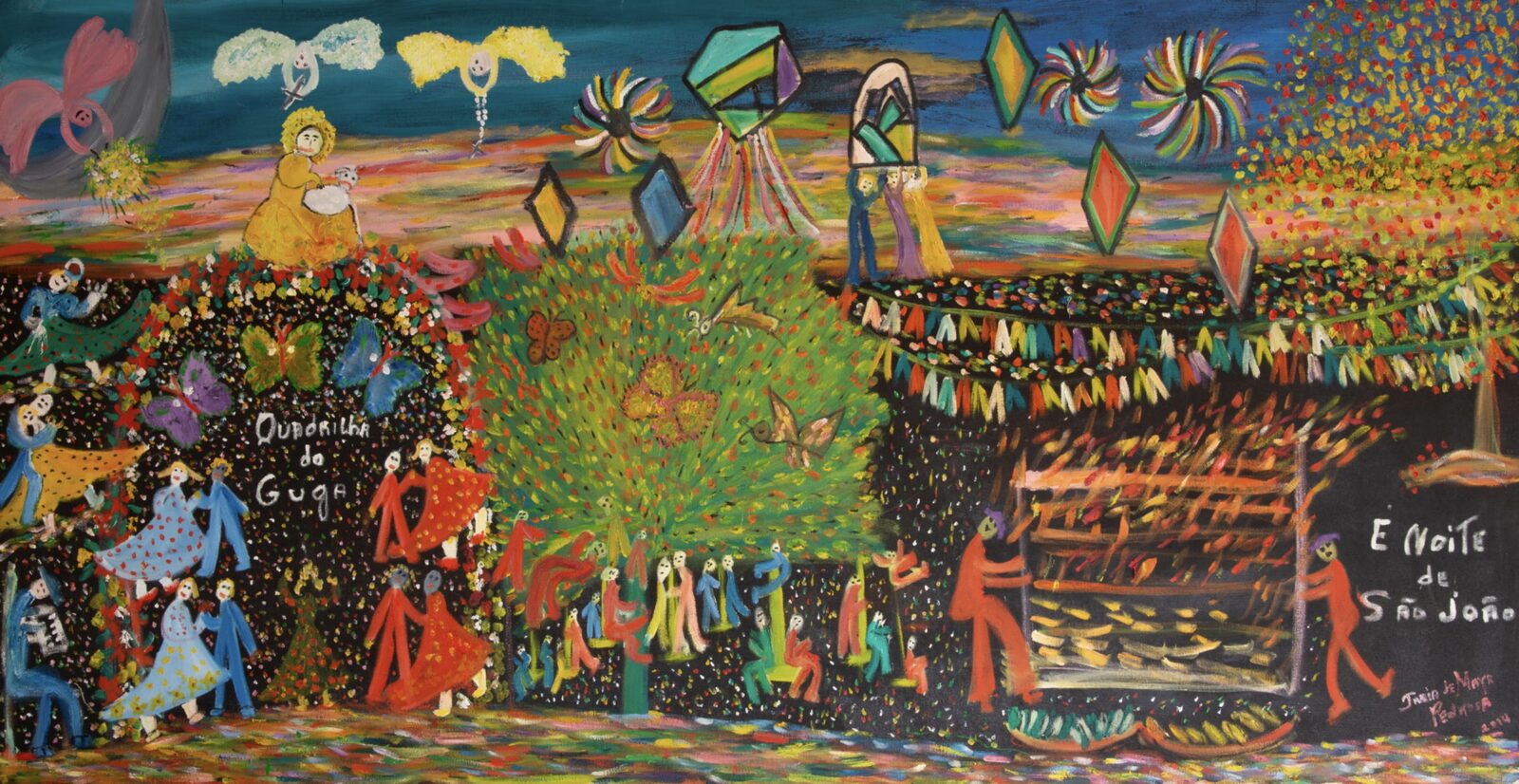
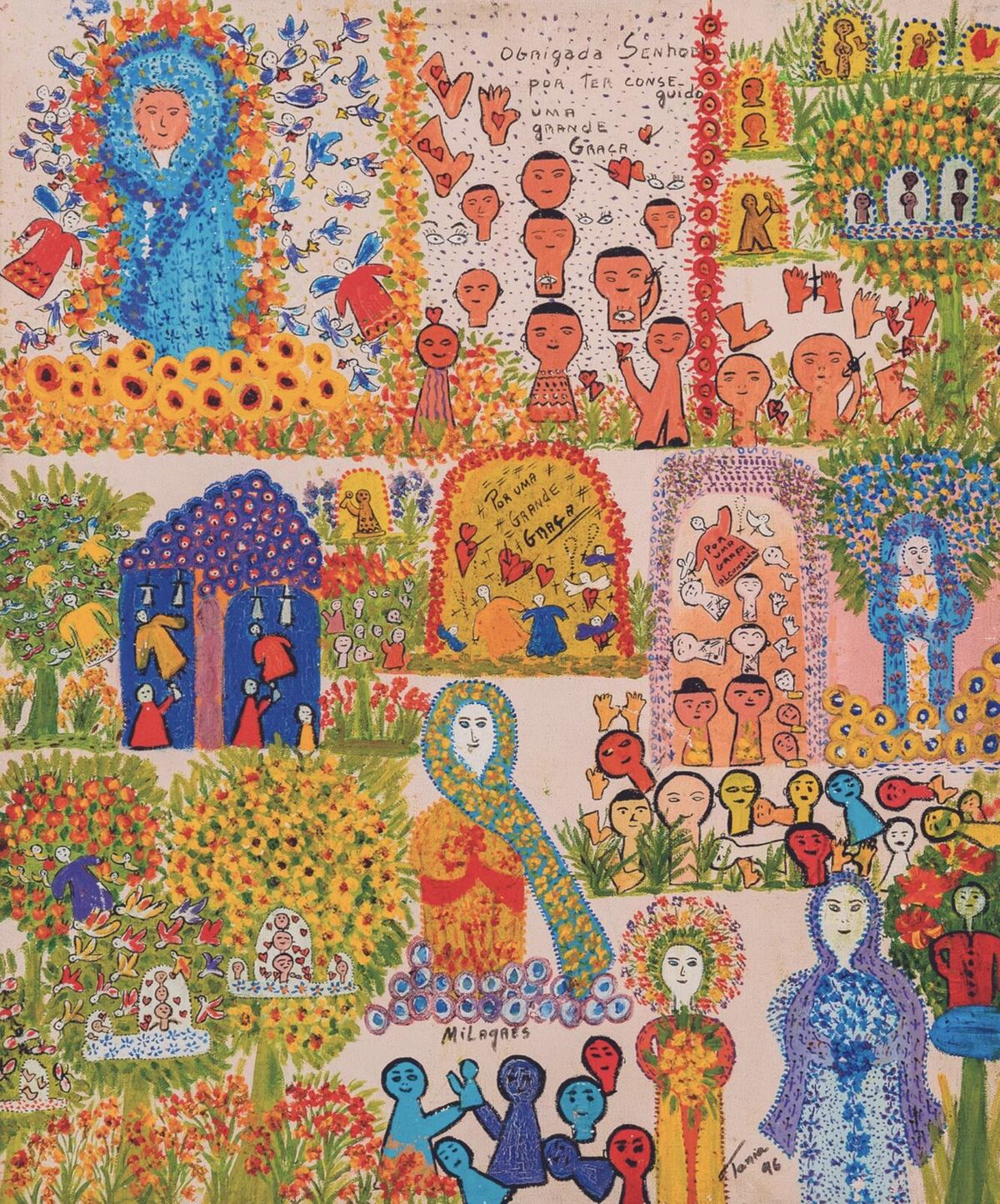
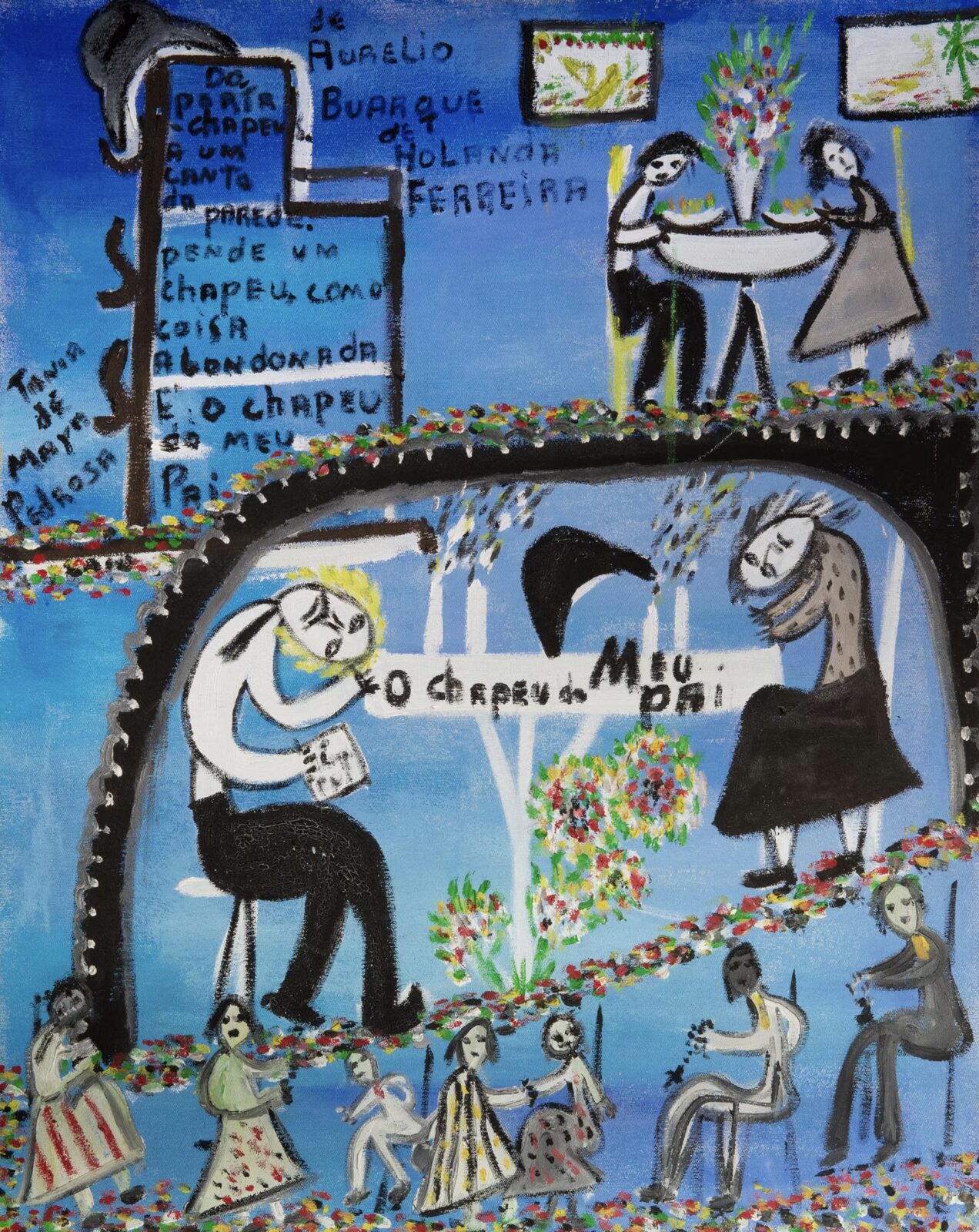
The six works selected here show the breadth of that visual storytelling. Crowded scenes gather children, pilgrims, processions, saints, houses, animals, flowers, boats, musicians, and handwritten fragments into dense fields of color. A shelter for children becomes a theater of faces and protective figures; a familiar song about a hat unfolds across a blue ground; gratitude for a received grace expands into a garden of votive bodies and Marian apparitions. Village celebrations, devotional gatherings, and a São João night appear not as distant folklore but as lived social worlds. Perspective yields to accumulation: figures grow according to emotional importance, episodes coexist across the same surface, and dotted marks bind the scenes into rhythmic constellations. Seen from afar, these paintings approach abstraction through their chromatic intensity; seen closely, they divide into dozens of small narratives.
Tânia’s paintings are therefore more than illustrations of custom. They are affective archives shaped by faith, humor, anxiety, tenderness, and the urgency of remembrance. Words, prayers, songs, place names, and popular sayings enter the painted field as equal partners to color and line, preserving the cadence of oral culture while asserting the artist’s individual voice. This commitment extends to her work as a collector, writer, and advocate for popular art: her collection grew to more than 1,500 works, and her research helped document artists and traditions from Alagoas. Yet the authority of her painting comes from its refusal of neutral ethnography. Memory is rearranged, enlarged, and reinvented. Through this personal grammar, Tânia de Maya Pedrosa turns everyday life into a living cosmology and gives visual permanence to communities, beliefs, and ways of seeing that modern life continually threatens to erase.