Márcio Vasconcelos: Photography as Living Ancestral Memory
From São Luís, Maranhão, Márcio Vasconcelos has built an independent, self-taught photographic practice around a sustained commitment to the popular and religious cultures of Afro-descendant communities in Brazil. For more than two decades, he has worked where image-making meets anthropological and social research, returning to celebrations, terreiros, rural communities, and devotional spaces rather than treating them as subjects to be visited once and consumed quickly. His photographs emerge from duration: from listening, learning the rhythms of a place, and recognizing that cultural memory is carried not only by ceremonies and costumes but also by gestures, sounds, landscapes, and relationships. See also Bernardo Conceicao and the Arrangements of Abundance.
That ethic is especially clear in Nagon Abioton, his photographic and historical study of Casa de Nagô, one of Maranhão’s oldest Tambor de Mina terreiros. Vasconcelos describes remaining quiet and discreet during rituals, moving carefully so as not to interfere, and gradually earning the trust of religious leaders and their communities. The project was developed with researchers Mundicarmo Ferretti and Paulo Melo Sousa and supported by the Petrobras Cultural program. It belongs to a wider body of work that includes Casa Fanti-Ashanti, Terecô, Quilombolas, Incorporados, Zeladores de Voduns, and Bumba Meu Boi. Across these series, photography is neither detached evidence nor theatrical spectacle. It is a form of proximity shaped by accountability to the people, histories, and sacred practices represented. See also Aurelino dos Santos and the City as a System of Signs.
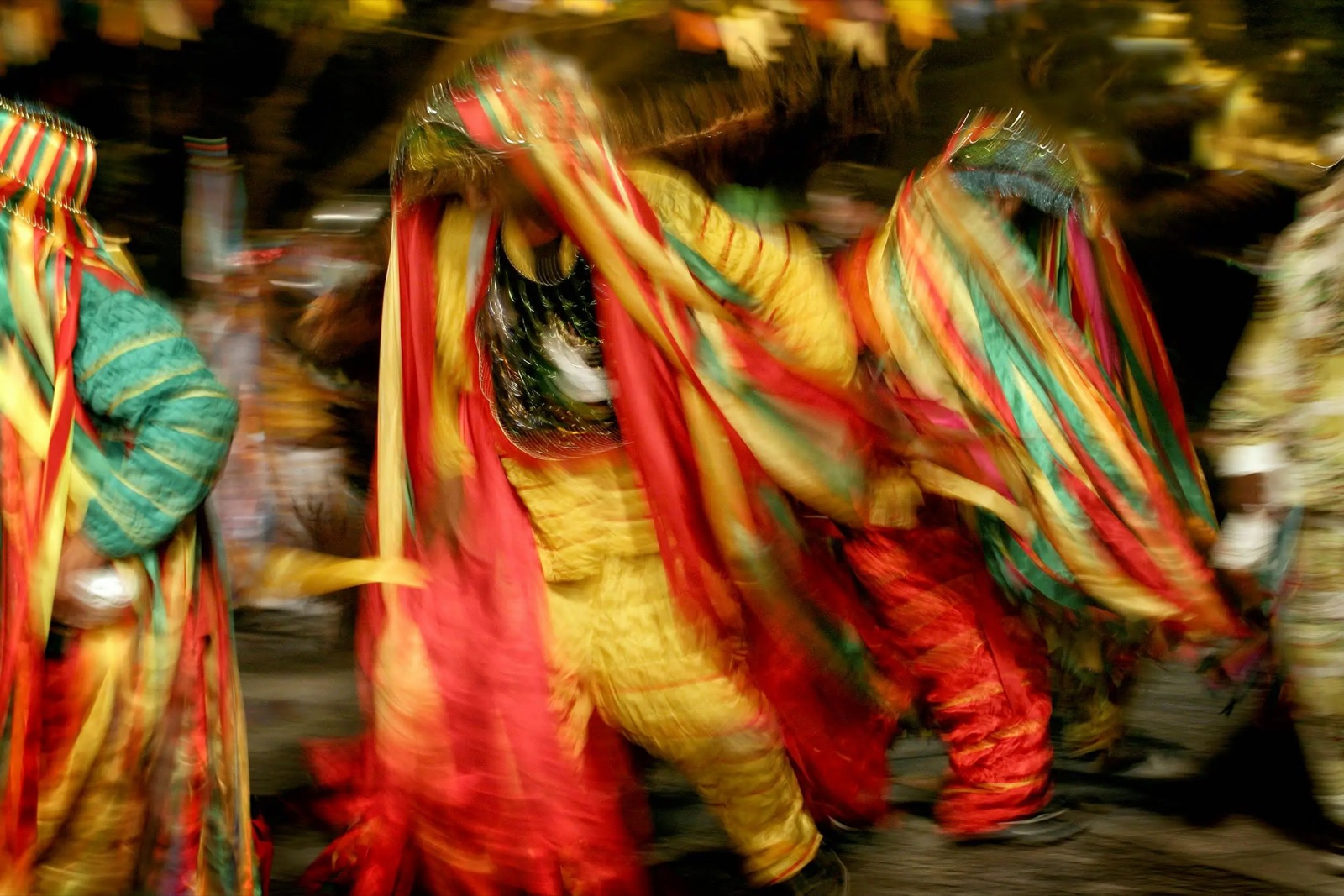
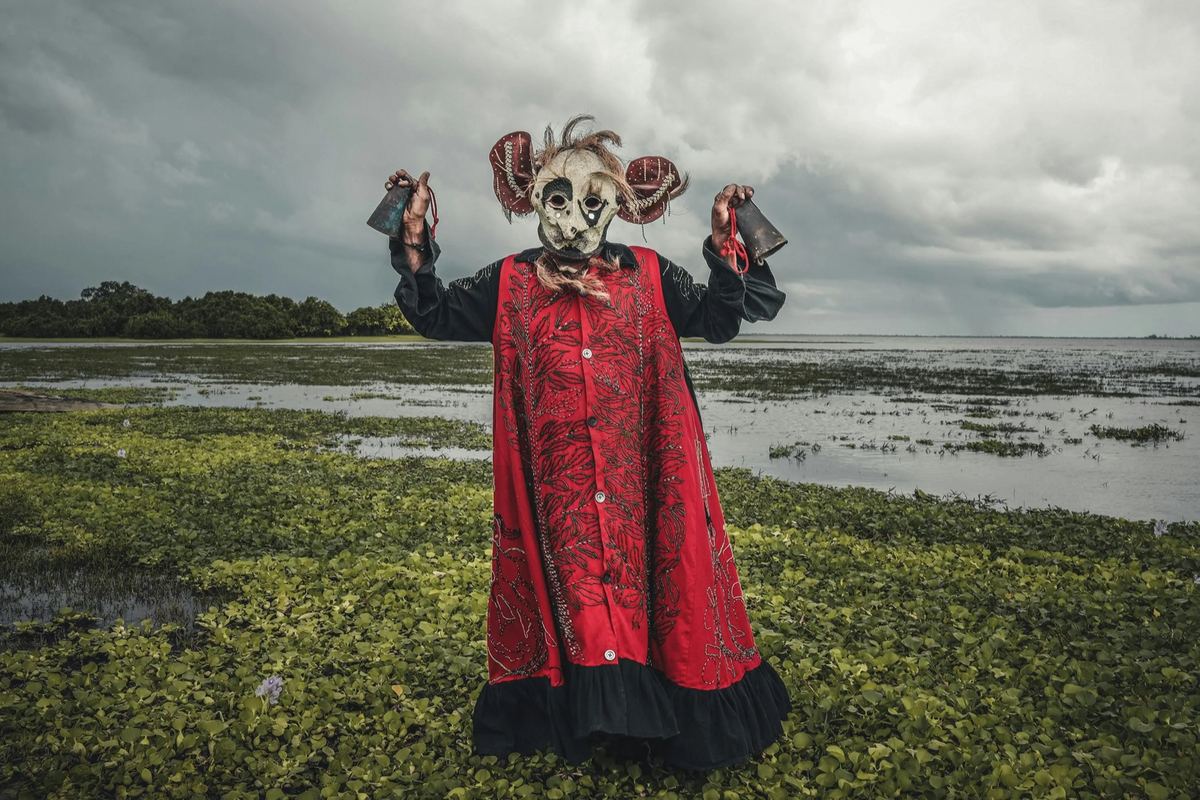
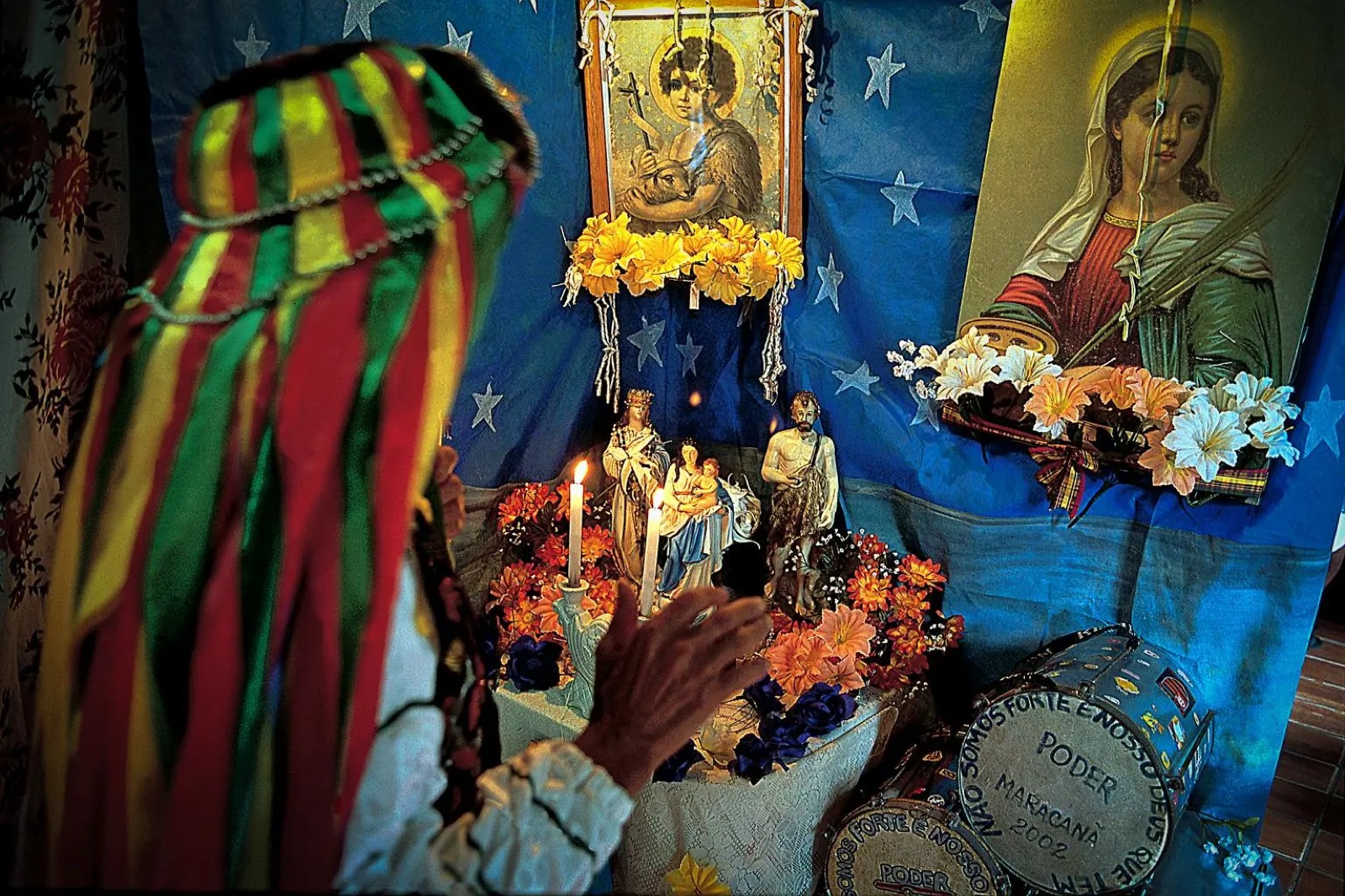
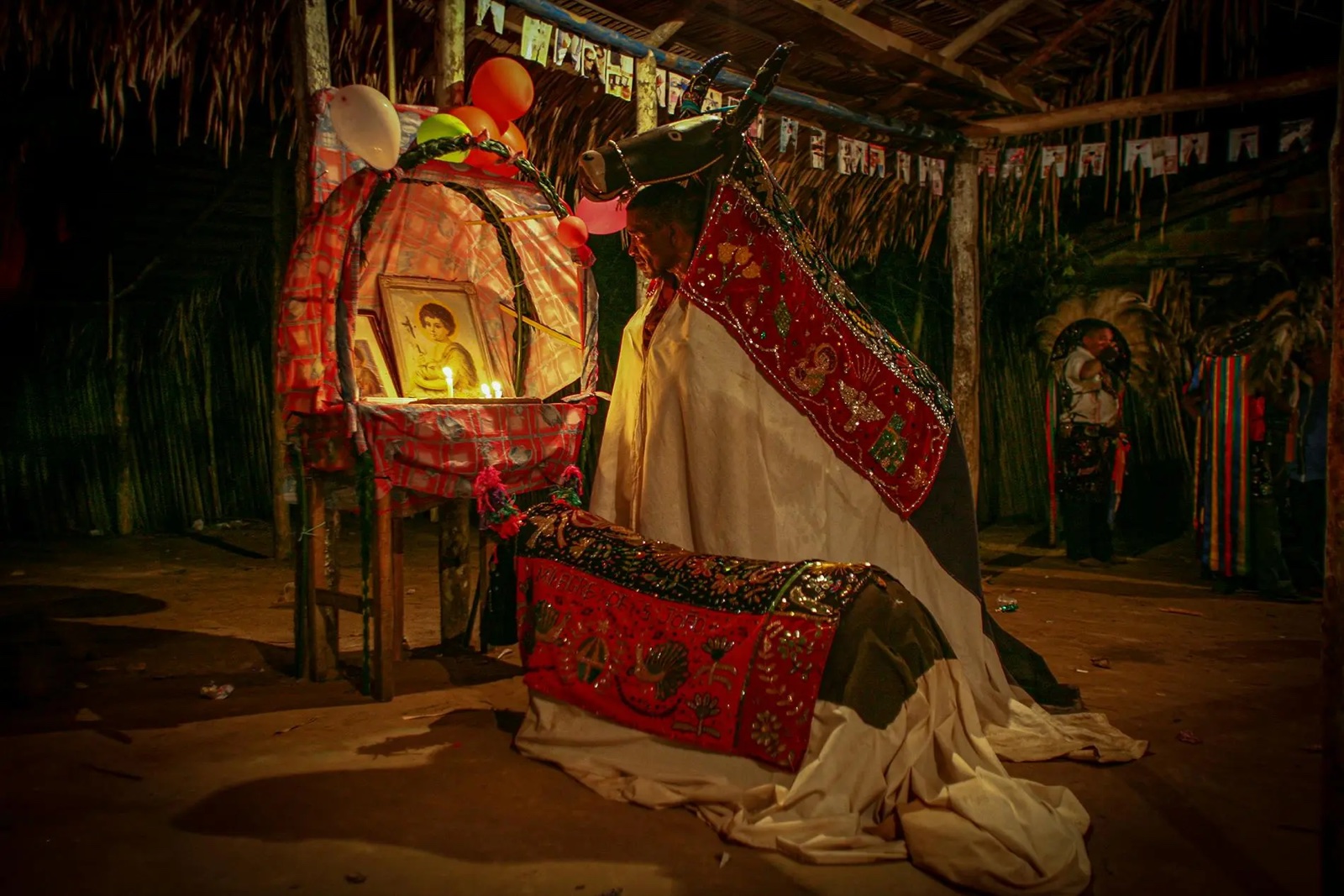
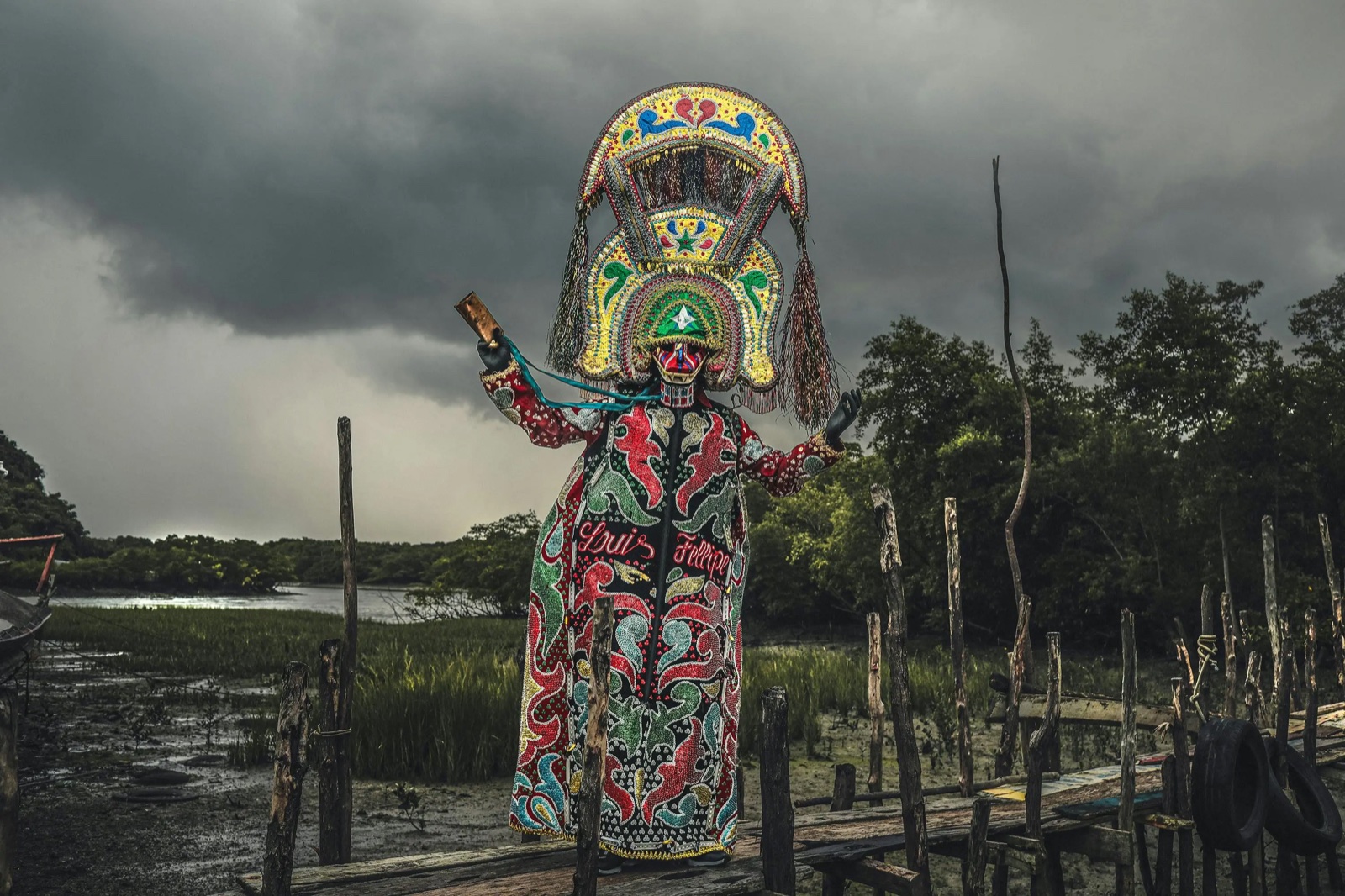
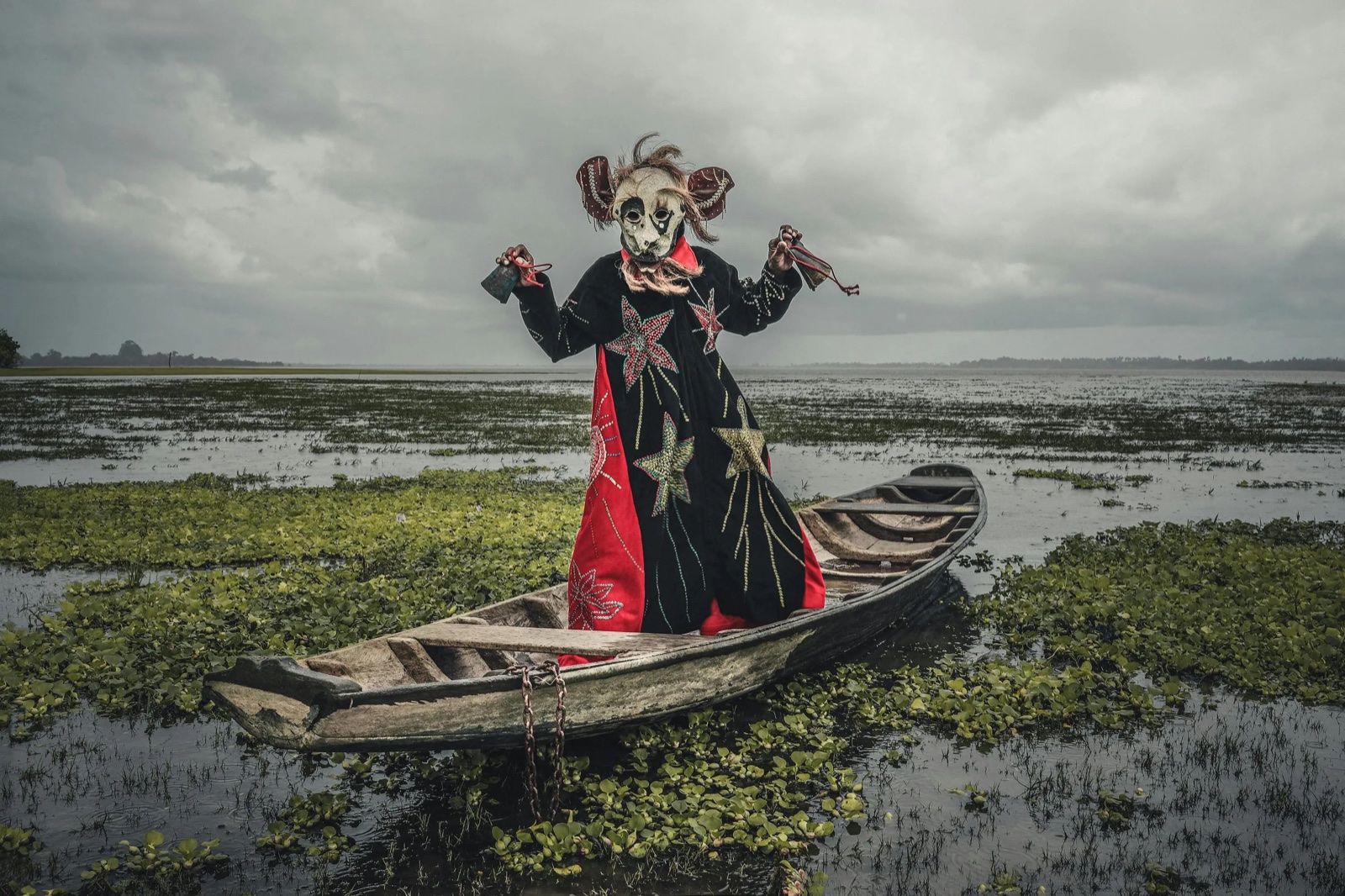
The selected photographs reveal the range of that approach. In an image of Bumba Meu Boi, long exposure turns embroidered costumes and ribbons into streams of red, yellow, and green, translating collective movement into a field of color. Other works enter devotional interiors where candles, flowers, drums, painted saints, and ritual figures share the frame. Light is often dramatic, but it does not isolate a single symbol; it binds objects, bodies, and architecture into a lived spiritual environment. In the outdoor photographs, masked figures wearing richly embroidered garments stand against wetlands, canoes, wooden walkways, and storm-heavy skies. The contrast between ceremonial presence and expansive landscape gives the figures an almost mythic scale, while the specificity of costume and terrain keeps the images grounded in Maranhão. Performance, ancestry, and ecology become inseparable.
Vasconcelos has extended this visual research through a substantial sequence of books. Arte nas Mãos: Mestres Artesãos Maranhenses appeared in 2007, followed by Nagon Abioton in 2009 and Zeladores de Voduns do Benim ao Maranhão in 2010. Na Trilha do Cangaço and Visões de um Poema Sujo, both published in 2016, received the XI and XIV Funarte Marc Ferrez Photography Awards respectively; the latter was inspired by Ferreira Gullar’s landmark poem. In 2021, Bumba meu Boi do Maranhão: Patrimônio Cultural Imaterial da Humanidade received the XVI edition of the same award. Together, these projects form more than a documentary record. They constitute a living counter-archive in which Afro-Brazilian religious knowledge, popular performance, and Maranhão’s cultural landscapes are approached as contemporary forces—complex, changing, and sustained by the communities that keep them alive.
Sources and further reading