Kennedy Bahia and the Tropical Rhythm of Tapestry
Kennedy Bahia was born Patrick Maderos Kennedy Dito in Valparaíso, Chile, in 1929, and arrived at art by an unusual route. Trained as a mining engineer, he worked in gold exploration in Bolivia and in the Brazilian Amazon, where the scale and intensity of the forest left a lasting impression. After contracting malaria, he moved to Salvador for treatment in the early 1960s and began making tapestries while recovering, drawing on textile skills first encountered in childhood. What began during convalescence became a new life. He adopted Bahia as part of his name and made the state not simply his home, but the cultural ground from which his work would circulate internationally. See also Pedro Delgado: The Sea as Memory and Counter-Image.
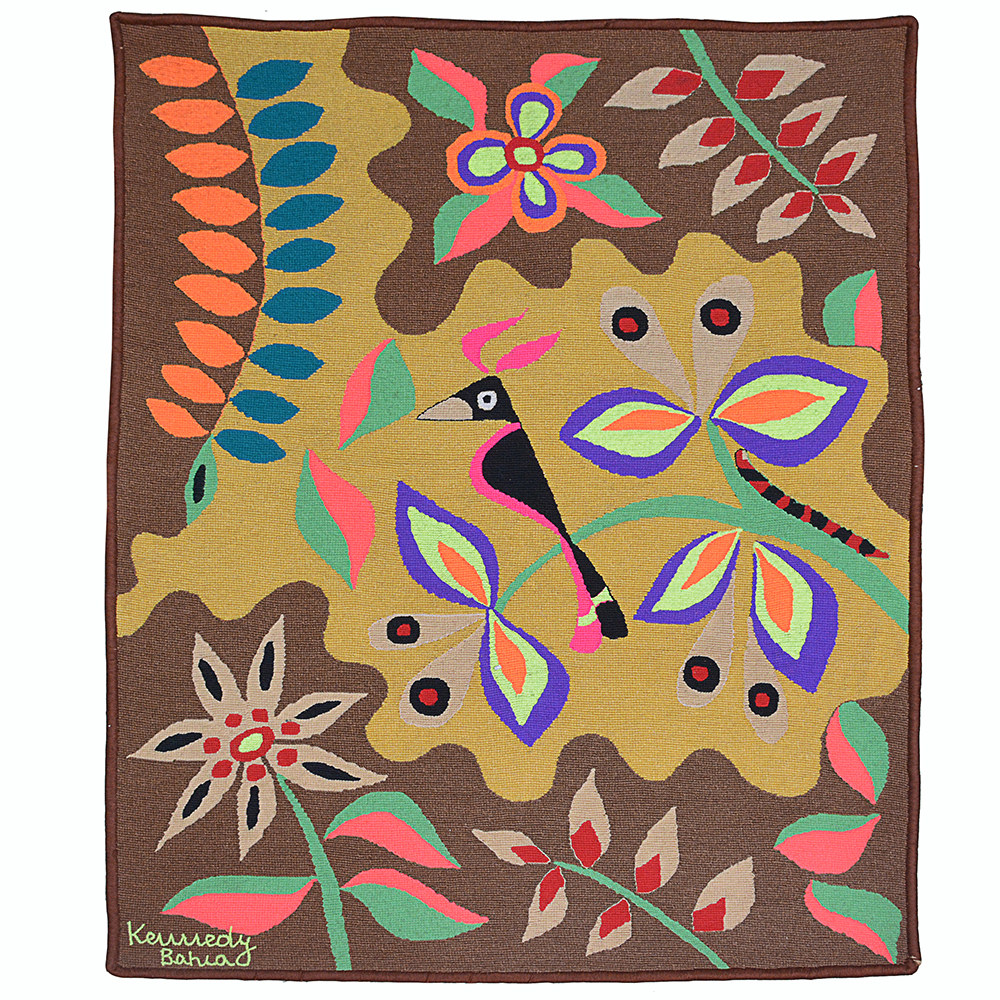
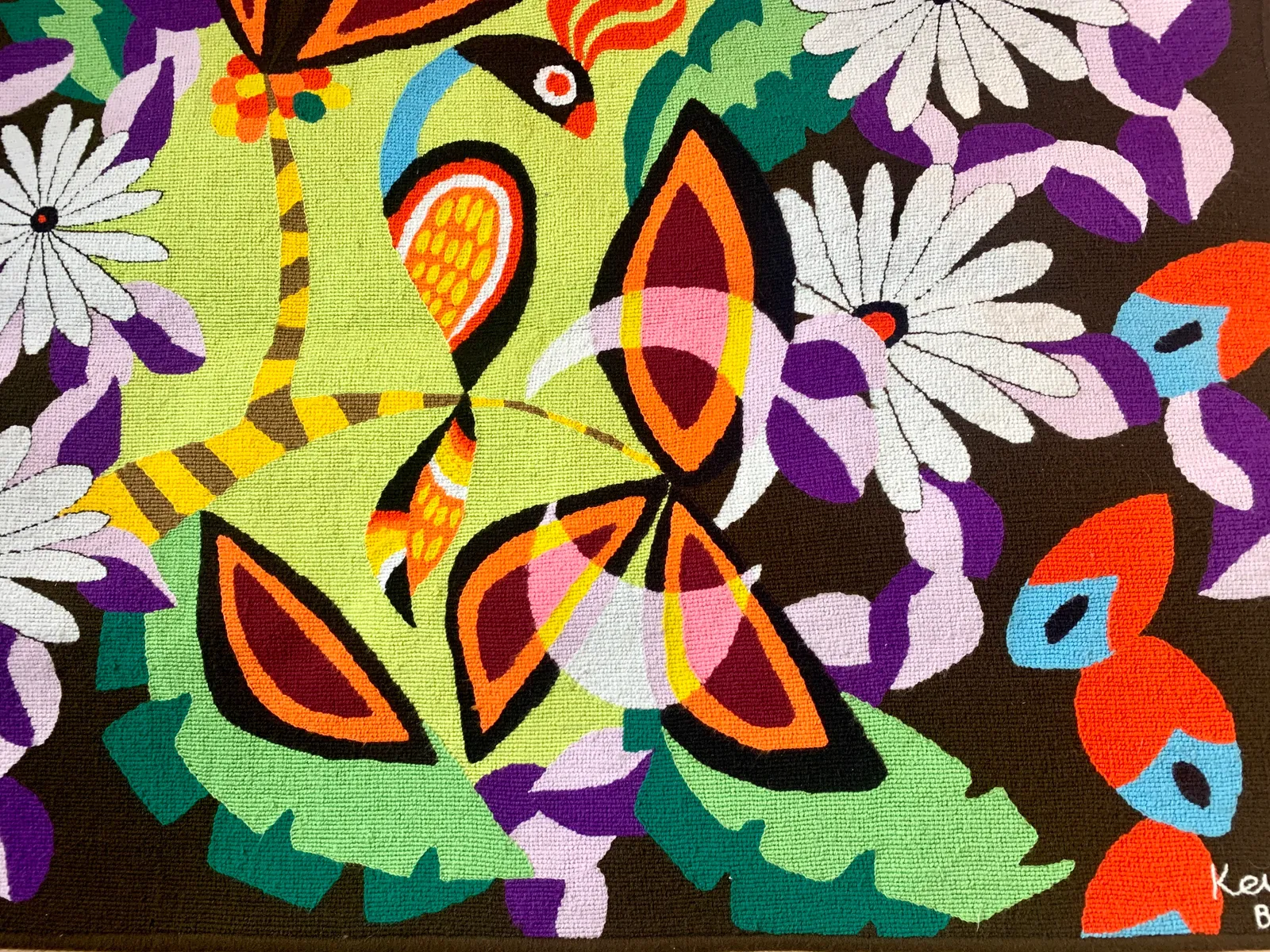
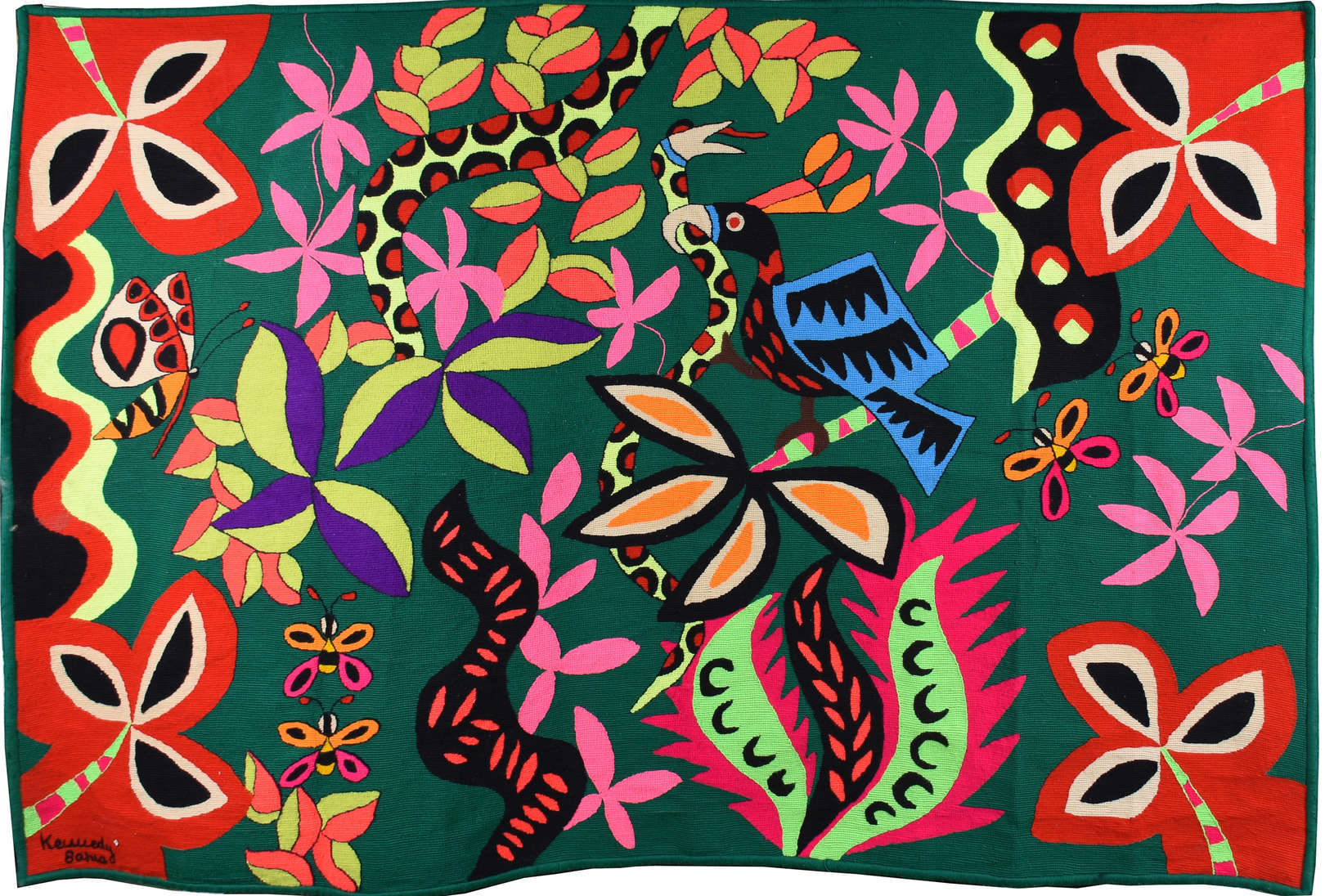
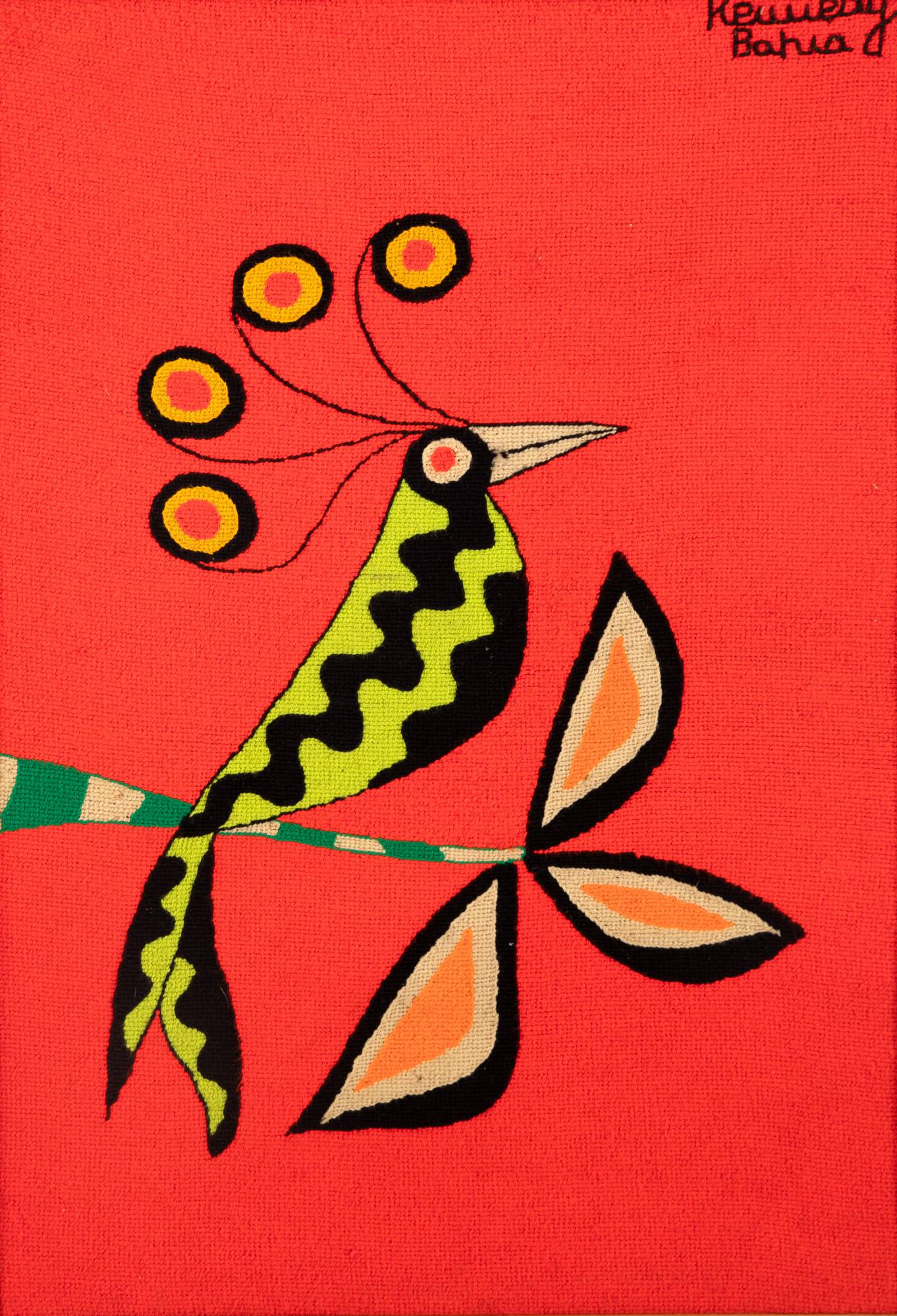
His tapestries transform observation into a compressed, exuberant graphic language. Birds, butterflies, flowers, fruit, snakes, and spreading branches are built from flat shapes edged by strong contours, with little concern for illusionistic depth. Instead, color carries the composition: cobalt blue, saturated red, green, orange, pink, and violet push against one another until the whole surface feels animated. The stitch is never merely a method of filling in a drawing. Its density gives the image a tactile pulse, while repeated leaves, wings, eyes, and petals create rhythm across the cloth. In the selected works, the forest is less a naturalistic setting than a living system in which every creature and plant participates in the same ornamental energy. See also Antonio Maia and the Quiet Gravity of the Sacred.
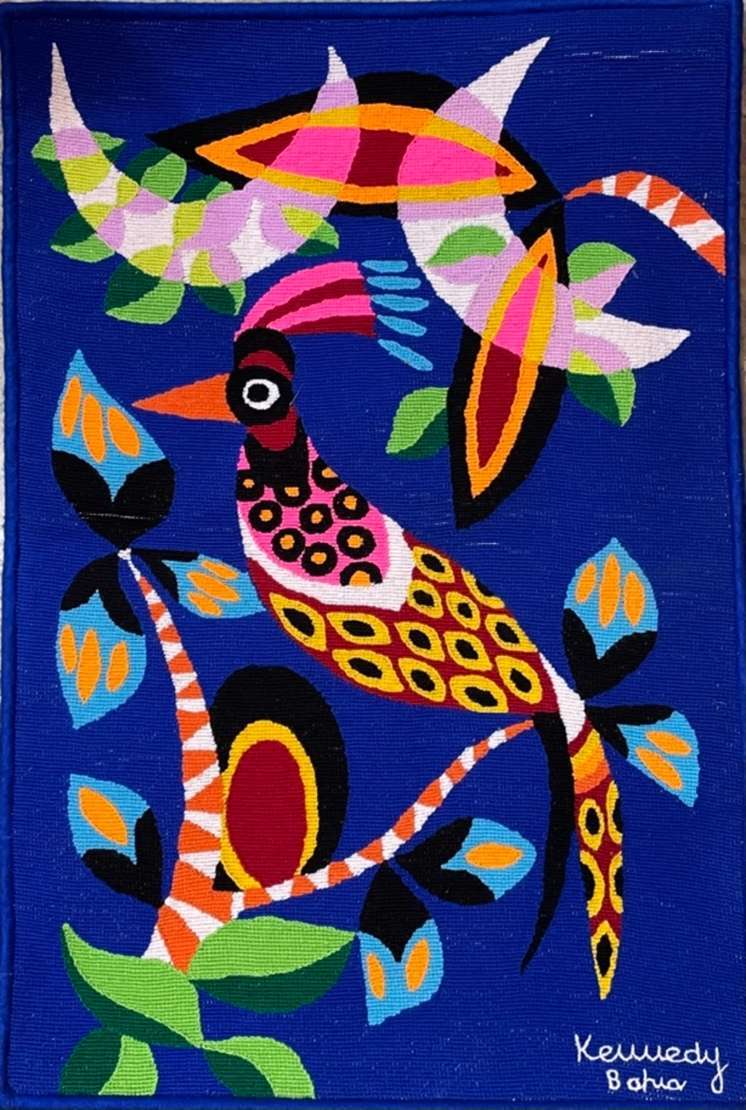
After settling in Salvador, Kennedy expanded this vocabulary to include scenes and symbols drawn from Afro-Bahian culture. The tapestry with two figures and fruit places human life inside the same abundant field as flowers and leaves, refusing any separation between body, labor, ritual, and environment. Other works concentrate on a single bird or distribute animals across dense vegetation, showing how easily he moved between emblem and panorama. His celebrated 1973 collection Fauna e Flora da Bahia consolidated this vision, joining memories of the Amazon to the visual culture of his adopted state. During the 1960s and 1970s, his production also belonged to a broader flowering of artistic tapestry in Salvador, where textile art became a major vehicle for modern image-making.
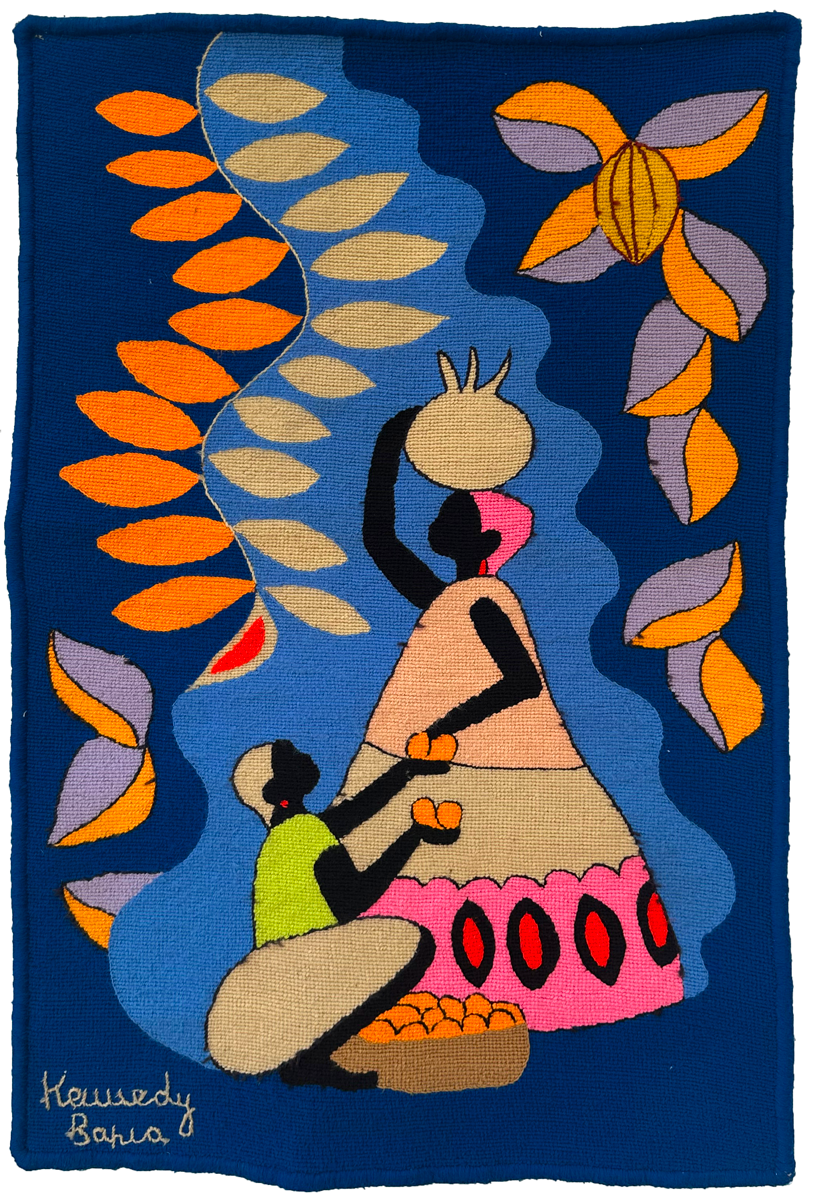
Kennedy Bahia died in Salvador in 2005, leaving a body of work that helped carry Bahia’s visual culture beyond Brazil. Yet the strongest reason to return to his tapestries is not their brightness alone. They hold together several histories often treated separately: migration across South America, extractive work in the forest, the recovery of a handcraft, the modern reinvention of tapestry, and an adopted intimacy with Bahia. His images make nature feel symbolic without becoming remote and make decoration operate as structure rather than embellishment. Through thread, color, and repetition, Kennedy Bahia built an unmistakable world—one in which tropical abundance is disciplined into form, and every wing, leaf, and figure seems to move to the same rhythm.